Why Personal Finance Apps Matter More in 2026–2027
Americans today often manage multiple checking accounts, credit cards, loans, retirement accounts, investment accounts, subscriptions, and recurring bills.
Checking every transaction manually can make it easy to miss unnecessary spending.
Personal finance apps are designed to make this information easier to understand. Depending on the app, users can track spending, create budgets, monitor subscriptions, view their net worth, plan financial goals, or manage investments.
However, these apps are not identical. Each one is designed around a different financial need.
Quick Comparison: 4 Personal Finance Apps
AppBest ForMain StrengthPricing
Rocket Money
Subscription and bill management
Finds recurring expenses and helps manage bills
Free plan; Premium typically $7–$14/month
Empower Personal Dashboard
Net worth and investments
Free financial dashboard and investment tracking
Free dashboard
Monarch Money
Complete household money management
Budgeting, goals, investments and shared finances
$99.99/year Core or $14.99/month
YNAB
Serious budgeting
Zero-based budgeting and spending planning
$1
Pricing can change, so users should check the company's current pricing page before subscribing.

1. Rocket Money — Best for Subscriptions and Recurring Bills
Rocket Money is particularly useful for Americans who want to understand where their recurring money is going.
The app can help users identify subscriptions, track spending, create budgets, monitor bills, and manage recurring expenses.
Its free plan includes core features such as subscription tracking, budgeting and bill reminders. Premium adds additional features, including subscription cancellation and more advanced financial tools. Rocket Money's 2026 pricing information says Premium generally uses a flexible pricing model of about $7 to $14 per month, although pricing can vary.
What Makes Rocket Money Useful?
One of the biggest advantages is subscription management.
Many Americans pay monthly for streaming services, memberships, software, apps, insurance-related services and other recurring charges.
Rocket Money can help users identify these recurring expenses instead of forcing them to search through months of bank statements.
Premium members can also request subscription cancellations. However, cancellation is not automatically guaranteed for every merchant; supported subscriptions may be handled by Rocket Money, while some services may require manual action.
Rocket Money Is Best For:
- Tracking subscriptions
- Finding recurring expenses
- Monitoring monthly spending
- Creating a personal budget
- Managing bills
- Identifying expenses that may be unnecessary
2026–2027 Takeaway
If your biggest problem is money disappearing through subscriptions and recurring bills, Rocket Money is one of the most practical choices.

2. Empower Personal Dashboard — Best Free Option for Net Worth and Investments
Empower Personal Dashboard is designed for people who want a broader view of their financial life.
Unlike an app focused mainly on subscriptions, Empower combines budgeting and financial tracking with tools for investments, retirement planning and net-worth monitoring.
Empower describes its Personal Dashboard as a free tool that helps users budget, plan and prepare for retirement.
What Can You Track?
Depending on the accounts you connect, the dashboard can provide a consolidated view of financial information such as:
- Bank accounts
- Credit cards
- Investments
- Retirement accounts
- Cash flow
- Transactions
- Net worth
- Spending
- Financial goals
Empower's terms describe the dashboard as a way to track account balances, cash flows, transactions and holdings in one place.
Why Americans May Prefer Empower
For someone who wants to know more than just "How much did I spend this month?", Empower can be useful.
You can use the dashboard to look at your overall financial position, including assets and investments.
It is particularly attractive for people who want financial tracking without paying a monthly subscription for the basic dashboard.
Empower Is Best For:
- Tracking net worth
- Monitoring investments
- Retirement planning
- Viewing multiple financial accounts
- Understanding overall financial health
- Free financial tracking
2026–2027 Takeaway
If investments, retirement and net worth are more important to you than subscription cancellation, Empower may be the stronger choice.

3. Monarch Money — Best for Complete Household Money Management
Monarch Money is designed as an all-in-one personal finance platform.
It brings budgeting, account tracking, recurring expenses, goals and financial planning into one dashboard.
Monarch's Core plan is currently listed at $99.99 per year, while the monthly option is $14.99. The company also offers a higher-priced Plus plan. Pricing is subject to change.
What Makes Monarch Different?
Monarch is especially interesting for households and couples.
The platform allows couples to work together on finances, including budgets, goals and financial accounts.
Instead of keeping separate spreadsheets for spending, savings goals, recurring expenses and investments, users can organize much of their financial picture in one place.
Key Features
- Budgeting
- Spending tracking
- Financial goals
- Recurring expense tracking
- Investment tracking
- Account aggregation
- Household financial management
- Shared finances for couples
Monarch is also available in Canada, so it is not accurate to describe it as a U.S.-only application.
Monarch Is Best For:
- Couples
- Families
- Household budgeting
- People managing multiple financial accounts
- Users who want an all-in-one dashboard
- Long-term financial planning
2026–2027 Takeaway
If two people need to manage household finances together, Monarch can be more convenient than maintaining separate spreadsheets and budgeting systems.
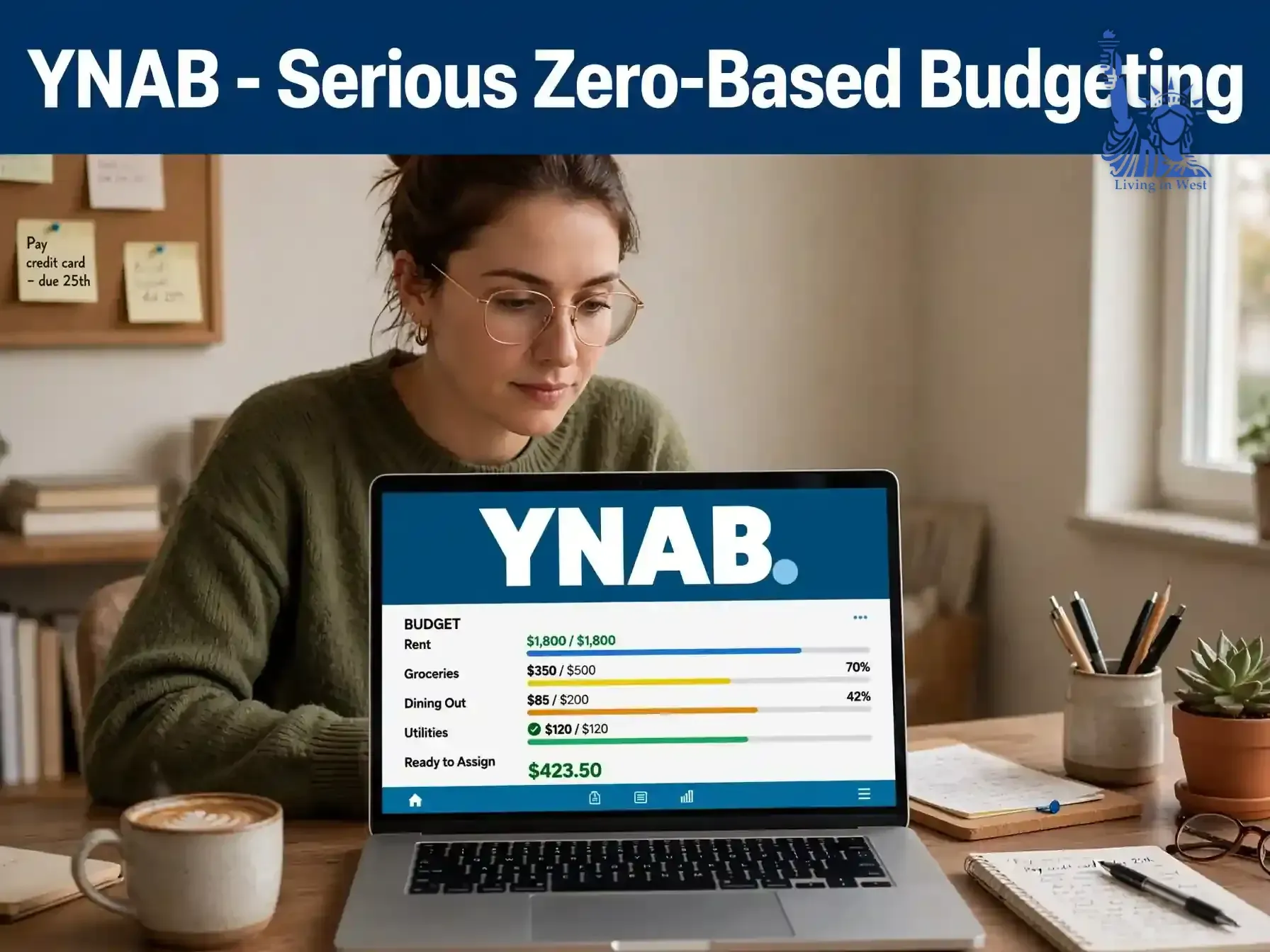
4. YNAB — Best for People Who Want a Serious Budgeting System
YNAB stands for "You Need A Budget."
Unlike apps that mainly show where your money went, YNAB focuses heavily on deciding where your money should go before you spend it.
The system is based around assigning available money to specific priorities and expenses.
How Much Does YNAB Cost?
As of 2026, YNAB lists:
- $109 per year
- $14.99 per month
- 34-day free trial
The annual plan works out to about $9.08 per month when paid annually.
Why Is YNAB Different?
YNAB is built around a budgeting method rather than simply providing a financial dashboard.
Users can plan for:
- Rent or mortgage
- Groceries
- Utilities
- Transportation
- Debt payments
- Emergency savings
- Travel
- Annual expenses
- Other financial goals
YNAB also allows a subscription to be shared with a partner, family or close-knit group of up to six people under its YNAB Together feature.
YNAB publishes user-reported outcomes, including an average of $600 saved in the first month and more than $6,000 in the first year. These are company-reported averages and should not be treated as guaranteed savings for every user.
YNAB Is Best For:
- People who struggle with overspending
- Zero-based budgeting
- Debt repayment planning
- Saving toward specific goals
- Families and partners
- People who want a structured budgeting method
2026–2027 Takeaway
If your goal is not simply to track your money but to actively control where every dollar goes, YNAB is one of the strongest options.
Which Personal Finance App Is Best for Americans in 2026–2027?
There is no single winner for everyone.
The best app depends on what you are trying to accomplish with your money.
Choose Rocket Money If:
You frequently forget about subscriptions, recurring charges or monthly bills and want help identifying them.
Choose Empower If:
You want a free financial dashboard focused on net worth, investments, retirement and your overall financial picture.
Choose Monarch Money If:
You want an all-in-one platform for household finances, budgeting, goals and shared money management.
Choose YNAB If:
You want a structured budgeting system that helps you decide how to use your money before you spend it.
How These Apps Can Help Americans Save Time and Money
The biggest benefit of personal finance apps is not simply having another app on your phone.
The real benefit is visibility.
When financial information is spread across checking accounts, credit cards, investment accounts and recurring bills, it can be difficult to understand the complete picture.
A financial app can organize much of that information in one place.
1. Better Spending Awareness
Instead of waiting until the end of the month to look at a bank statement, users can monitor spending throughout the month.
This can make unnecessary spending easier to identify.
2. Better Subscription Management
Subscription services can create small recurring expenses that are easy to overlook.
Tools such as Rocket Money can help users identify recurring subscriptions and decide which ones are still worth paying for.
3. Better Budget Planning
Budgeting tools can help households plan for rent, groceries, utilities, transportation, debt payments and savings.
That can make monthly cash flow easier to understand.
4. Better Long-Term Financial Planning
Tools such as Empower and Monarch can give users a broader picture of their assets, investments, goals and net worth.
This can help users think beyond the next paycheck.
How Personal Finance Apps Can Benefit the U.S. Economy
The benefits are not limited to individual users.
When millions of consumers become more aware of their spending, budgeting and financial goals, better household financial management can potentially support healthier consumer behavior.
More Financial Awareness
People who understand their spending patterns may be better positioned to make informed purchasing decisions.
Better Household Budgeting
Budgeting can help families allocate money toward necessities, debt payments, savings and long-term goals.
Greater Digital Financial Management
The growing use of financial technology also supports the wider U.S. fintech ecosystem, creating demand for financial software, data connectivity, cybersecurity and digital financial services.
More Focus on Saving and Investing
Apps that help users monitor investments and net worth can encourage people to pay more attention to retirement and long-term financial planning.
However, a budgeting app does not automatically make someone financially successful. The result still depends on how consistently the user applies the information and decisions provided by the tool.
Are These Apps Replacements for Banks or Financial Advisors?
No.
Personal finance apps are generally designed to help users organize and understand financial information.
They do not automatically replace a bank, tax professional, financial planner or investment advisor.
Users should also understand what information an app accesses before connecting financial accounts and should review each company's privacy, security and data policies.
What Happened to Mint?
Mint was one of the best-known budgeting and personal finance services in the United States, but Intuit shut down Mint in early 2024.
Since then, Americans looking for alternatives have increasingly considered other financial-management platforms.
However, it is better to describe Monarch, Empower, Rocket Money and YNAB as Mint alternatives, rather than calling any one of them the official successor to Mint.
Each platform has a different approach.
- Rocket Money focuses heavily on subscriptions and recurring expenses.
- Empower focuses strongly on net worth, investments and financial planning.
- Monarch provides broad household money management.
- YNAB focuses on proactive budgeting.
Final Verdict: Which One Should You Use in 2026–2027?
If you want one simple answer, start with your biggest financial problem.
Best for subscriptions: Rocket Money
Best free option for investments and net worth: Empower Personal Dashboard
Best for couples and household finances: Monarch Money
Best for disciplined budgeting: YNAB
The most important thing is not choosing the app with the longest feature list.
The best financial app is the one you will actually use consistently.
Frequently Asked Questions
Is Rocket Money free in 2026?
Yes. Rocket Money offers a free plan with core features. Premium provides additional tools, including advanced budgeting and subscription cancellation features. Rocket Money's 2026 information lists Premium pricing generally around $7–$14 per month, although pricing can vary.
Is Empower Personal Dashboard really free?
Yes. Empower offers its Personal Dashboard as a free financial management tool for tracking and organizing financial information. Its paid financial advisory services are separate from the free dashboard.
How much does Monarch Money cost in 2026?
Monarch's Core plan is currently listed at $99.99 per year or $14.99 per month. The company also offers a higher-priced Plus plan. Prices may change.
How much does YNAB cost in 2026?
YNAB currently costs $109 per year or $14.99 per month. It also offers a 34-day free trial.
Which is better, Rocket Money or YNAB?
It depends on your goal. Rocket Money is stronger for subscription and recurring-expense management, while YNAB is designed around proactive, structured budgeting.
Which is better, Empower or Monarch?
Empower may be a better fit if your priority is free net-worth and investment tracking. Monarch may be better if you want a broader household budgeting and money-management system.
Is Monarch Money only available in the USA?
No. Monarch is also available in Canada, so it should not be described as a U.S.-only financial app.
Can couples use YNAB together?
Yes. YNAB's YNAB Together feature allows a subscription to be shared with partners, family members and other close-knit groups of up to six people.
Can Rocket Money cancel every subscription automatically?
No. Rocket Money can help Premium members cancel supported subscriptions, but some merchants may require manual cancellation or additional action.
Which personal finance app is best for 2026–2027?
There is no universal winner. Rocket Money is strongest for subscriptions, Empower for free financial and investment tracking, Monarch for household money management, and YNAB for structured budgeting.

Editorial Team