1: Understanding Rare U.S. Visa Categories
The United States issues millions of visas and processes immigration applications every year. Most applicants are familiar with common categories such as B-1/B-2 visitor visas, F-1 student visas, H-1B employment visas, and family-based immigrant visas.
However, U.S. immigration law also contains several less common classifications designed for very specific circumstances.
Some are intended for people who provide important information to law enforcement agencies. Others cover specialized maritime activities, certain family members of international organization employees, or individuals who have experienced human trafficking.
This article examines four such categories:
- S Visa: For certain witnesses and informants who assist U.S. law enforcement or intelligence agencies.
- C-4/D-3 Visa: For qualifying foreign nationals involved in specialized lightering activities and related maritime work.
- N-8/N-9 Classifications: For certain parents and children connected to employees of international organizations.
- T Visa: For eligible victims of severe forms of human trafficking.
Why are these visas considered rare?
These categories are not designed for ordinary tourism, study, or general employment. Each has specific eligibility requirements, government procedures, and limitations.
For example:
- An S Visa generally requires a law enforcement agency to initiate and support the process.
- A C-4/D-3 classification is associated with a narrow maritime activity.
- N-8 and N-9 classifications apply to particular family relationships involving qualifying international organization employees.
- A T Visa requires evidence of severe human trafficking and satisfaction of additional statutory conditions.
Visa issuance does not always mean permanent immigration
One important distinction is the difference between a visa and immigration status.
A visa issued by a U.S. embassy or consulate generally allows a person to travel to a U.S. port of entry and request admission. U.S. Customs and Border Protection determines whether the person may enter and the period of authorized admission.
Some visa classifications are temporary, even when they offer a possible route to permanent residence. Others may allow a person to remain in the United States for a limited period without providing a direct Green Card route.
For this reason, the number of visas issued should not automatically be treated as the number of people who obtained permanent immigration status.

2: S Visa – The Visa for Certain Witnesses and Informants
The S Visa is one of the most unusual U.S. nonimmigrant classifications. It is designed for certain individuals who provide important information or assistance to U.S. law enforcement or intelligence agencies.
It is sometimes described informally as an informant or witness visa.
Unlike ordinary employment or visitor visas, an individual generally cannot apply for an S Visa independently through the normal public visa application process. A qualifying U.S. law enforcement agency must initiate and support the relevant procedure.
What is the purpose of the S Visa?
The S classification allows certain foreign nationals to enter or remain in the United States when their information or cooperation is considered important to government investigations or national security.
There are two principal categories:
S-5: Criminal organization information
This category is for certain individuals who possess critical and reliable information concerning criminal organizations or enterprises and are willing to provide that information to U.S. law enforcement authorities.
Their information must satisfy the statutory requirements and be considered important to the relevant investigation or prosecution.
S-6: Terrorism-related information
This category applies to certain individuals who provide critical and reliable information concerning terrorist organizations, terrorist activities, or other qualifying terrorism-related matters.
The information must meet the applicable legal requirements, including its importance to the investigation or prevention of terrorist activity.
What is the S-7 classification?
S-7 is a related classification for certain qualifying family members of S-5 or S-6 principals.
It does not create a general family sponsorship program. Eligibility depends on the applicable statutory and regulatory requirements and the principal applicant's circumstances.
Who can apply?
An individual cannot simply submit an ordinary visa application and request S-5 or S-6 classification.
The process involves a qualifying U.S. law enforcement agency, which must support the case and complete the required government procedures.
The process generally involves:
- A law enforcement agency identifies an individual who may qualify.
- The agency evaluates the importance and reliability of the information.
- The agency prepares and submits the required documentation.
- The relevant government authorities review the request.
- If approved, the individual completes the required visa and admission procedures.
Form I-854, Inter-Agency Alien Witness and Informant Record, is an important part of the government process.
How long can an S Visa holder stay?
S classification is subject to strict statutory limits.
Under Section 101(a)(15)(S) and Section 214(k) of the Immigration and Nationality Act, the maximum admission period for the principal S-5 and S-6 classifications is generally three years. The statutory framework does not provide an ordinary extension beyond that maximum period.
The exact admission and family-member arrangements depend on the relevant classification and case circumstances.
Can an S Visa holder obtain a Green Card?
Potentially, yes.
Certain S nonimmigrants may be eligible to apply for adjustment of status under Section 245(j) of the Immigration and Nationality Act.
However, this is not automatic. The applicant must satisfy the relevant statutory conditions, and the required government support and certification are important parts of the process.
How many S Visas were issued?
The U.S. Department of State's FY2024 worldwide nonimmigrant visa workload table reports a combined S-category line.
The published table reports zero issuances for that combined reporting line in FY2024.
It is important not to interpret this as a separate figure for each S subcategory. The published table does not provide separate S-5, S-6, and S-7 issuance totals in that line.
3: C-4/D-3 Visa – A Specialized Maritime Classification
The C-4/D-3 classification is another uncommon U.S. visa category. It relates to specialized maritime activities rather than ordinary passenger travel or general employment.
It is associated with qualifying foreign nationals involved in lightering operations.
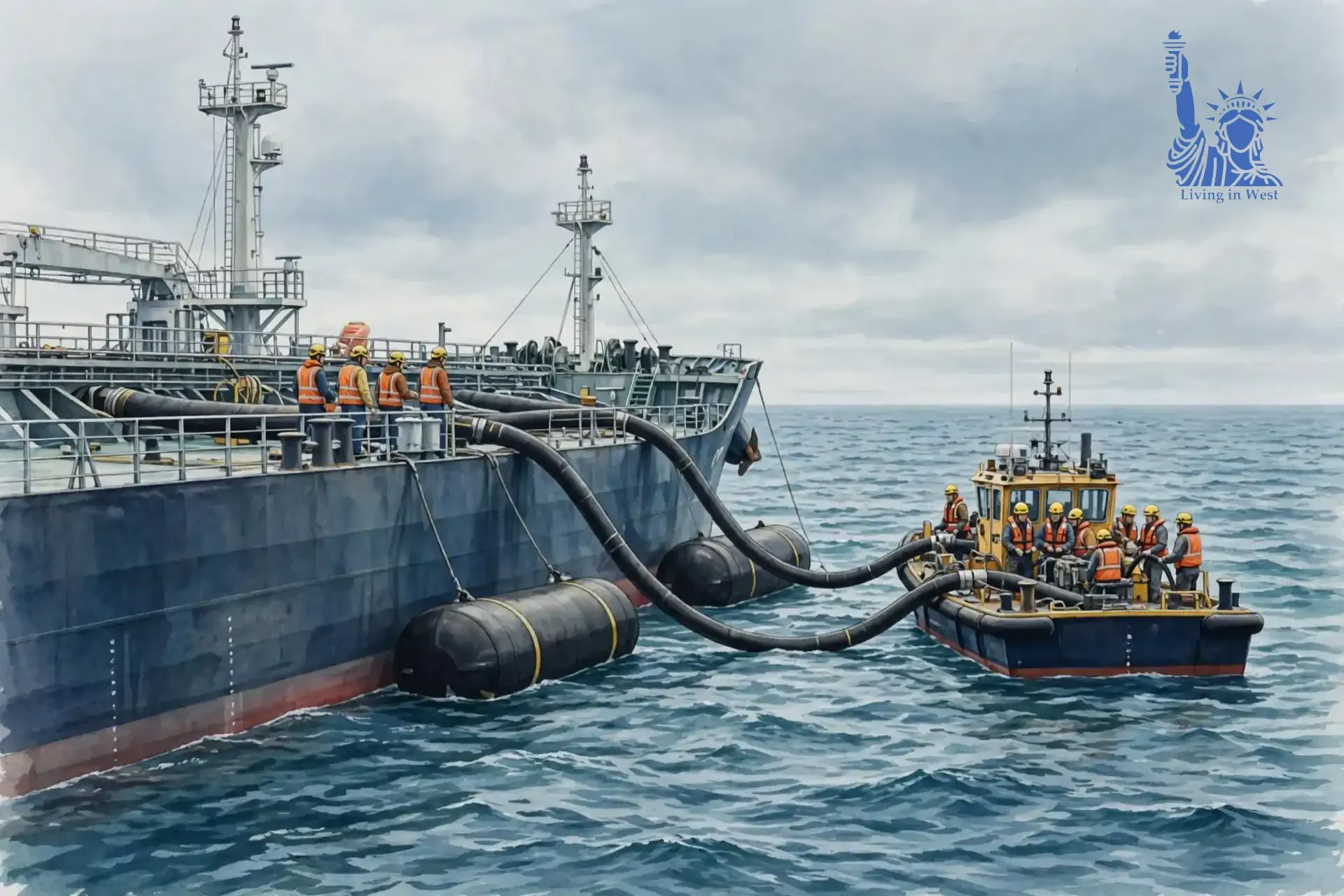
What is lightering?
Lightering is a maritime operation in which cargo is transferred from one vessel to another, often to reduce the draft of a large ship or allow cargo to be transported to a location where the larger vessel cannot safely enter.
For example, a large tanker may transfer part of its cargo to a smaller vessel before entering a port with depth restrictions.
These operations require specialized vessels, trained personnel, and compliance with applicable maritime regulations.
<image placeholder="A maritime lightering operation showing cargo transfer between a large tanker and a smaller vessel" />
What does C-4 mean?
C-4 is a specialized nonimmigrant classification associated with qualifying lightering activity.
It is not a general-purpose visa for every seafarer, shipping employee, or person working in the maritime industry.
Eligibility depends on the specific activity and the applicable immigration requirements.
What does D-3 mean?
D-3 is a related crew classification that may apply in qualifying circumstances connected with the relevant maritime activity.
The C-4/D-3 combination should not be confused with an ordinary C-1/D crew visa. The legal basis and qualifying activity are different.
How long can someone stay?
The applicable admission period depends on the classification and the circumstances of the trip.
The C-4 category has a specific statutory limitation. Under the applicable provisions, qualifying lightering activity is subject to a maximum period of 180 days.
Applicants should confirm the authorized admission period shown in their immigration records rather than assuming that every C-4/D-3 traveler receives the same period.
How many C-4/D-3 visas were issued?
The FY2024 Department of State worldwide nonimmigrant visa workload table reports:
| Visa classification | FY2024 issuances |
|---|---|
| C-4 | 1 |
| C-4/D-3 | 4 |
| Combined total | 5 |
The table reports C-4/D-3 as a combined line. It does not provide a separate D-3 issuance figure in that row.
How rare is this category compared with ordinary crew visas?
The same FY2024 table reports 324,098 C-1/D issuances.
| Classification | FY2024 issuances |
|---|---|
| C-4 | 1 |
| C-4/D-3 | 4 |
| C-1/D | 324,098 |
This comparison shows how narrowly the C-4/D-3 classification is used compared with the much more common crew-related category.

4: N-8 and N-9 – Special Family Classifications for International Organization Employees
N-8 and N-9 are unusual U.S. nonimmigrant classifications connected to certain employees of international organizations.
They are not ordinary family visitor visas. They apply to specific qualifying family relationships under U.S. immigration law.
The classifications are particularly important because the eligibility of a parent or child depends on the underlying employee's immigration classification.
What is the N-8 classification?
N-8 generally applies to a qualifying parent of a person classified as SK-3 or SN-3.
It is important to understand the family relationship correctly:
- The SK-1 or SN-1 individual is the qualifying international organization employee.
- A qualifying child of that employee may hold an SK-3 or SN-3 classification.
- The parent of that qualifying SK-3 or SN-3 child may be eligible for N-8 classification.
N-8 is therefore not simply a visa for the parent of any international organization employee.
What is the N-9 classification?
N-9 applies to certain qualifying children of:
- An N-8 principal;
- An SK-1, SK-2, or SK-4 principal; or
- An SN-1, SN-2, or SN-4 principal.
The exact relationship and underlying classification must satisfy the applicable immigration rules.
What are SK and SN classifications?
SK and SN are classifications associated with qualifying employees of international organizations and certain related family members.
Their meaning depends on the person's role and relationship under the relevant immigration provisions.
They should not be treated as interchangeable categories. The underlying principal classification determines which family relationships may qualify for N-8 or N-9.
How long can N-8 and N-9 holders stay?
N-8 and N-9 nonimmigrants may be admitted for a period of up to three years, subject to the applicable admission rules.
Extensions may be available in increments of up to three years, depending on continuing eligibility.
The visa validity period is determined under the applicable reciprocity schedule for G-4 visas. Visa validity and authorized U.S. stay are separate matters: the admission record controls the authorized period of stay.
What happens if a child ages out or marries?
The qualifying relationship is important.
N-8 and N-9 status can terminate when the underlying individual no longer meets the immigration-law definition of a qualifying child.
For example, a child may lose eligibility after reaching the applicable age limit or marrying, depending on the governing definition and classification.
Applicants should not assume that a dependent classification continues indefinitely.
Can N-8 and N-9 holders work in the United States?
Employment may be authorized incident to qualifying N status under the applicable regulations.
This is different from categories where the person must first obtain a separate employment authorization document before beginning work.
The individual should still verify that the particular employment and status circumstances satisfy the governing rules.
FY2024 N-8 and N-9 visa statistics
The FY2024 worldwide nonimmigrant visa workload table reports:
| Classification | Visas issued | Visas refused |
|---|---|---|
| N-8 | 10 | Not specified here |
| N-9 | 0 | 3 |
These numbers reflect visa workload reporting. They do not represent every person who may hold N-8 or N-9 status inside the United States.

5: T Visa – Protection for Victims of Human Trafficking
The T Visa is a humanitarian immigration classification designed to protect eligible victims of severe forms of human trafficking.
It allows qualifying individuals to remain in the United States temporarily and may provide a pathway to permanent residence if the person later meets the relevant requirements.
The T Visa is different from an ordinary employment visa. Its purpose is protection and assistance for people who have experienced serious exploitation.
What is severe human trafficking?
U.S. immigration law recognizes two principal forms of severe trafficking.
1. Sex trafficking
Sex trafficking involves a commercial sex act induced by force, fraud, or coercion, or where the person induced to perform the act is under 18 years of age.
2. Labor trafficking
Labor trafficking involves the recruitment, harboring, transportation, provision, or obtaining of a person for labor or services through force, fraud, or coercion for the purpose of involuntary servitude, peonage, debt bondage, or slavery.
Not every workplace violation, unpaid wage dispute, or difficult employment situation automatically qualifies as severe human trafficking.
The legal definition requires specific facts and evidence.
Five important eligibility requirements
A principal T-1 applicant generally must satisfy five central requirements:
1. The applicant must be a victim of a severe form of trafficking
The person must have experienced qualifying sex trafficking or labor trafficking under U.S. law.
2. The applicant must be physically present in the United States
The applicant must satisfy the statutory physical-presence requirement on account of the trafficking, including the applicable rules concerning entry, escape, and continued presence.
3. The applicant must comply with reasonable law enforcement requests, unless an exception applies
Applicants generally must comply with reasonable requests for assistance in the investigation or prosecution of trafficking.
However, an exception may apply where the person was under 18 when at least one qualifying trafficking act occurred, or where trauma or physical or psychological harm makes cooperation unreasonable.
4. The applicant must demonstrate extreme hardship involving unusual and severe harm if removed
The applicant must establish that removal from the United States would cause extreme hardship involving unusual and severe harm.
This is a specific legal standard, not simply a general claim that life would be difficult in another country.
5. The applicant must be admissible or qualify for an applicable waiver
The applicant must satisfy the applicable admissibility requirements or obtain a waiver where the law allows one.
How does someone apply for a T Visa?
The principal applicant generally files:
- Form I-914, Application for T Nonimmigrant Status;
- A personal statement describing the trafficking experience;
- Supporting evidence relevant to eligibility;
- Any required additional documentation.
A law enforcement declaration may help support an application, but it is not an absolute requirement in every case.
USCIS evaluates the application and supporting evidence under the applicable legal standards.
What is Bona Fide Determination?
USCIS may conduct a Bona Fide Determination, commonly called BFD, for qualifying pending T applications.
For applications filed on or after August 28, 2024, the applicant generally must have filed a properly completed application, including a signed personal statement, and must satisfy the applicable initial background-check and national-security requirements.
If USCIS determines that the application is bona fide and the other requirements are met, it may exercise discretion to grant deferred action and employment authorization while the application remains pending.
A BFD is not final T-1 approval. It does not mean that the applicant has automatically received permanent residence.
A qualifying principal applicant must also submit the appropriate Form I-765 to request employment authorization where required.
Eligible family members may have separate requirements, including the relevant Form I-914 Supplement A and supporting relationship evidence.
How long does T Visa processing take?
USCIS publishes historical median processing-time data for Form I-914.
The following figures are the reported fiscal-year medians:
| Fiscal year | Median Form I-914 processing time |
|---|---|
| FY2021 | 18.0 months |
| FY2022 | 12.9 months |
| FY2023 | 12.3 months |
| FY2024 | 14.9 months |
| FY2025 | 20.8 months |
| FY2026 | 28.6 months |
FY2026 ended on September 30, 2026. The 28.6-month figure is the full fiscal-year median shown in USCIS historical data.
A median is not an average and does not guarantee that an individual case will be completed within that period. Actual processing depends on the application, evidence, background checks, requests for additional information, and USCIS workload.
Applicants should check the current USCIS processing-time tool for the latest case-processing information.
How long can a T Visa holder stay?
T-1 status may generally be granted for an initial period of up to four years, subject to the applicable rules.
Extensions may be available in qualifying circumstances.
T-1 nonimmigrants are generally authorized to work incident to their status. Derivative family members may have separate employment authorization requirements.
Which family members can receive T derivative status?
The available derivative classifications depend on the principal T-1 applicant's age and the family relationship.
| Classification | Eligible family relationship |
|---|---|
| T-2 | Spouse of the T-1 principal |
| T-3 | Child of the T-1 principal |
| T-4 | Parent of a T-1 principal who was under 21 when the relevant application was filed, subject to the rules |
| T-5 | Unmarried sibling under 18 of a qualifying T-1 principal who was under 21, subject to the rules |
| T-6 | Certain qualifying family members of a derivative beneficiary who face a present danger of retaliation |
Special rules can allow certain parents and siblings to qualify when they face a present danger of retaliation because of the principal's escape from trafficking or cooperation with law enforcement.
Therefore, the family eligibility rules should not be reduced to a simple age-based table without considering the retaliation provisions.
How many T derivative visas were issued?
The U.S. Department of Justice's FY2024 Human Trafficking Report provides a breakdown of certain T derivative visa issuances.
| Derivative category | FY2024 issuances |
|---|---|
| T-2 | 72 |
| T-3 | 291 |
| T-4 | 56 |
| T-5 | 36 |
| T-6 | 24 |
| **Total** | **479** |
The total of 479 represents the reported T-2 through T-6 derivative visa issuances. It is not the number of principal T-1 applicants approved.
Can a T Visa holder obtain a Green Card?
Yes, certain T-1 nonimmigrants may apply for lawful permanent residence under Section 245(l) of the Immigration and Nationality Act.
Generally, the applicant must satisfy the applicable continuous physical-presence requirement and other statutory conditions.
The usual route involves at least three years of continuous physical presence since lawful admission as a T-1 nonimmigrant.
A separate rule may apply where the relevant investigation or prosecution has been completed, allowing an application after the shorter applicable period.
The applicant must also satisfy the relevant requirements concerning continued T status, admissibility or waiver, good moral character, and reasonable cooperation with law enforcement, unless an applicable exception applies.
Certain lengthy absences can interrupt continuous physical presence. Under the applicable rules, an absence exceeding 90 consecutive days or 180 days in total may break continuity unless an exception applies.

6: U.S. Immigration Policy Changes and Their Impact on Applicants
Visa eligibility is only one part of the immigration process. Applicants must also understand government screening policies, court decisions, and changes in visa appointment procedures.
Several important developments in 2026 affected immigration processing.
The 39-country USCIS policy restrictions
In 2026, litigation challenged several government policies affecting immigration applications involving nationals of certain countries.
The policies included:
- A Benefits Hold Policy;
- A Global Asylum Hold Policy;
- A Comprehensive Re-Review Policy; and
- A Country-Specific Factors Policy.
The litigation resulted in court orders affecting the implementation of these policies.
On August 14, 2026, the U.S. Court of Appeals for the First Circuit issued an order addressing the government's request for a stay.
The order granted a stay concerning the Comprehensive Re-Review Policy while denying the requested stay concerning the other challenged policies.
The district court had entered a Rule 54(b) partial final judgment on June 11, 2026. This was a partial judgment, not a final resolution of every issue in the entire litigation.
Was Pakistan included in the 39-country USCIS hold?
According to the federal court record in the Dorcas litigation, Pakistan was not among the 39 countries subject to the specific USCIS Benefits Hold, Comprehensive Re-Review, or Country-Specific Factors policies discussed in that case.
This distinction matters because a country appearing in one immigration policy does not automatically mean it is included in every other U.S. immigration restriction.
Pakistan's exclusion from those specific 39-country policies does not remove ordinary security checks, admissibility requirements, or other applicable immigration procedures.
The separate 75-country immigrant visa issuance pause
A separate U.S. government policy announced in January 2026 affected immigrant visa issuance for nationals of 75 countries, including Pakistan.
This was an immigrant visa issuance policy. It should not be confused with a general suspension of all nonimmigrant visas.
On August 28, 2026, the U.S. Department of State confirmed that the 75-country immigrant visa issuance pause was no longer in effect as of August 21, 2026, following the relevant court order.
This means the January pause should not be described as still active after that date.
Were immigrant visa interviews also affected?
Yes, separate changes to immigrant visa appointment procedures were reported in 2026.
A September 10, 2026 State Department cable instructed consular posts to reschedule affected immigrant visa interview appointments and communicate new appointment dates and times to applicants.
These scheduling adjustments were connected to changes in public-charge training and immigrant visa adjudication procedures.
Applicants should follow the latest instructions from their specific U.S. embassy or consulate. A previous appointment notice should not be treated as valid if the post has issued a new instruction.
Did these policies automatically affect N-8 and N-9 applicants?
This question requires care.
N-8 and N-9 are nonimmigrant classifications, although the Department of State's Foreign Affairs Manual discusses them within a section titled "Other IV and Quasi-IV Classifications."
The public information reviewed does not conclusively establish that every immigrant visa appointment adjustment applied to N-8 and N-9 cases in exactly the same way.
Applicants should therefore confirm their individual case instructions with the relevant consular post rather than assuming that an immigrant visa policy automatically applies to these classifications.
What should applicants do?
Before attending an interview or submitting additional documents, applicants should:
- Check the official U.S. embassy or consulate website.
- Read the latest appointment and document instructions.
- Confirm whether their visa category is affected by a specific policy.
- Avoid relying on social media posts or outdated appointment notices.
- Seek qualified immigration legal advice where a policy change may affect their case.
7: Comparison, FAQs and Final Explanation
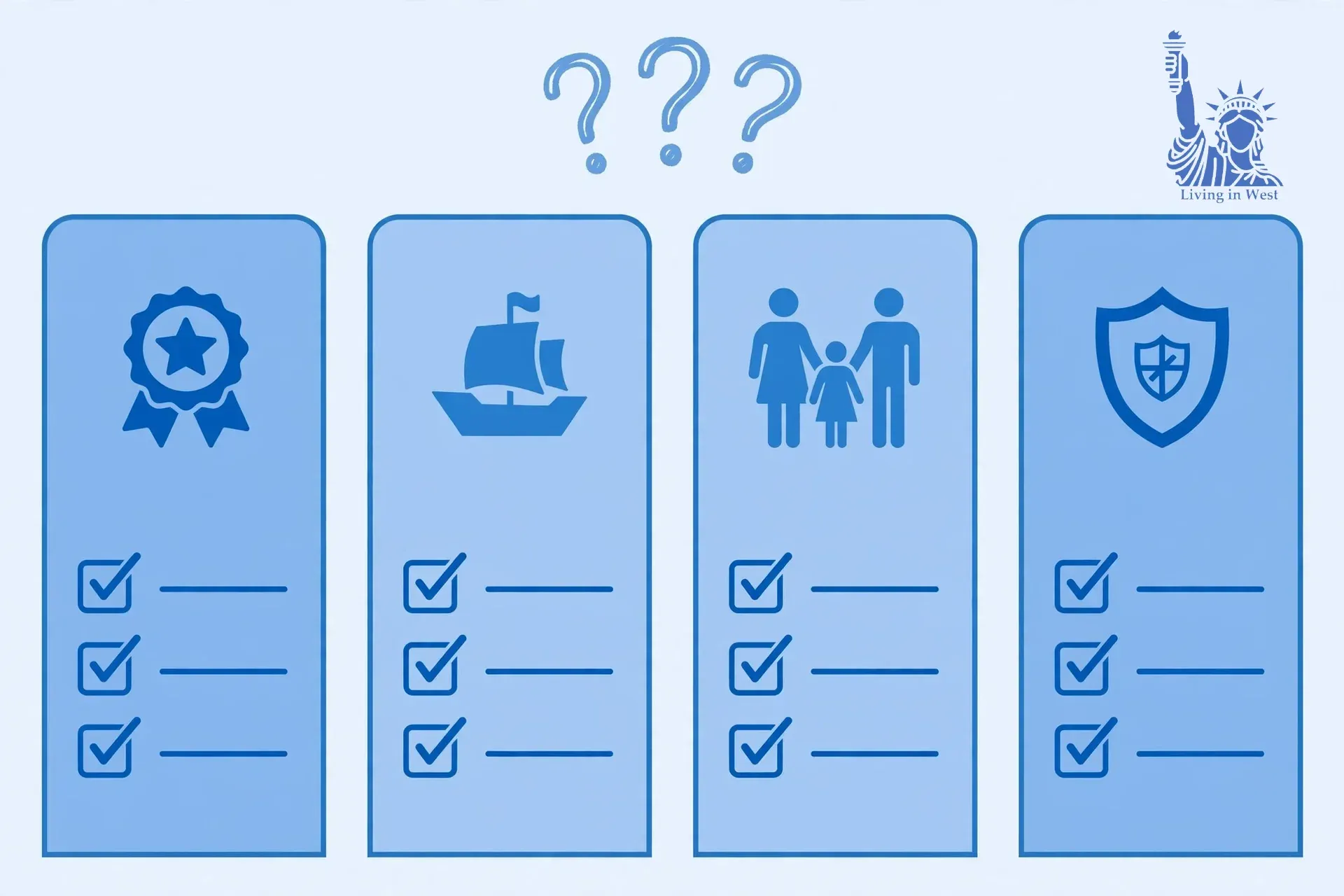
The four visa categories discussed in this article serve very different purposes. Their eligibility requirements, government procedures, and possible immigration benefits should not be confused.
Comparison of the four uncommon U.S. visa categories
| Feature | S Visa | C-4/D-3 | N-8/N-9 | T Visa |
|---|---|---|---|---|
| Main purpose | Law enforcement and intelligence cooperation | Specialized maritime lightering activity | Qualifying family relationships involving international organization employees | Protection of eligible trafficking victims |
| Main applicants | Certain witnesses and informants | Qualifying maritime personnel | Certain parents and children | Victims of severe human trafficking |
| Application process | Government agency-supported process | Visa application under specific maritime rules | Based on qualifying underlying relationship | Form I-914 and supporting evidence |
| Employment | Depends on classification and authorization | Depends on qualifying activity | Employment may be authorized incident to status | T-1 employment authorized incident to status |
| Possible Green Card route | Yes, under specific statutory conditions | No general direct route under this classification | No general direct route under this classification | Yes, under Section 245(l), if requirements are met |
| Main limitation | Strict government sponsorship and statutory conditions | Narrow qualifying activity and time limit | Strict family relationship and age requirements | Extensive humanitarian and legal eligibility requirements |
Which of these visas is the rarest?
Based on the FY2024 Department of State figures discussed above, the C-4/D-3 category recorded a combined total of only five issuances.
The S category's combined reporting line recorded zero issuances in the same table.
However, it would be misleading to rank all four categories using one simple numerical comparison because the available statistics are not always reported in the same format.
For example:
- The S table reports a combined category line.
- C-4/D-3 has a specific combined reporting line.
- N-8 and N-9 are reported separately.
- The 479 T figure refers to derivative visa issuances, not principal T-1 approvals.
- T Visa processing-time statistics measure application processing rather than visa issuance.
The figures therefore demonstrate how uncommon these categories are, but they are not a perfectly comparable count of every person holding each immigration status.
Frequently Asked Questions
1. What is the rarest U.S. visa category?
There is no single answer without specifying the reporting period and measurement. In the FY2024 worldwide nonimmigrant visa workload table, the combined S-category line reported zero issuances, while C-4 and C-4/D-3 together reported five.
2. Can an ordinary person apply for an S Visa?
No. The S Visa generally requires a qualifying U.S. law enforcement agency to identify and support the individual through the government process.
3. Is C-4/D-3 the same as a normal seaman visa?
No. C-4/D-3 is associated with specific qualifying lightering activity. It should not be confused with the much more common C-1/D crew classification.
4. Can an N-8 visa holder work in the United States?
Qualifying N-8 nonimmigrants may be authorized to work incident to their status under the applicable regulations. The person's actual status and employment circumstances must meet the relevant requirements.
5. What is the difference between N-8 and N-9?
N-8 generally applies to a qualifying parent of an SK-3 or SN-3 individual. N-9 applies to certain qualifying children of N-8 and specified SK or SN principals.
6. Does a T Visa automatically give someone a Green Card?
No. A T Visa may provide a pathway to permanent residence, but the applicant must satisfy the continuous physical-presence, admissibility, good-moral-character, and other applicable statutory requirements.
7. How many T derivative visas were issued in FY2024?
The DOJ FY2024 Human Trafficking Report recorded 479 T-2 through T-6 derivative visa issuances. This figure does not represent principal T-1 approvals.
8. How long does Form I-914 processing take?
USCIS reported a median processing time of 28.6 months for FY2026. This is a historical fiscal-year median, not a guarantee for an individual application. Current case-processing information should be checked through USCIS.
9. Was Pakistan included in the 39-country USCIS hold?
The federal court record in the Dorcas litigation states that Pakistan was not among the 39 countries subject to the specific policies challenged in that case. This does not exempt Pakistani applicants from ordinary immigration screening.
10. Is the 75-country immigrant visa pause still active?
The U.S. Department of State confirmed on August 28, 2026, that the pause was no longer in effect as of August 21, 2026.
Final Thoughts
S, C-4/D-3, N-8/N-9, and T are among the less commonly encountered U.S. immigration classifications because each serves a narrow legal purpose.
The S Visa is connected to qualifying law enforcement cooperation. C-4/D-3 concerns specialized maritime activity. N-8 and N-9 cover specific family relationships involving international organization employees. The T Visa provides protection for eligible victims of severe human trafficking.
Their rarity does not make them interchangeable, and their benefits should never be assumed without reviewing the relevant legal requirements.
Anyone considering one of these classifications should consult the applicable U.S. immigration law, official government guidance, and a qualified immigration attorney before making decisions.
Official Sources and Legal References
The following government sources provide the legal and statistical basis for this article:
- U.S. Department of State – Nonimmigrant Visa Statistics
- Annual and monthly nonimmigrant visa workload and issuance information.
- U.S. Department of State – Foreign Affairs Manual, 9 FAM 402.6
- Guidance concerning S, T, and U nonimmigrant classifications.
- Immigration and Nationality Act – 8 U.S.C. § 1184(k)
- Statutory provisions concerning S nonimmigrant classifications and numerical limits.
- U.S. Department of State – Foreign Affairs Manual, 9 FAM 502.7
- Guidance concerning N-8 and N-9 classifications.
- USCIS – Form I-914, Application for T Nonimmigrant Status
- Application requirements and supporting documentation for T status.
- USCIS – Historical National Median Processing Times
- Historical Form I-914 processing-time statistics.
- 8 CFR § 245.23
- Adjustment of status provisions for qualifying T nonimmigrants.
- U.S. Department of Justice – FY2024 Human Trafficking Report
- T derivative visa issuance statistics.
- U.S. Department of State – August 28, 2026 Notice
- Update concerning the January 2026 immigrant visa issuance pause affecting nationals of 75 countries.
- Federal Court Records – Dorcas Litigation
- Court proceedings concerning the challenged immigration policies.
Important: Immigration laws, visa procedures, and processing times can change. This article is for general informational and educational purposes only. It is not legal advice and does not create an attorney-client relationship. Readers should verify current requirements through official U.S. government sources or consult a qualified immigration attorney.

Editorial Team