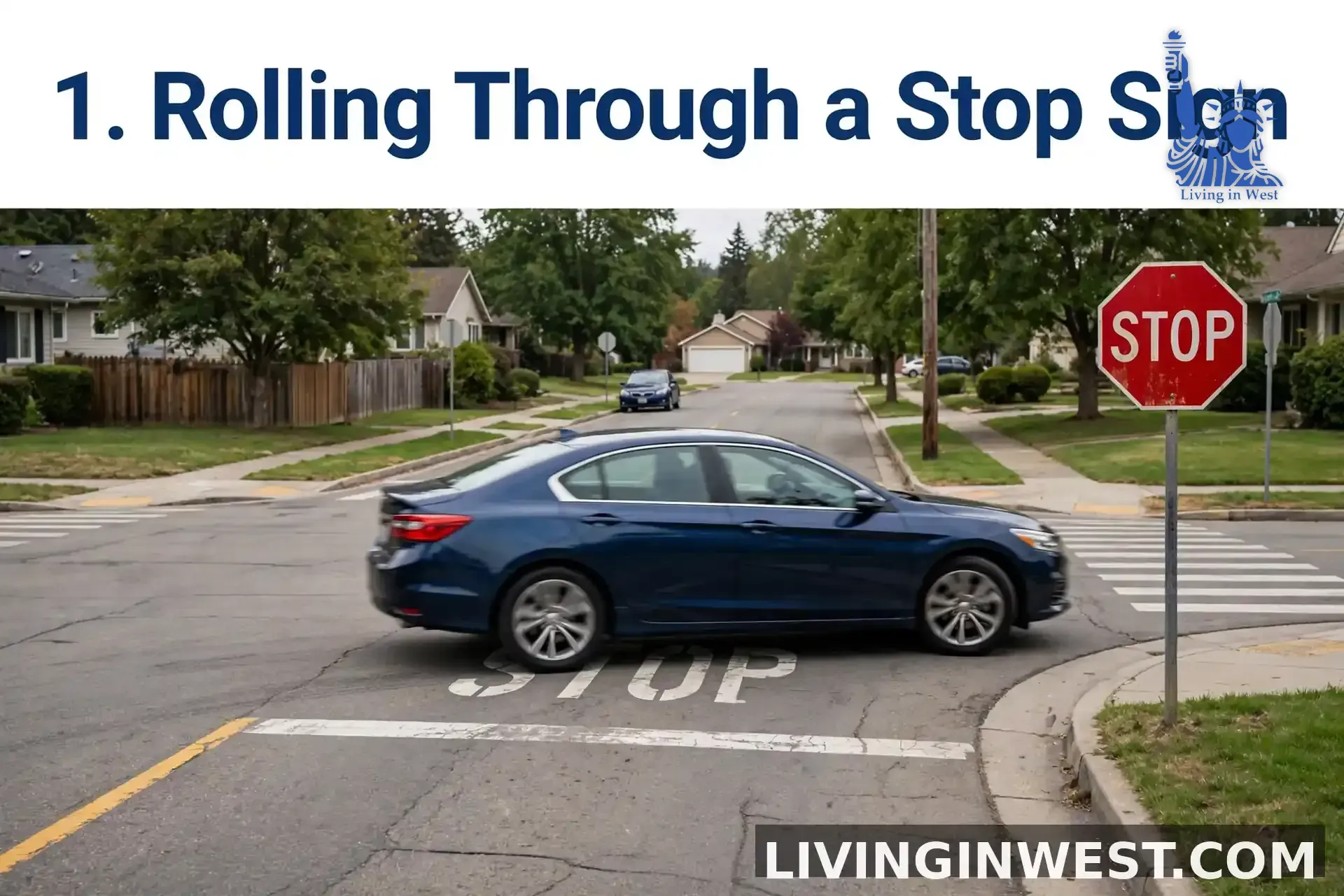
1. Rolling Through a Stop Sign
The Common Mistake
One of the easiest ways to make a serious mistake during a road test is to perform a rolling stop.
A driver approaches a STOP sign, slows down significantly, but the vehicle never completely stops. The wheels continue moving slowly before the driver proceeds.
It may feel like a stop to the driver, but an examiner can see that the vehicle never came to a complete stop.
What You Should Do Instead
Come to a complete stop before proceeding.
You should stop at the appropriate stopping point, such as the stop line. If there is no stop line, the exact stopping position can depend on the road markings and state rules.
After stopping, check the traffic situation and proceed only when it is safe.
California DMV's driving-test criteria specifically require the vehicle to come to a full stop without unnecessary forward movement or rolling backward.
You do not need to count three seconds unless your state specifically teaches or requires something different. A fixed three-second waiting rule is not a universal U.S. driving-test requirement.
Better Test Habit
Think:
STOP → CHECK → PROCEED
Do not think:
Slow down → look → go.
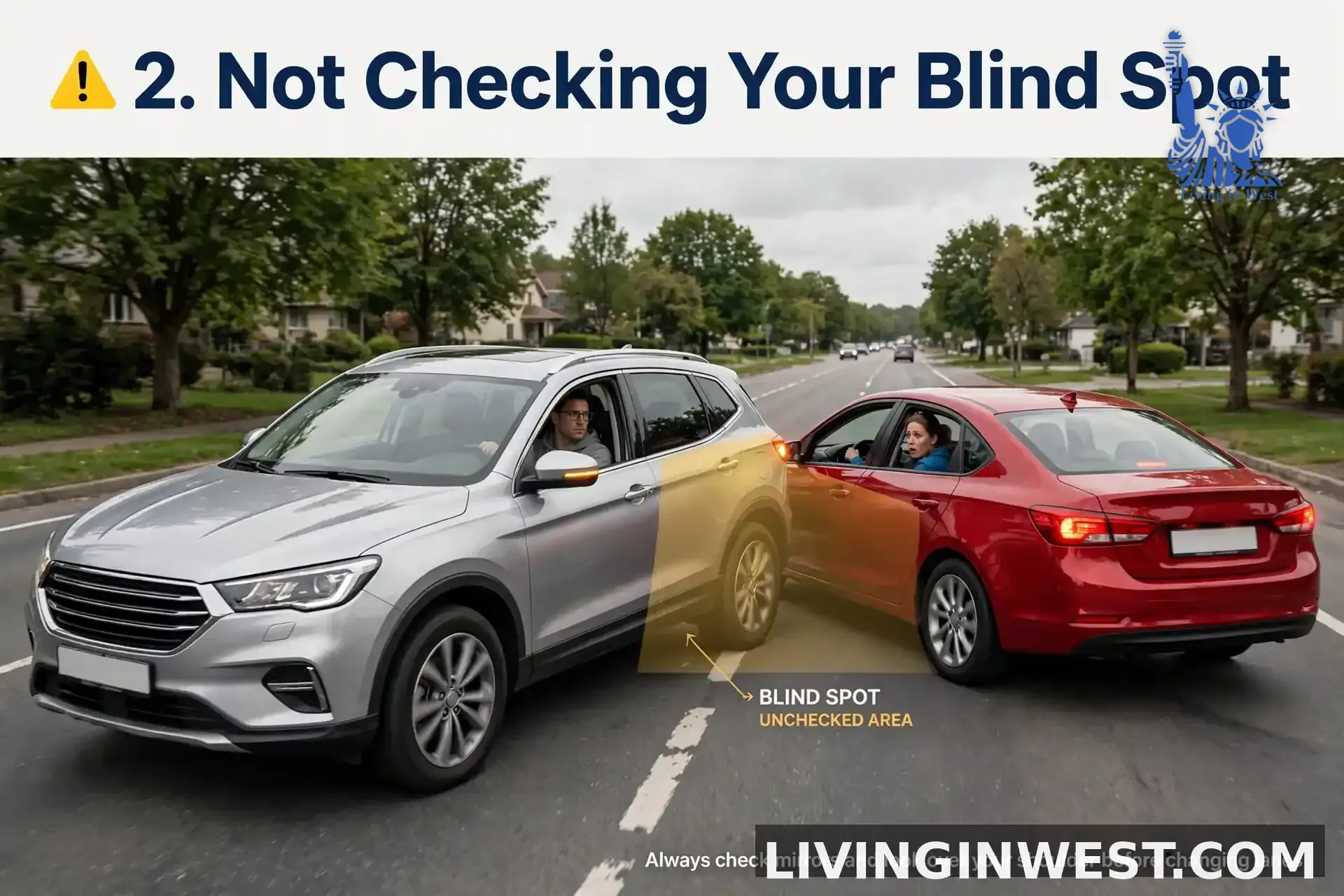
2. Not Checking Your Blind Spot
The Common Mistake
Another major problem is changing lanes after looking only at the rearview and side mirrors.
Mirrors are important, but they cannot show every area beside and slightly behind your vehicle.
This area is commonly called the blind spot.
What You Should Do Instead
Before changing lanes:
Signal → Mirrors → Shoulder Check → Safe Gap → Move
Look over the appropriate shoulder toward the side window to check the blind spot.
California DMV specifically instructs drivers to look over their shoulders when checking blind spots before changing lanes, merging, backing, and performing other maneuvers.
You do not need to turn your entire body or make an exaggerated 90-degree movement. The important thing is that you actually perform the visual check.
What About Backup Cameras?
A backup camera can help you see behind the vehicle, but it should not replace your visual checks.
California DMV states that backup cameras and blind-spot monitoring systems may be used during the drive test but are not a replacement for actual visual checks.
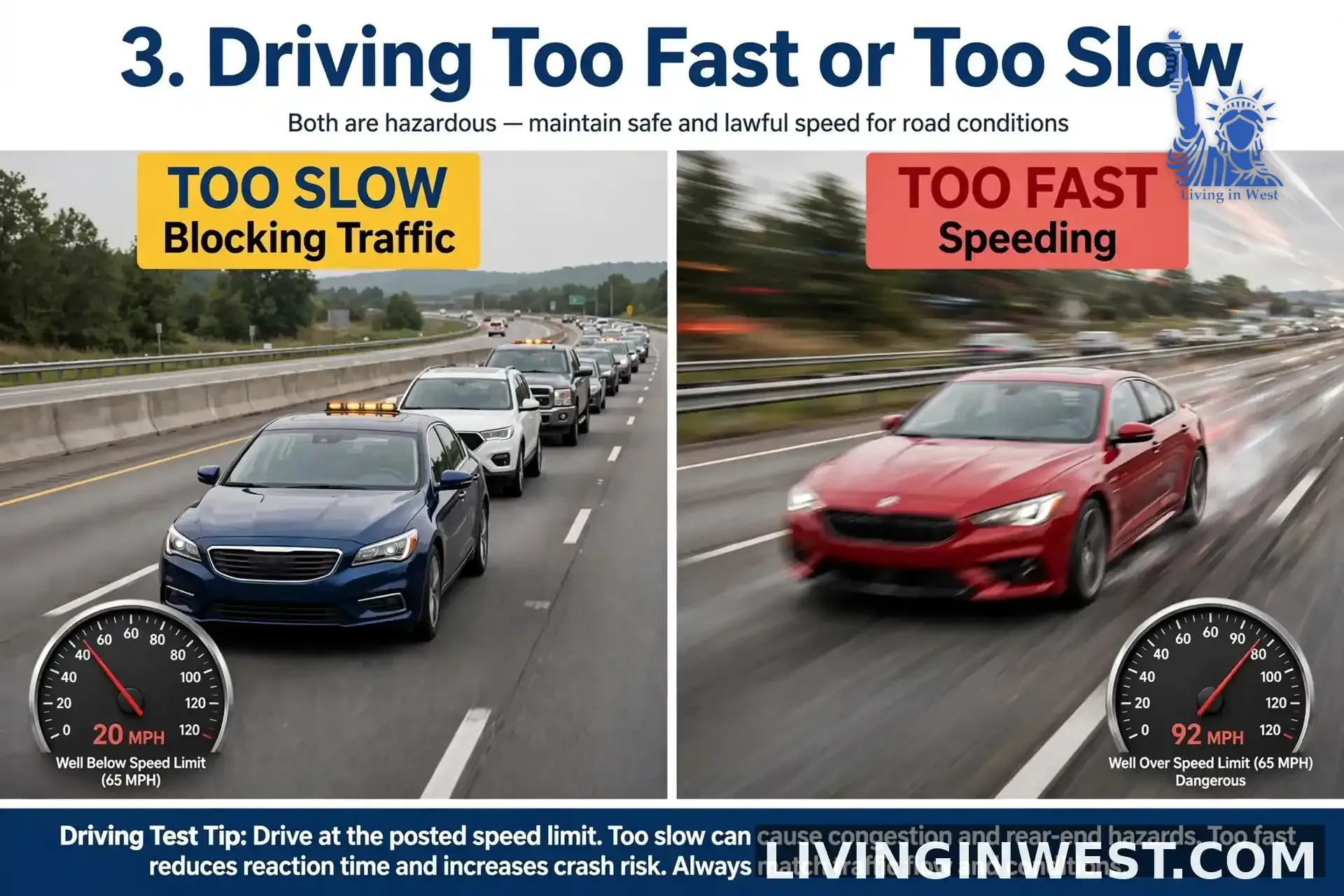
3. Driving Too Fast or Too Slow
The Common Mistake
Some applicants think driving slightly below the speed limit is always safer.
Others become nervous and drive far below the posted speed even when traffic and road conditions do not require it.
Both can create problems.
Driving too fast can make it difficult to react safely. Driving unnecessarily slowly can also interfere with traffic and may be considered unsafe.
What You Should Do Instead
Follow the posted speed limit and adjust your speed when road, traffic, weather, pedestrian, or visibility conditions require it.
Do not automatically drive 2 or 3 mph below the speed limit simply because you are taking a test.
For example, if the posted speed limit is 35 mph, there is no universal rule saying you must drive at 32 or 33 mph.
California DMV's driving-test criteria says drivers should maintain an appropriate speed and notes that driving 10 mph over or under the speed limit, unless justified by road, traffic, or weather conditions, can be a critical driving error.
School Zones
Never assume that every school zone in America has the same speed limit.
School-zone limits can vary by state and local jurisdiction.
Always follow the posted school-zone speed limit and watch for signs, flashing lights, children, crossing guards, and other hazards.
Better Test Habit
Do not focus only on the number on the speedometer.
Think:
Posted limit + road conditions + traffic + safety.
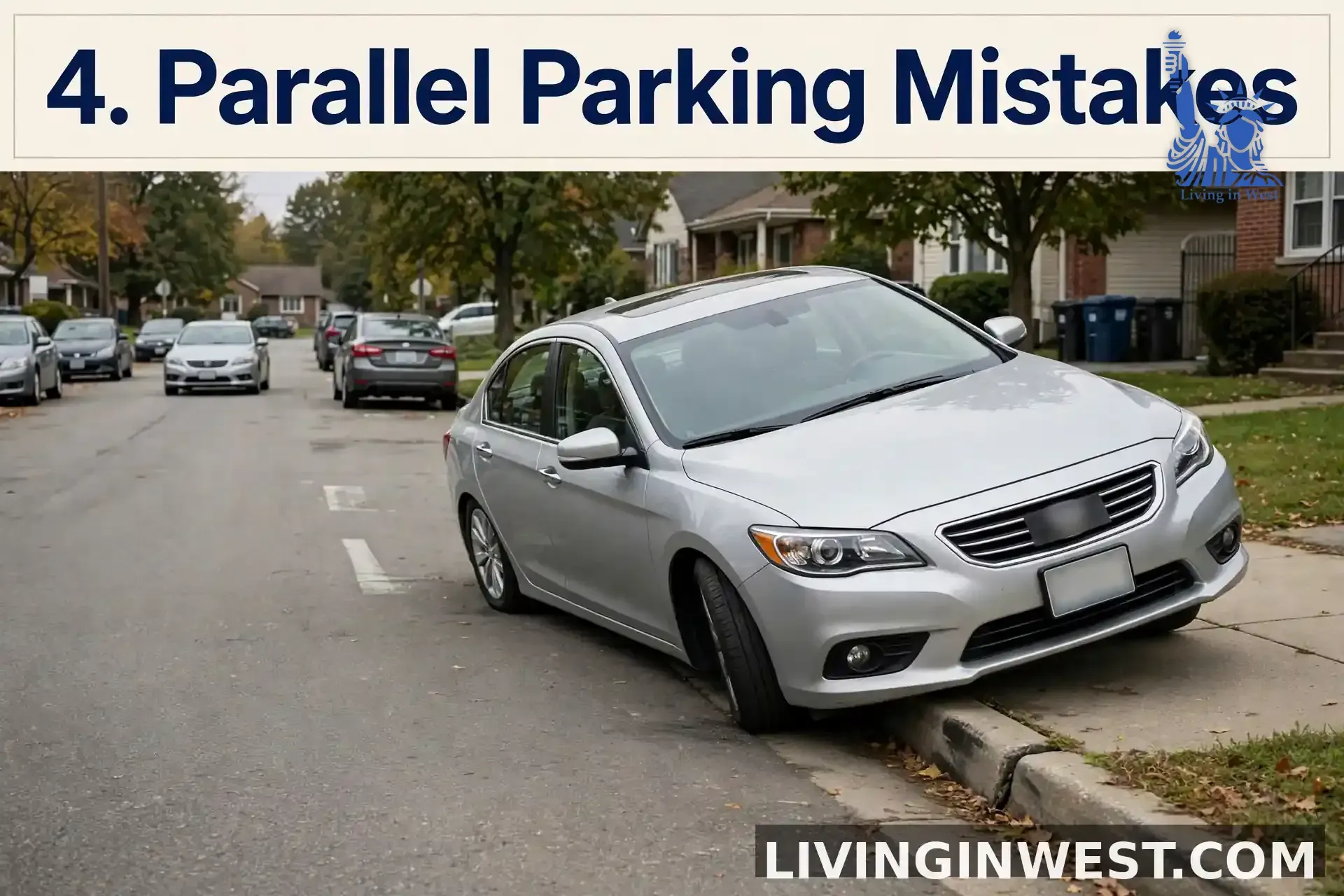
4. Making Mistakes While Parallel Parking
The Common Mistake
Applicants often become nervous during parallel parking and try to complete the maneuver too quickly.
Common problems include:
- Turning the steering wheel too aggressively
- Failing to check blind spots
- Looking only at the backup camera
- Hitting the curb
- Ending the maneuver too far from the curb
- Losing control while reversing
What You Should Do Instead
Slow down and control the vehicle.
Check your surroundings before and during the maneuver. Use your mirrors and look over your shoulder instead of relying only on technology.
California DMV's handbook says that during parallel parking, drivers should check blind spots and look over the shoulder. It also states that the vehicle should finish parallel and within 18 inches of the curb under California's test guidance.
You may need to pull forward and backward to straighten the vehicle.
Do not assume that every state gives exactly the same number of corrections or attempts. Test procedures differ by state.
Important
Do not rush just because the examiner is watching.
A controlled correction is generally better than a rushed maneuver that causes you to hit a curb or another object.
California's driving-test criteria treats striking an object or driving over a curb or sidewalk as a critical driving error.
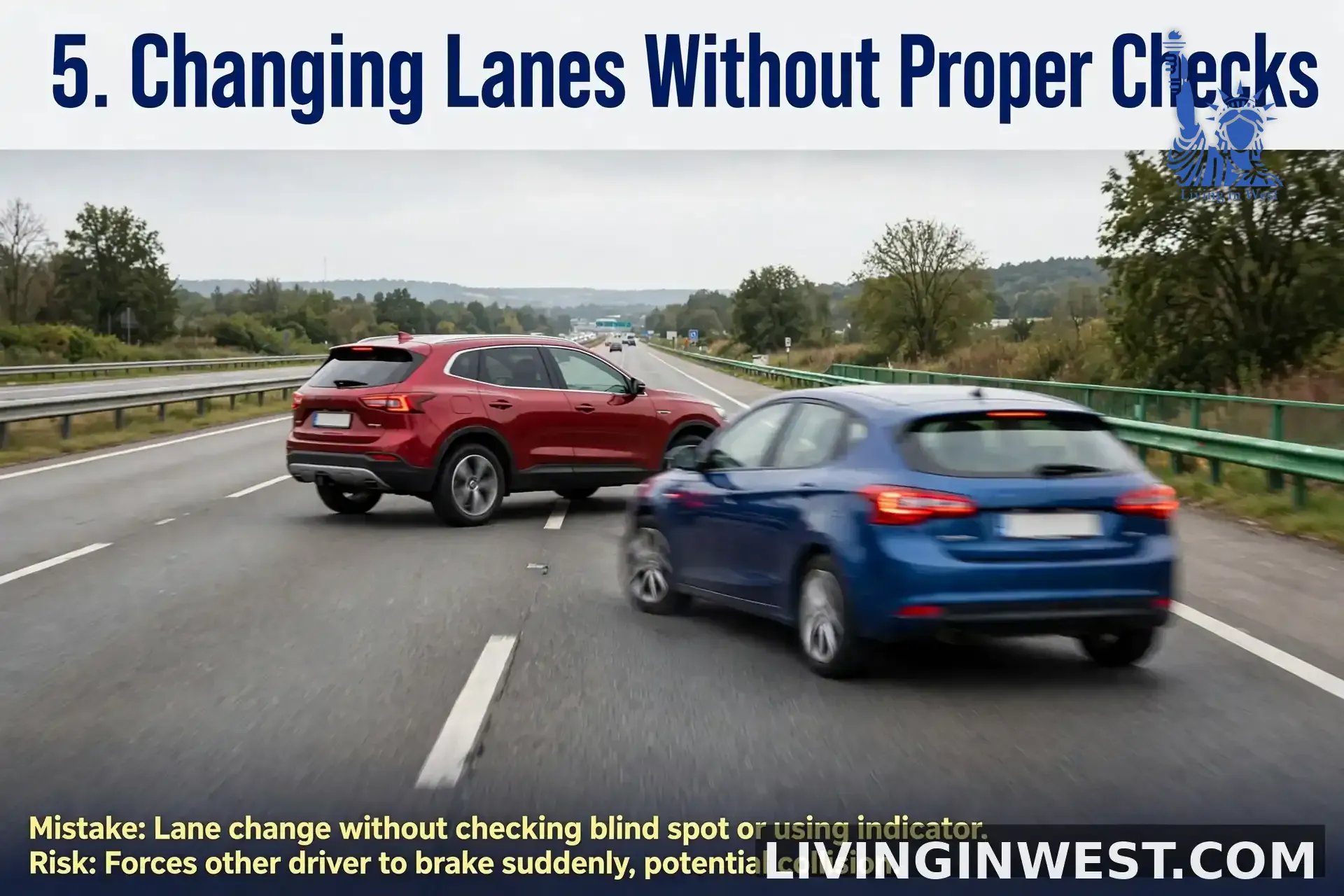
5. Changing Lanes Without Proper Checks
The Common Mistake
Some applicants:
- Change lanes without signaling
- Signal and immediately move without checking
- Forget to check the blind spot
- Move into a space that is too small
- Change lanes when another vehicle has the right-of-way
- Make an unnecessary lane change near an intersection or turn
What You Should Do Instead
Use a consistent process:
Signal → Check mirrors → Check blind spot → Confirm a safe gap → Change lanes smoothly
Do not move simply because you turned on the signal.
The signal tells other drivers what you intend to do. It does not automatically give you permission to move into another lane.
California DMV's safe-driver checklist specifically recommends signaling, checking mirrors, checking the blind spot over your shoulder, and then changing lanes safely.
Do You Always Have to Signal 3–5 Seconds Before?
There is no single nationwide "3–5 second" rule that applies to every driving test.
Signal timing requirements can vary by state and maneuver.
For example, California's driving-test criteria requires a turn signal at least 100 feet before a turn in the situations covered by its test criteria.
Always follow your state's handbook.
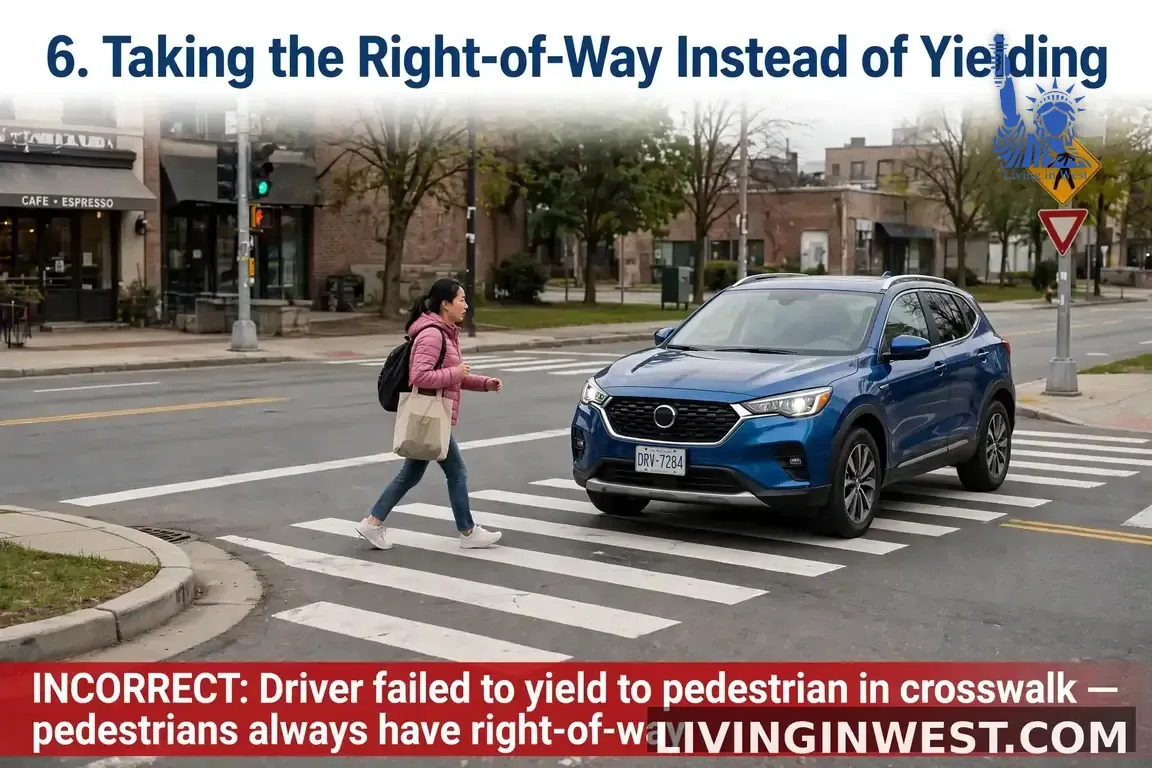
6. Taking the Right-of-Way Instead of Yielding
The Common Mistake
Nervous drivers sometimes focus so much on completing the examiner's instruction that they forget who has the right-of-way.
Examples include:
- Entering an intersection too quickly
- Failing to yield to a pedestrian
- Turning in front of approaching traffic
- Entering traffic without a safe gap
- Assuming another driver will automatically yield
What You Should Do Instead
Learn the right-of-way rules in your state and, most importantly, do not force another road user to react to you.
At intersections, look for vehicles, pedestrians, and bicyclists before proceeding.
California DMV explains that the vehicle arriving first generally has the right-of-way at intersections without STOP or YIELD signs. When vehicles, pedestrians, or bicyclists arrive at the same time, California rules generally require yielding to the road user on your right.
Pedestrians have important right-of-way protections, especially when crossing at crosswalks and intersections.
Do not assume that a pedestrian simply standing near a road automatically means you must stop in every situation. Instead, understand the specific pedestrian right-of-way rules in your state and watch carefully for people who are crossing or about to cross.
Golden Rule
Never fight for the right-of-way.
If another driver does something unexpected, safety comes first.
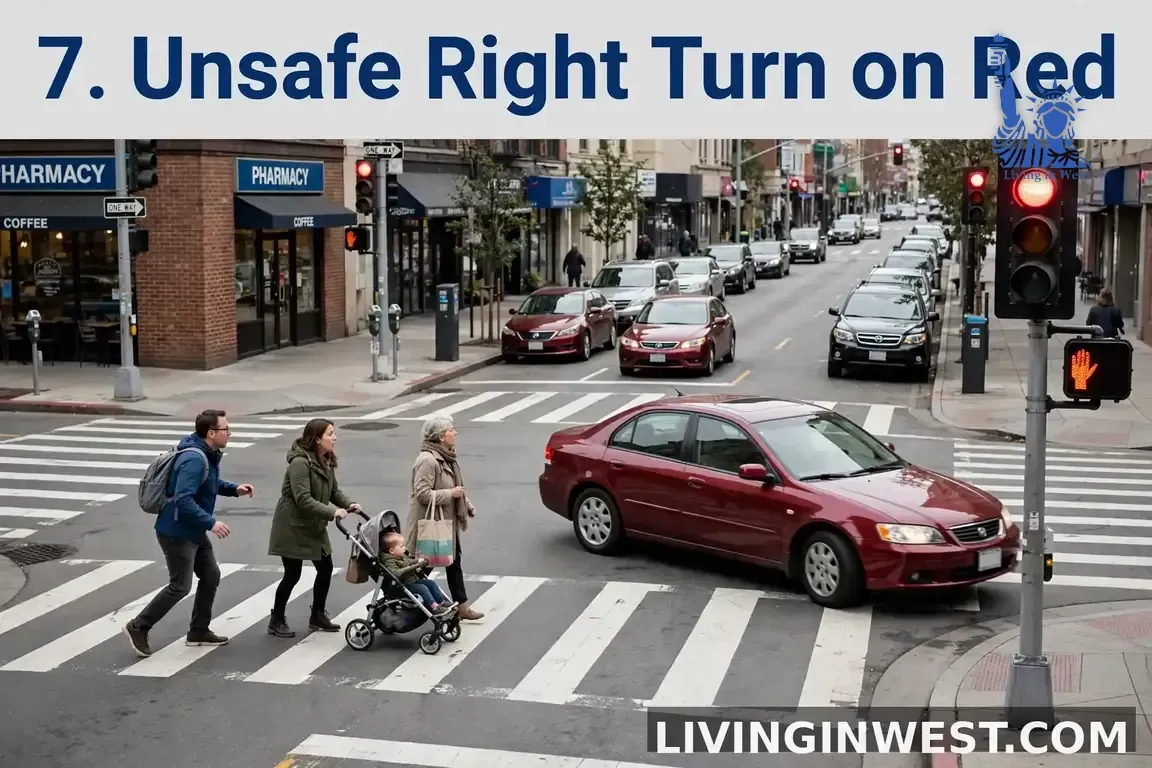
7. Making an Unsafe Right Turn on Red
The Common Mistake
A common test mistake is treating a red light like a yield sign.
The driver slows down, looks quickly, and turns without making a complete stop.
That can result in a serious error.
What You Should Do Instead
Where right-on-red is legally permitted:
Full stop → Check pedestrians → Check traffic → Yield → Turn when safe
You must first make a complete stop.
You also need to watch for pedestrians, bicyclists, and other traffic.
California DMV states that a driver may turn right on a red light after a complete stop when permitted, unless a NO TURN ON RED sign prohibits the maneuver.
California's handbook also instructs drivers making a right turn to look left-right-left and turn only when safe.
Important
A red arrow is different from a normal red light in California and some other jurisdictions.
Always follow your state's specific traffic-signal rules.
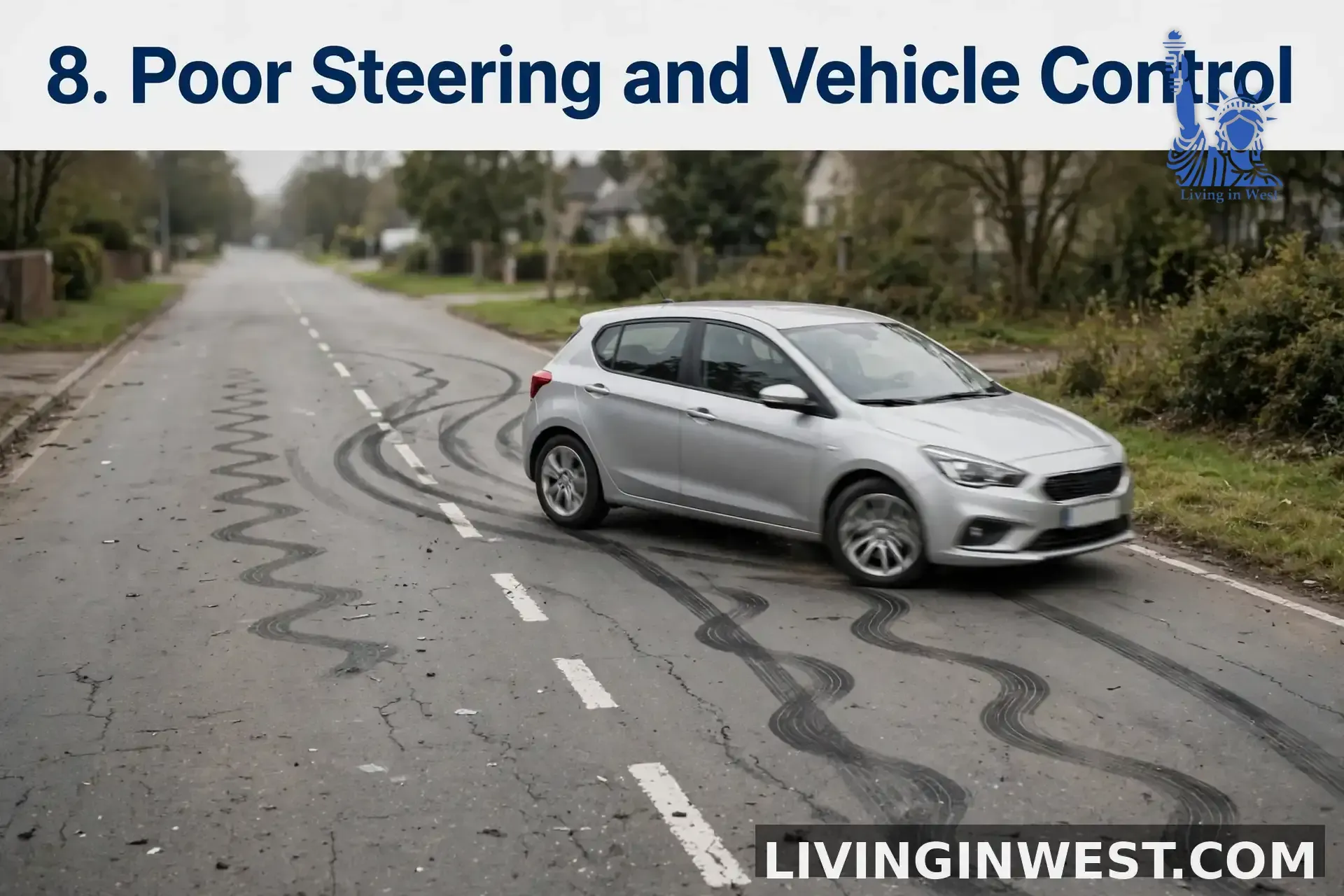
8. Poor Steering and Vehicle Control
The Common Mistake
Some applicants become nervous and make sudden steering movements.
Common examples include:
- Oversteering
- Understeering
- Drifting within the lane
- Turning too sharply
- Losing control while completing a turn
- Using one hand unnecessarily during normal driving
- Making sudden corrections
What You Should Do Instead
Keep the vehicle under smooth control.
Your steering should be:
Smooth + controlled + appropriate for the turn
California DMV's driving-test criteria specifically evaluates whether the driver turns the steering wheel smoothly, maintains full control, and uses only the amount of steering necessary.
The exact recommended hand position can vary by driving guidance, so do not treat one hand position as the only nationwide rule.
The important point for the road test is maintaining safe control of the vehicle.
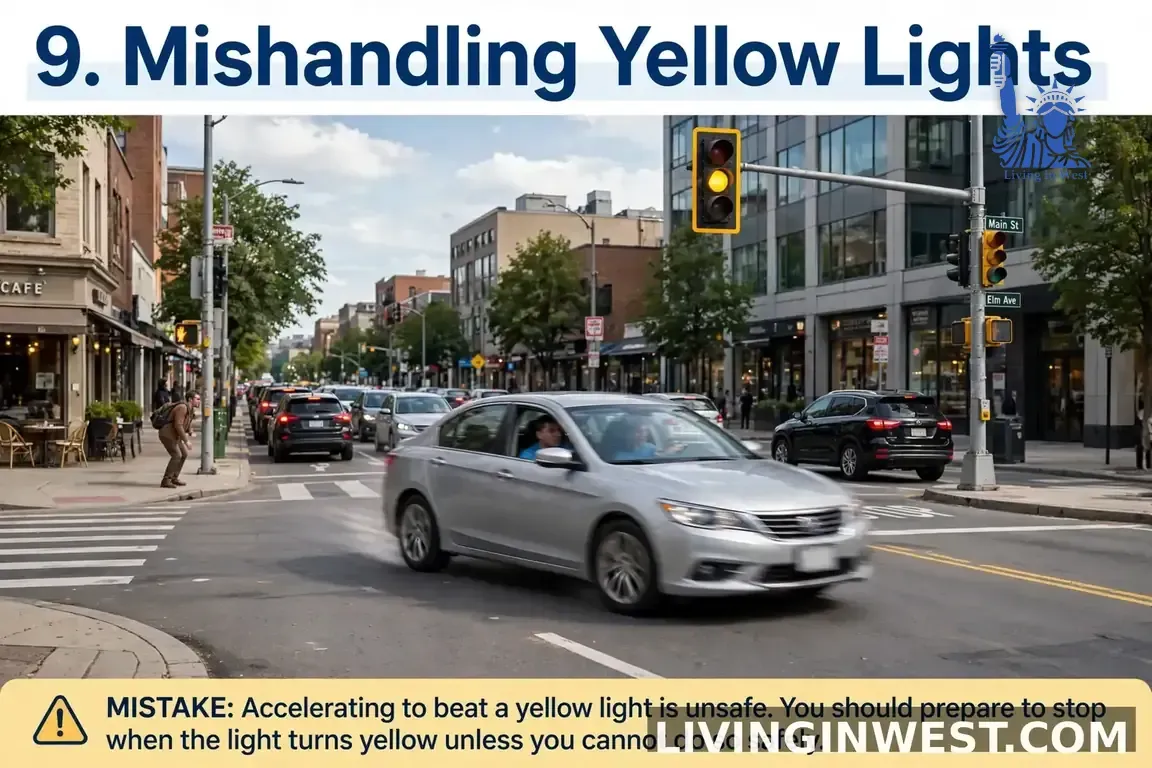
9. Mishandling Yellow Lights and Intersections
The Common Mistake
Some applicants see a yellow light and immediately accelerate to "beat the light."
Others see yellow and slam on the brakes even when stopping suddenly would be unsafe.
Both situations can create a problem.
What You Should Do Instead
A yellow light means caution.
If you can stop safely, stop.
If you cannot stop safely, proceed through the intersection cautiously.
California DMV specifically explains that a solid yellow light means the signal is about to turn red. Drivers should stop if they can do so safely; if they cannot stop safely, they should cautiously cross the intersection.
What About a Green Light?
Green does not mean:
"Stop looking."
You should still watch the intersection for pedestrians, bicyclists, vehicles that may be violating the signal, and other hazards.
California DMV advises drivers to check cross streets before entering intersections and to keep their eyes moving while driving.
Best Test Habit
At intersections:
Look → Evaluate → Proceed safely
Do not rush simply because the light is changing.
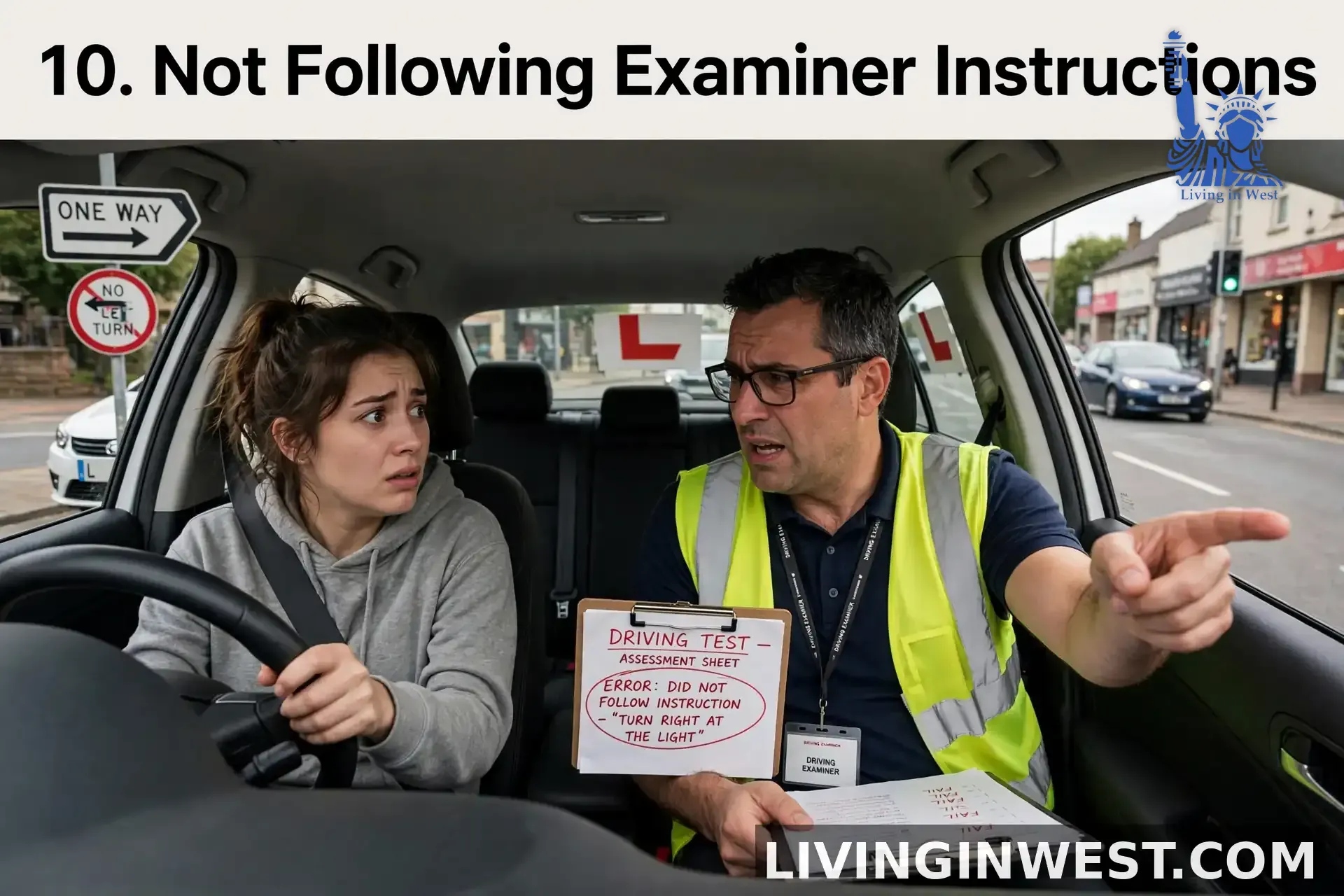
10. Not Understanding or Following the Examiner's Instructions
The Common Mistake
During a road test, nervous applicants sometimes misunderstand an instruction.
For example, the examiner may say:
"At the next intersection, turn left."
The driver may turn too early, miss the intersection, or make an unsafe maneuver trying to follow the instruction.
What You Should Do Instead
Listen carefully.
If you do not understand the instruction, ask the examiner to repeat it.
You can simply say:
"Could you please repeat that?"
There is no reason to make an unsafe maneuver just because you are afraid to ask for clarification.
California DMV says the examiner gives directions for the requested actions and the applicant is responsible for completing them when it is safe to do so. The test is not designed to trick the driver, and examiners should not ask applicants to perform something illegal or unsafe.
Most Important Rule
If an instruction cannot be completed safely, do not make an unsafe maneuver just to follow it immediately.
Safety comes first.
Bonus: Your Test Car Can Also Cause Problems
Many people prepare for the driving portion but forget that the vehicle itself must meet the state's requirements.
Before the test, check items such as:
- Turn signals
- Brake lights
- Tires
- Horn
- Mirrors
- Windshield
- Seat belts
- Parking brake
- Windows
- Other required safety equipment
California DMV has a specific pre-drive safety checklist. If certain required vehicle items fail the safety criteria, the driving test can be rescheduled. California also states that if an applicant cannot locate or demonstrate enough of the required controls, the test can be considered unsatisfactory.
This is why you should never arrive at a driving test without checking the car first.
Final USA Driving Test Checklist
Before starting your road test, remember:
Stop completely at STOP signs.
Check mirrors and blind spots before changing lanes.
Follow the posted speed limit and adjust for conditions.
Do not drive unnecessarily fast or unnecessarily slow.
Use turn signals correctly and early enough for other road users to understand your intention.
Yield when another driver, pedestrian, or bicyclist has the right-of-way.
Make a complete stop before a permitted right turn on red.
Watch for pedestrians and bicyclists at intersections and turns.
Keep smooth control of the steering wheel.
Do not rely only on backup cameras or driver-assistance technology.
Listen carefully to the examiner.
Ask for clarification if you do not understand an instruction.
Check your vehicle before arriving at the test center.
The Biggest Secret to Passing a USA Driving Test
You do not need to impress the examiner by driving fast.
You need to demonstrate that you can operate the vehicle safely, legally, smoothly and predictably.
The examiner is watching your decisions—not just whether you can move the car.
A good road-test mindset is:
Slow when necessary.
Move when safe.
Check before changing direction.
Yield when required.
Follow the signs.
Stay in control.
Most importantly, remember that driving-test requirements are not identical across all 50 states. Before your test, read the official driver's handbook and road-test information published by your state's DMV or equivalent licensing agency.
Official Sources
California Department of Motor Vehicles — Driving Test Criteria: California DMV Driving Test Criteria
California DMV — Driving Performance Evaluation Scoring Criteria: California DMV DPE Scoring Criteria
California DMV — Driver's Handbook: California Driver's Handbook
California DMV — Safe Driver Checklist: California DMV Safe Driver Checklist
California DMV — Pre-Drive Safety Checklist: California DMV Pre-Drive Checklist
Note: This article is for general educational purposes. Driving-test procedures, scoring, speed limits, parking requirements and other rules can vary by state. Always check your state's official DMV or driver-licensing agency for the rules that apply to your test.

Editorial Team