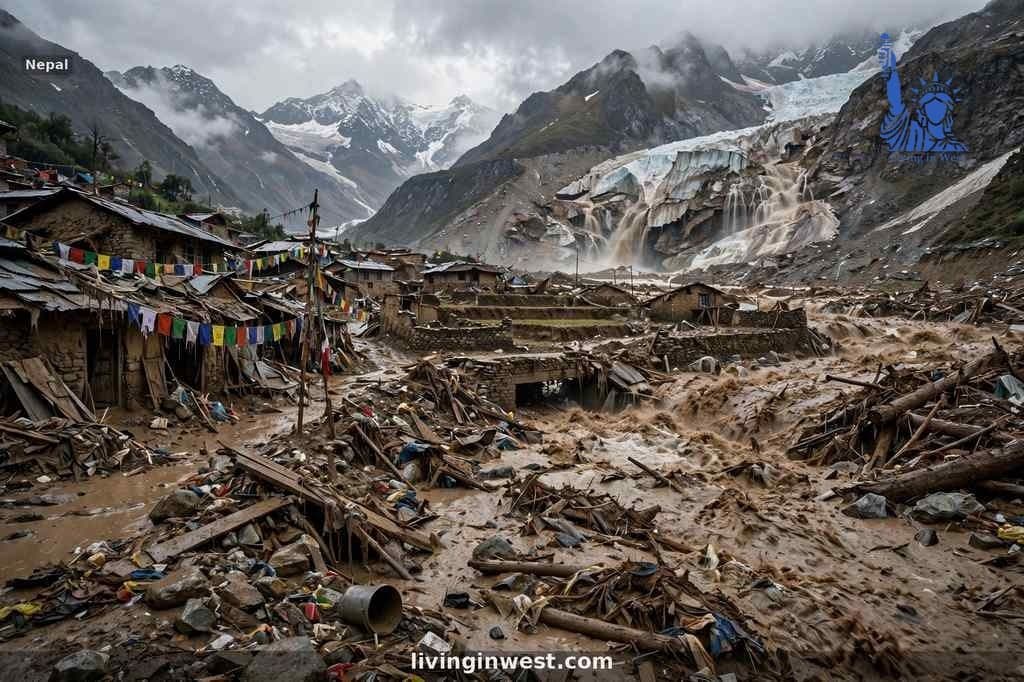
1. Nepal — Everest Region
Why is the ice melting?
The Everest region has experienced major glacier retreat and the growth of glacial lakes. One important example is Imja Tsho, a rapidly growing glacial lake fed by the Imja and Lhotse Shar glaciers.
According to the International Centre for Integrated Mountain Development (ICIMOD), Imja Tsho did not exist as a large lake until the second half of the 20th century. It developed as the glacier retreated, leaving water trapped behind a moraine dam.
The lake has been identified as a potentially dangerous glacial lake because a sudden release of water could produce a Glacial Lake Outburst Flood (GLOF).
Important 2026 Update
Nepal also experienced a devastating glacier-related disaster in August 2026. A glacier collapse near the Nepal-China border triggered a massive flood and debris flow, showing how quickly unstable mountain ice can become a threat to communities downstream.
Authorities subsequently monitored newly formed lakes because of the possibility of additional flooding.
The key point: Not every Himalayan glacier disaster is an Imja Tsho GLOF. The 2026 Nepal disaster should not be described as an Imja Lake event.
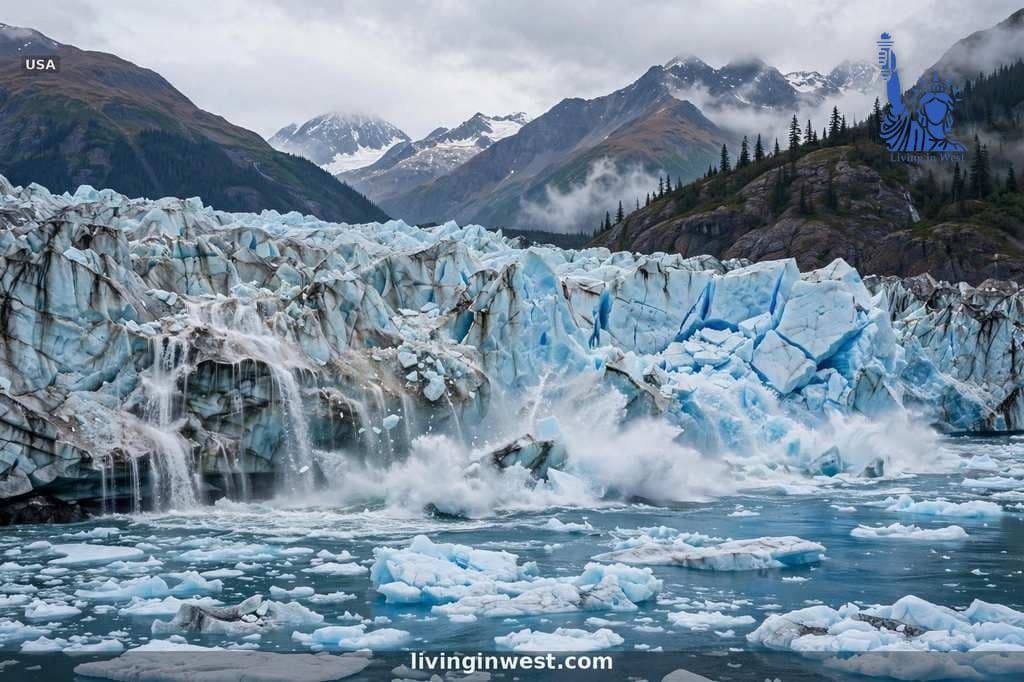
2. Alaska, USA — One of the World's Major Glacier Loss Regions
Alaska contains an enormous amount of glacier ice, but its glaciers are losing mass rapidly.
The U.S. Geological Survey (USGS) has estimated that Alaska's glaciers have been losing approximately 75 billion tons of ice per year. The agency says the retreat of Alaska's glaciers has made a disproportionately large contribution to global sea-level rise since the 1990s.
Why are Alaska's glaciers melting?
The major driver is a warming climate.
Higher temperatures increase surface melting, while changes in snowfall can reduce the amount of new snow available to replace lost ice.
Some glaciers also experience changes in ice flow and calving.
So the original claim of 67 billion tons per year is close to older estimates, but for this article the stronger figure to use is the USGS estimate of approximately 75 billion tons per year.
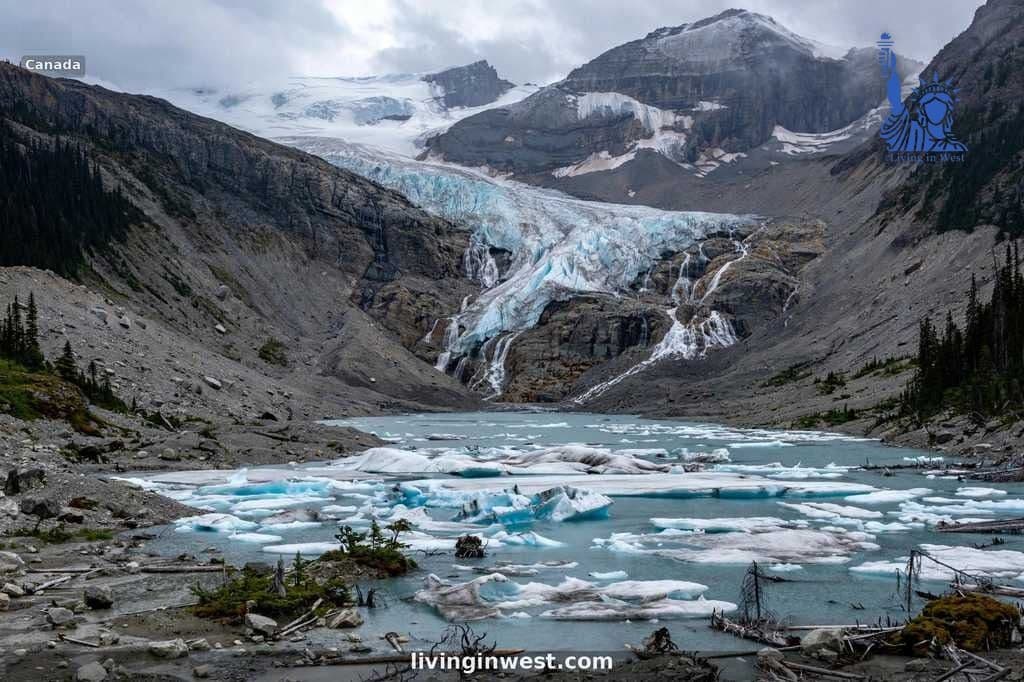
3. British Columbia, Canada — Berg Glacier Is Pulling Away From Berg Lake
One of the clearest visual examples of glacier retreat is Canada's Berg Glacier in Mount Robson Provincial Park.
Berg Glacier historically reached Berg Lake and was famous for icebergs breaking from the glacier into the lake. British Columbia's official geographical database confirms the glacier's historical connection with Berg Lake.
But in August 2026, researchers reported that Berg Glacier had retreated so far that it no longer reached the lake.
University of Northern British Columbia researcher Joseph Shea observed the change during fieldwork in summer 2026. The retreat means the glacier may no longer produce the same icebergs that once floated in Berg Lake.
Why is this happening?
British Columbia's climate assessments identify warmer temperatures as a major driver of glacier retreat.
Warmer winters and springs also mean more precipitation can fall as rain rather than snow, reducing snowpack and increasing early melting.
B.C. Parks has also documented major snowmelt associated with extreme heat, including the 2021 heat dome.
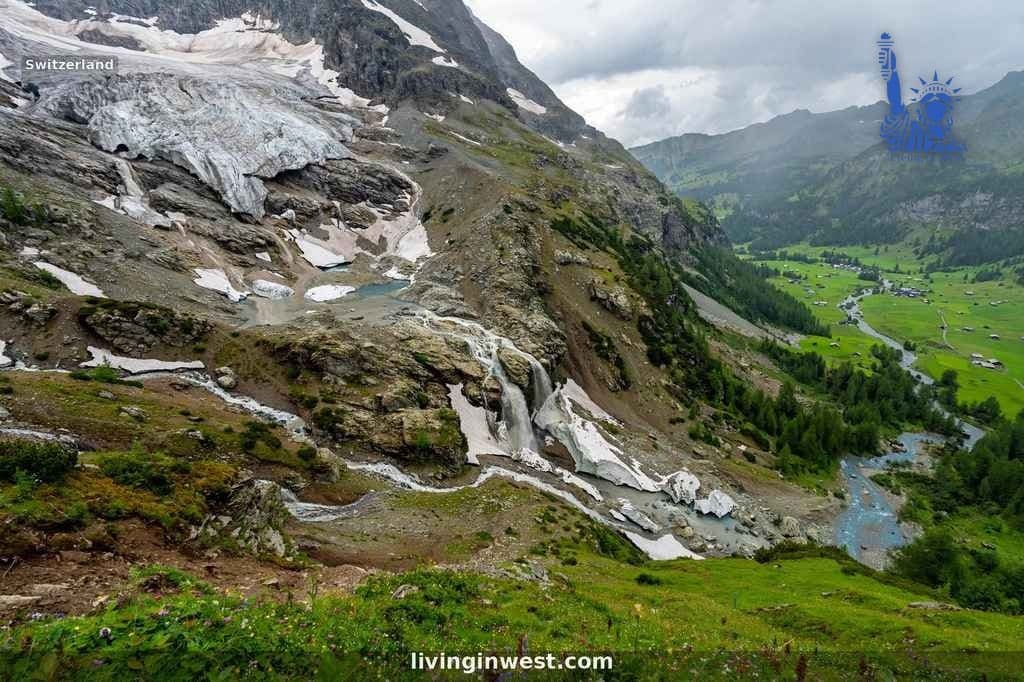
4. Switzerland — The Alps Are Losing Ice Rapidly
Switzerland is home to more than a thousand glaciers, but the country's glaciers have experienced extraordinary losses in recent years.
According to the Swiss glacier monitoring program GLAMOS, Switzerland had approximately 46.4 cubic kilometers of glacier ice remaining at the end of 2024, nearly 30 cubic kilometers less than in 2000.
Glacier area had fallen by about 28% compared with 2000.
During the 2023/24 hydrological year, Swiss glaciers lost approximately 2.4% of their remaining ice volume.
Why are Swiss glaciers melting?
The main reason is rising temperatures.
Hot summers increase ice melt, while warmer conditions can reduce the amount of winter precipitation that remains as snow.
GLAMOS reported that even after a snow-rich winter in 2024, strong summer melting produced substantial ice losses.
Switzerland's Federal Office of Meteorology and Climatology also reports that Swiss glaciers have lost roughly one-third of their mass since 2000.
Important correction: Instead of saying "the Alps are the fastest melting glaciers in Europe," it is safer and more scientifically accurate to say that Swiss Alpine glaciers are experiencing exceptionally rapid ice loss.
5. Hunza, Pakistan — Shisper Glacier and GLOF Risk
Pakistan's northern mountains are among the world's glacier-rich regions, but they are also highly vulnerable to glacial hazards.
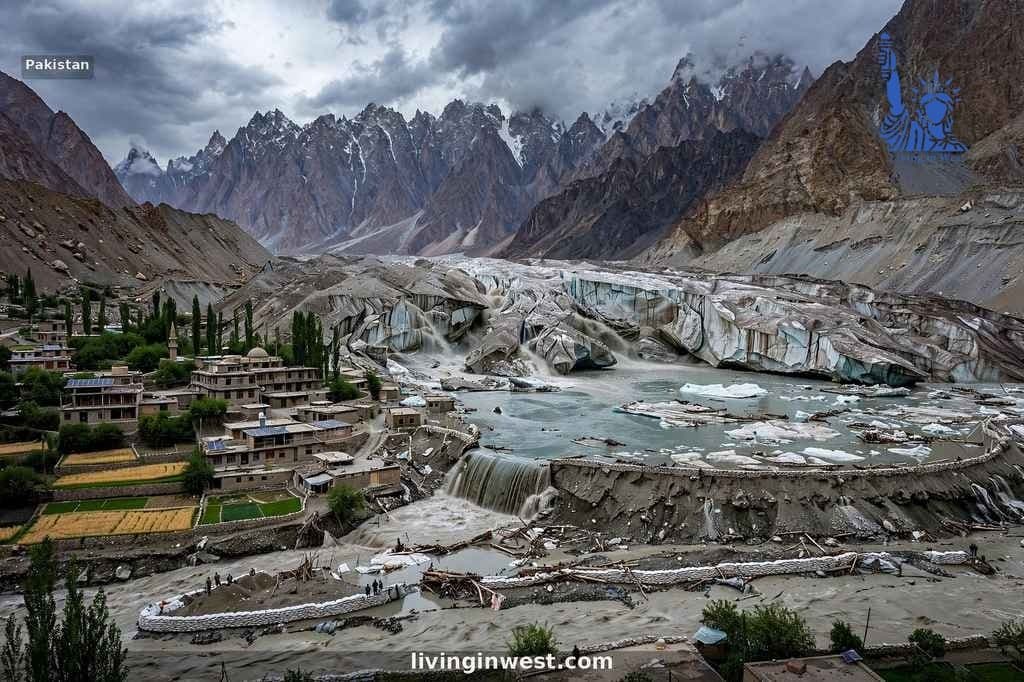
The Shisper Glacier near Hassanabad in Hunza has repeatedly surged and formed an ice-dammed lake.
ICIMOD reports that a sudden surge of Shisper Glacier was first recorded in 2018. The surge blocked the flow from the Muchuhar Glacier and created an ice-dammed lake.
The lake subsequently breached several times.
A major GLOF in May 2021 damaged houses, agricultural land and orchards in Hassanabad.
Later research documented another lake drainage in May 2022 that washed away the Hassanabad bridge on the Karakoram Highway.
What about Passu Glacier?
Passu is also part of a highly glaciated and GLOF-prone region.
ICIMOD research has identified historical GLOF risk associated with Passu and other glaciers in the Hunza River basin.
Important Correction
It is not accurate to say:
"Shisper and Passu glaciers give a GLOF every year."
A better description is:
"Shisper and other glaciers in the Hunza region have repeatedly generated dangerous glacial lake events and remain a significant GLOF risk."
6. Peru — The Andes Have Lost More Than Half Their Glacier Area
Peru's glaciers have experienced one of the most dramatic long-term changes in the tropical Andes.
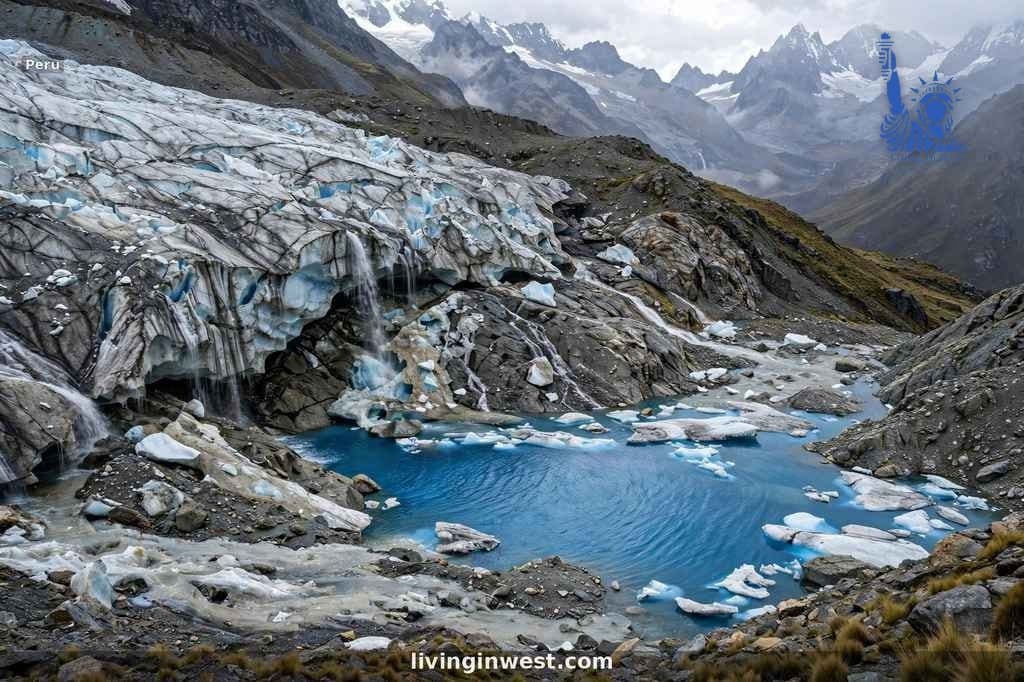
A 2025 technical study by Peru's National Institute for Research on Glaciers and Mountain Ecosystems (INAIGEM) found that Peru had lost 56.2% of its total glacier surface over approximately six decades.
The study attributes the retreat mainly to:
- Rising temperatures
- Less precipitation falling as snow
- Climate change
- Black carbon pollution
- Climate variability
The official 2023 national glacier inventory also reports a loss of about 1,348.75 square kilometers of glacier area over 58 years.
Important Correction
The commonly repeated claim that "40% of Peru's glaciers will disappear in 50 years" does not match the latest national assessment.
The stronger verified statement is:
Peru has already lost 56.2% of its glacier surface over roughly six decades.
7. Iceland — The Country That Held a Glacier Memorial
Iceland provides one of the most powerful symbols of glacier loss.
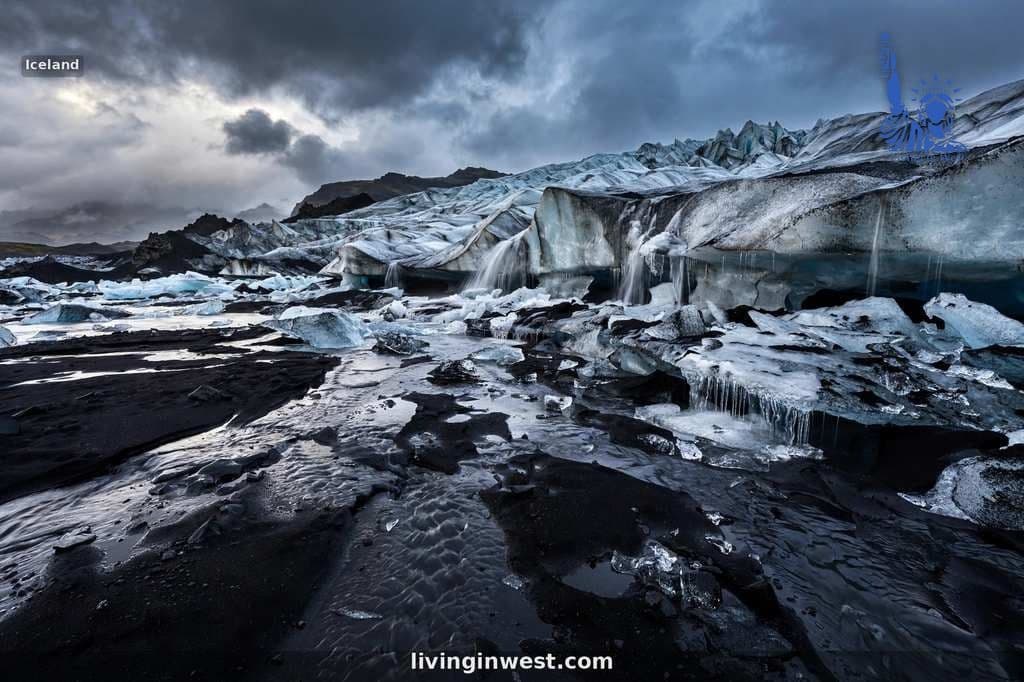
In 2014, Iceland's Ok glacier, commonly known as Okjökull, was officially removed from the list of glaciers because it was no longer moving under its own weight.
In August 2019, scientists and others held a memorial event at the former glacier site to draw attention to climate change.
The Icelandic Meteorological Office reported that when Iceland's glaciers were remapped in 2017, 56 glaciers recorded in earlier mapping were no longer considered glaciers.
Iceland's Meteorological Office also reports that Icelandic glaciers have lost around 2,100 square kilometers of area since their late-19th-century maximum, with more than 750 square kilometers lost since 2000.
Why are Iceland's glaciers shrinking?
Long-term warming is the major reason.
The Icelandic Meteorological Office reports that more than 90% of monitored outlet glaciers were retreating by the late 1990s, and glacier retreat has continued into the modern period.
8. Greenland — The Ice Sheet Is Losing Mass
Greenland is different from the smaller mountain glaciers on this list because it contains a massive continental ice sheet.
The important correction is that Greenland's entire ice sheet is not currently melting away completely.
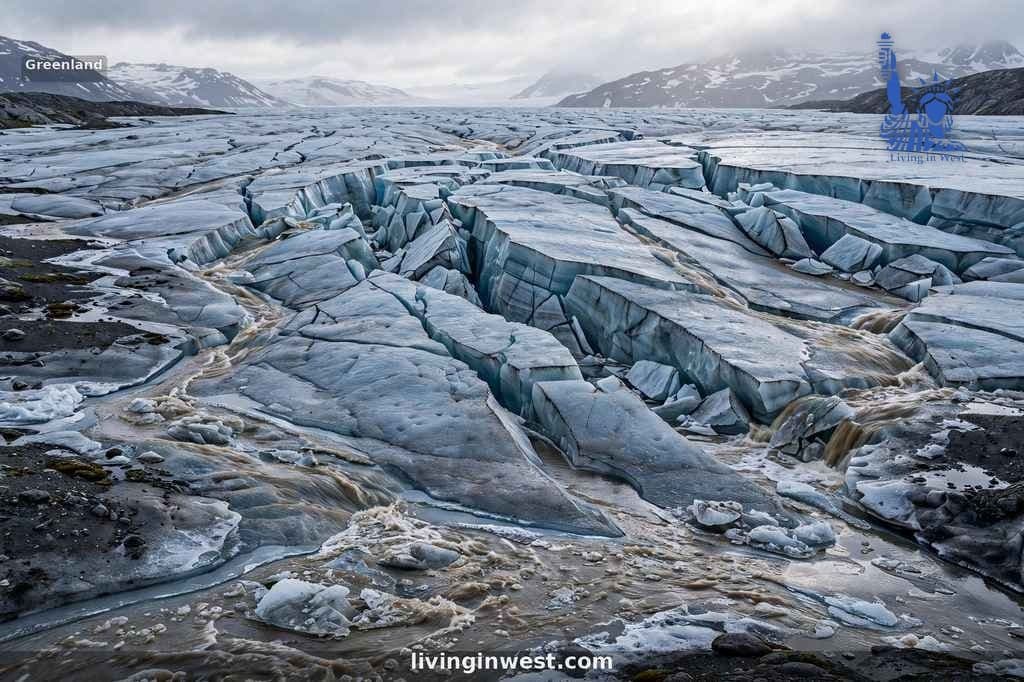
Instead, Greenland is experiencing substantial and sustained ice mass loss.
NASA's GRACE and GRACE-FO satellite observations indicate that Greenland lost approximately 264 billion metric tons of ice per year between 2002 and 2025, contributing about 0.8 millimeters per year to global sea-level rise.
Why is Greenland losing ice?
Two major processes are involved:
1. Surface Melting
Warmer air causes more ice and snow to melt at the surface.
2. Iceberg Calving
Glaciers flowing toward the ocean lose mass when ice breaks away as icebergs.
NASA says Greenland and Antarctica together are losing hundreds of billions of tons of ice each year, with human-caused warming from fossil-fuel emissions being the leading cause of the long-term ice loss.
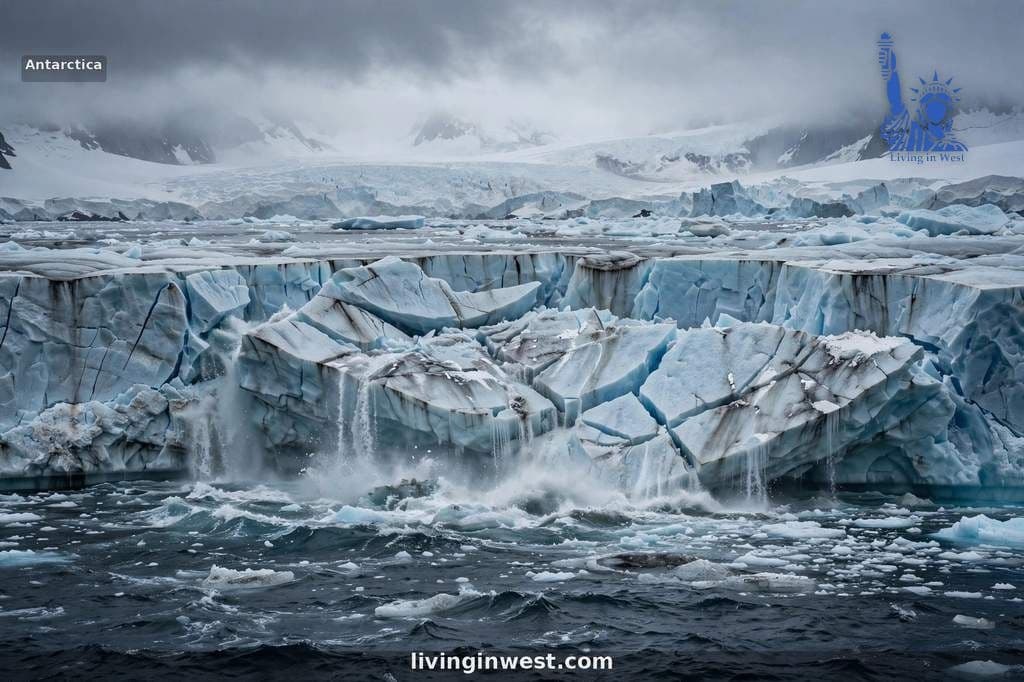
9. Antarctica — Thwaites Glacier, the "Doomsday Glacier"
Few glaciers have received as much attention as Thwaites Glacier in West Antarctica.
It is often called the "Doomsday Glacier" because of its importance to future sea-level rise.
Thwaites is rapidly losing ice, and scientists are particularly concerned about the interaction between the glacier and the warming ocean.
The National Snow and Ice Data Center says Thwaites is losing more than 50 billion tons of ice to the ocean each year and currently accounts for roughly 4% of annual global sea-level rise.
Is the "3 feet" claim correct?
Not for Thwaites alone.
If Thwaites Glacier were to completely collapse, it could eventually contribute approximately 65 centimeters, or about 2.1 feet, of global sea-level rise.
The bigger sea-level threat comes from the possibility that Thwaites' retreat could destabilize neighboring parts of the West Antarctic Ice Sheet.
Why is Thwaites melting?
One of the major concerns is warm ocean water reaching the underside of the glacier and its ice shelf.
NASA research has found that cavities beneath the glacier allow warm water to penetrate and accelerate melting.
Scientists are therefore studying both the atmosphere and the ocean around Thwaites to understand how quickly the glacier may retreat.
Why Are Glaciers Melting Around the World?
Although every glacier behaves differently, several major factors appear repeatedly.
1. Rising Temperatures
Warmer air increases surface melting and changes the balance between snowfall and ice loss.
2. Less Snow
A glacier needs new snowfall to replace the ice it loses. When more precipitation falls as rain instead of snow, the glacier receives less replacement mass.
3. Warmer Oceans
For marine-terminating glaciers such as Thwaites and many Greenland glaciers, warmer ocean water can melt ice from below.
4. Iceberg Calving
Glaciers can lose large amounts of mass when ice breaks away and enters the ocean.
5. Black Carbon and Pollution
Dark particles can settle on snow and ice, reducing reflectivity and increasing solar energy absorption.
Peru's official glacier assessment specifically identifies black carbon as one factor affecting tropical glaciers.
Final Takeaway
From Everest to Alaska, the Swiss Alps, Hunza, the Andes, Iceland, Greenland and Antarctica, scientists are observing major changes in the world's glaciers.
But the story is not identical everywhere.
Some glaciers are retreating because of warmer air and reduced snowfall. Others are particularly vulnerable to warmer oceans.
In mountain regions such as Nepal and Pakistan, glacier retreat and unstable glacial lakes can also increase the risk of sudden floods.
The most important point is that glacier loss is measurable.
Satellites, field measurements and national glacier-monitoring programs are documenting the changes year after year.
And several claims circulating online need to be corrected:
- Alaska: about 75 billion tons/year rather than 67 billion in the USGS figure.
- Peru: 56.2% of glacier surface lost over roughly six decades, not simply 40% in 50 years.
- Pakistan: repeated GLOFs, but not necessarily every year.
- Greenland: losing hundreds of billions of tons of ice annually, but its entire ice sheet is not disappearing at once.
- Thwaites: approximately 65 cm / 2.1 feet of potential sea-level rise from complete loss, not 3 feet from Thwaites alone.
These corrections make the story more scientifically accurate — and more credible for readers searching for information about melting glaciers, climate change and global sea-level rise.

Editorial Team