Part 1: What Is the O-1 Visa?
The O-1 visa is a temporary U.S. work classification for individuals who have demonstrated extraordinary ability or extraordinary achievement in their field.
USCIS divides it into two categories: O-1A and O-1B.
O-1A covers science, education, business, and athletics. The standard is extraordinary ability — meaning the person is among the small percentage at the very top of their field. Evidence must show either a major award or at least three of eight regulatory criteria.
O-1B covers the arts, and motion picture and television. The standard here is extraordinary ability (for the arts) or extraordinary achievement (for film/TV), evaluated under a different, separate criteria set under the regulations.
For O-1A, USCIS describes the required level as expertise showing that the person is among the small percentage who have risen to the very top of their field.
This means a good job, an advanced degree, a successful business, or a high salary alone does not qualify someone for O-1. The applicant needs documented evidence of sustained national or international acclaim and recognition in the field.
How Do You Qualify for O-1A?
USCIS generally requires evidence of a major internationally recognized award (such as a Nobel Prize-level distinction), or evidence satisfying at least three of the eight regulatory criteria:
- Awards or prizes — nationally or internationally recognized prizes for excellence
- Selective memberships — associations requiring outstanding achievement, judged by recognized experts
- Published material — major media or professional publications about the applicant and their work
- Judging the work of others — serving as a judge of others' work in the same or related field
- Original contributions — contributions of major significance to the field
- Scholarly articles — authorship in professional journals or major media
- Critical or essential role — for organizations with a distinguished reputation
- High salary — remuneration significantly higher than others in the field
Important: Meeting 3 criteria does not guarantee approval. Meeting three evidentiary criteria makes an applicant eligible to apply, but it does not guarantee approval. USCIS evaluates the total evidence and decides whether it establishes the required level of extraordinary ability under the regulations. Quality of evidence matters as much as the number of criteria met.
Can a Business Professional Get an O-1?
Yes. Business is explicitly included in the O-1A category alongside science, education, and athletics.
However, being a business owner or executive by itself is not enough. The applicant must still demonstrate extraordinary ability through qualifying evidence — such as major media coverage, awards, original contributions to the industry, or a salary significantly higher than others in the field.
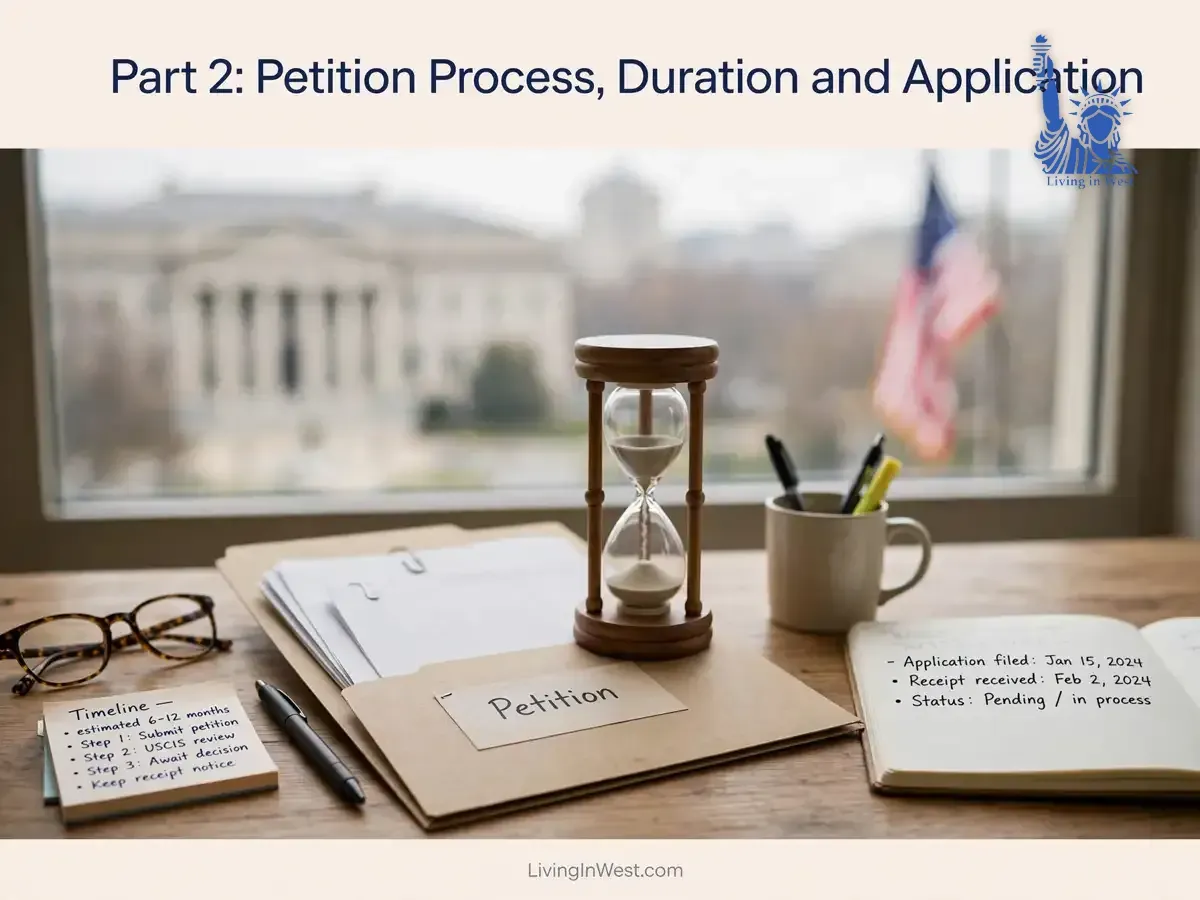
Part 2: Petition Process, Duration and Application
Can You Apply for the O-1 Yourself?
No. The O-1 beneficiary cannot self-petition. An O petition may be filed by a U.S. employer, a U.S. agent, or a foreign employer working through a U.S. agent.
The petition is filed using Form I-129 (Petition for a Nonimmigrant Worker). Specific rules apply to agents and multiple employers, so the petitioner structure matters.
Is a Consultation (Advisory Opinion) Required?
Generally yes. The petition includes a written advisory opinion from an appropriate peer group, labor organization, or management organization, depending on the field and O-1 category. Requirements vary by case.
How Long Can You Stay on O-1?
The initial period allowed is up to 3 years — for the time needed to complete the activity or event. Extensions are granted in 1-year increments, as long as the same activity continues. There's also a grace period of up to 10 days before and 10 days after the petition validity period, though employment is only authorized during the petition validity period itself.
Notably, unlike the H-1B's six-year maximum, the O-1 has no fixed total limit — extensions can continue as long as the qualifying work continues.
Is O-1 an eVisa?
No. For someone outside the U.S., the process has two stages.
Step 1 — USCIS Petition. The U.S. petitioner files Form I-129 with USCIS. If approved, the petitioner receives approval documentation (Form I-797).
Step 2 — Visa Application (Department of State). The applicant then applies for the O visa at a U.S. Embassy or Consulate, which normally involves Form DS-160, the visa application fee, a valid passport, the USCIS petition and approval information, supporting documents, and a visa interview where required.
The State Department generally instructs nonimmigrant visa applicants to schedule interviews in their country of nationality or residence, subject to designated-post rules. Applicants should follow the current instructions of the U.S. Embassy or Consulate that covers their location.
How Early Can an O-1 Petition Be Filed?
An O petition can generally be filed up to one year before the requested employment start date. For exact timing, check the current Form I-129 instructions and USCIS guidance.
O-1 Fees (Current, 2026)
The Form I-129 filing fee for the O classification is $1,055 for most employers, but only $530 for nonprofit petitioners or small employers with 25 or fewer full-time-equivalent employees.
On top of that, most petitioners must also pay a separate Asylum Program Fee of $600 (or $300 for small employers). Nonprofit petitioners are exempt from this fee. This is a fee draft versions of this kind of guide often leave out, so don't forget to budget for it.
Premium Processing (optional, via Form I-907) currently costs $2,965. This rose from the earlier $2,805 fee, effective March 1, 2026.
The visa application (MRV) fee for petition-based categories like O is $205.
There's also a newer $250 Visa Integrity Fee, created by federal legislation signed in 2025, meant to apply on top of the MRV fee — though as of mid-2026 it wasn't yet being actively collected. Check current State Department guidance before finalizing a budget.
Fees change periodically — always verify on the official USCIS (Form G-1055) and travel.state.gov fee schedules before applying. Attorney fees, if used, are separate and vary.
How Fast Is O-1 Processing?
Regular processing varies by service center and workload — check the current USCIS processing times tool for your form and category.
Premium Processing guarantees 15 business days for eligible Form I-129 O petitions, for the current fee of $2,965. Premium processing is a faster adjudication service — not a guarantee of approval.
O-1 vs. H-1B: Quick Comparison
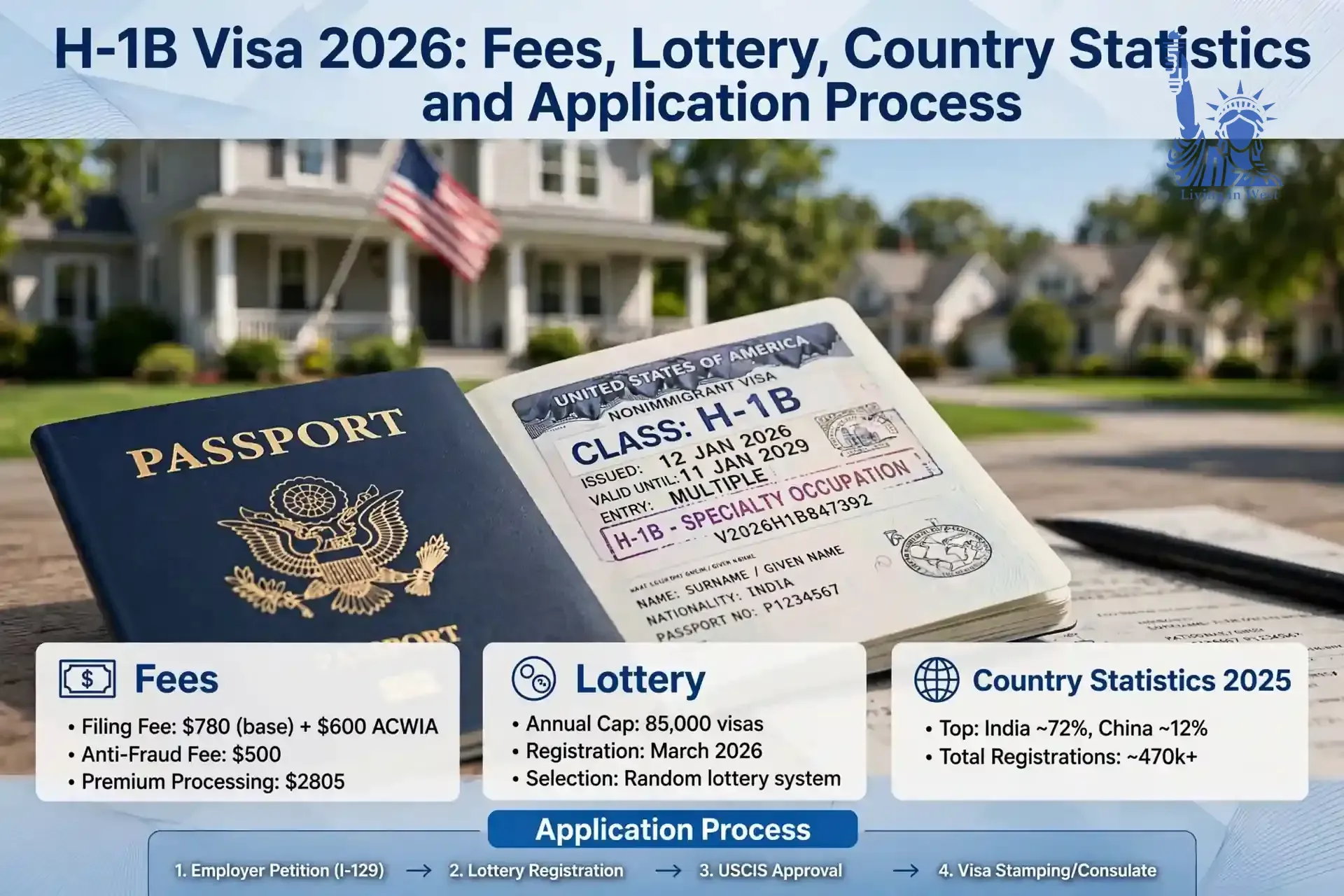
The O-1 requires extraordinary ability and top-of-field standing, while the H-1B only requires a specialty occupation, usually backed by a bachelor's degree. The O-1 has no lottery; the H-1B has an annual cap lottery. Both allow an initial duration of up to 3 years, but the O-1 has no fixed maximum (just repeated 1-year extensions), while the H-1B is generally capped at 6 years total. Changing employers requires a new petition under both visa types. The evidence burden is very high for O-1 — national or international recognition — versus standard professional credentials for H-1B.
The O-1 has no lottery, but the eligibility bar is far higher. The H-1B is easier to qualify for but comes with annual caps and lottery uncertainty.
Part 3: O-1 Visa FAQs
Can a business professional get an O-1A?
Yes. Business is explicitly included in the O-1A category along with science, education, and athletics. The applicant must still demonstrate extraordinary ability with qualifying evidence.
Does an O-1 visa give you a Green Card?
No. The O-1 is a nonimmigrant (temporary) classification, not a Green Card. However, O-1 holders may pursue a separate immigrant pathway if eligible — such as the EB-1A (extraordinary ability Green Card), which uses related concepts. An O-1 approval does not automatically convert into a Green Card; the two categories have separate legal requirements and are adjudicated separately.
Can your spouse and children come with you?
Yes. The spouse and unmarried children under 21 may qualify for O-3 dependent status. O-3 dependents cannot work in the U.S. based on O-3 status, but they may attend school while maintaining status.
Can an O-1 worker change employers?
Yes, but the new employer must generally file a new O petition, and the worker cannot begin working for the new employer without the required USCIS approval. An O worker may also work for multiple employers under the applicable petition rules.
Does the O-1 have an annual cap or lottery?
No. Unlike the H-1B, there is no annual limit on O-1 visas. The limiting factor is the extraordinarily high eligibility standard.
Is the O-1 really a "rare" visa?
"Rare" is an informal description, not an official USCIS classification. What makes the O-1 unusual is its eligibility standard — it is designed for people who can demonstrate a genuinely top-of-field level of achievement and recognition. The high bar means relatively few applicants qualify compared with ordinary work visas.
Official Sources
- USCIS — O-1 Visa (Official Page)
- USCIS — Premium Processing
- USCIS — Frequently Asked Questions on the USCIS Fee Rule
- U.S. Department of State — Temporary Worker Visas

Editorial Team