Some faced moments when their businesses were under severe financial pressure. Some had to completely change their business models. One pair of founders was even willing to sell their company for less than $1 million. Another leader took his company private to give it time to transform away from Wall Street's quarterly pressure.
As of September 1, 2026, Forbes ranks Elon Musk, Larry Page, Jeff Bezos, Sergey Brin, Michael Dell and Mark Zuckerberg among the six richest people in the world, with fortunes ranging from about $196.6 billion to $891.9 billion.
But the more interesting question is not how much they are worth today.
What happened when their businesses were in trouble—and what did they do next?
Here are six American business leaders whose biggest challenges became turning points in their careers.
1. Elon Musk — When Tesla and SpaceX Were Both in Trouble
Companies: Tesla and SpaceX
Business started: SpaceX in 2002; Tesla was founded in 2003
Current net worth: About $891.9 billion
2026 Forbes rank: #1
Elon Musk's current fortune is difficult to compare with almost anyone else's. Forbes estimated his net worth at about $891.9 billion on September 1, 2026, with Tesla and SpaceX listed as his primary sources of wealth.
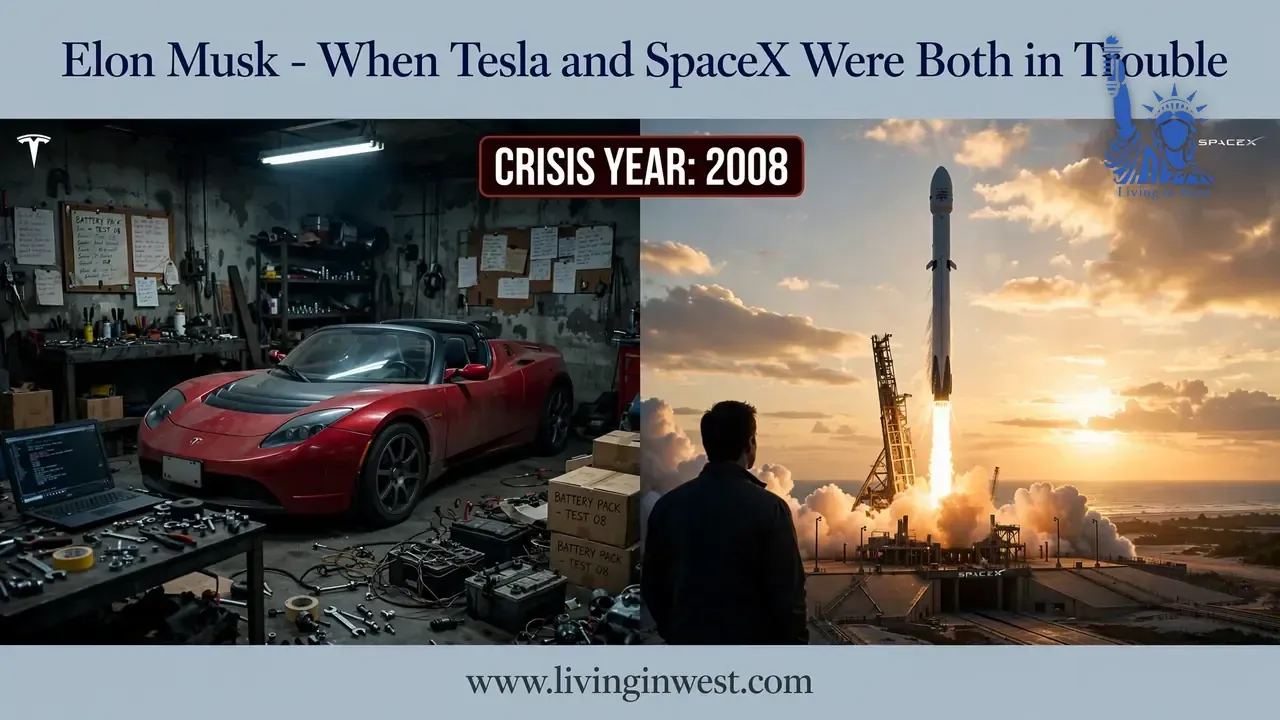
But in 2008, his business situation looked dramatically different.
The crisis
SpaceX had already suffered multiple Falcon 1 launch failures. Tesla was also struggling to raise enough money while trying to bring its first production car to market.
Tesla secured a $40 million convertible-debt financing commitment in November 2008, with the money intended to support Roadster production, its electric powertrain business and future product development.
SpaceX's breakthrough came later that year.
After a successful Falcon 1 launch in September 2008, NASA awarded SpaceX a $1.6 billion contract in December 2008 for 12 International Space Station cargo-resupply missions.
The comeback
Instead of abandoning either company, Musk continued investing in both.
SpaceX used the NASA relationship to build a sustainable commercial launch business. Tesla continued developing electric vehicles and eventually moved far beyond the original Roadster.
The result?
A 2008 survival story eventually became one of the largest business fortunes in American history.
The lesson
Musk's story shows that a company can look extremely fragile while its underlying technology may still have enormous future potential.
2. Jeff Bezos — Amazon Survived the Dot-Com Crash
Company: Amazon
Founded: 1994
Current net worth: About $267.6 billion
2026 Forbes rank: #3
Jeff Bezos founded Amazon in 1994 as an online bookseller.
Today, Amazon is one of America's largest technology, retail, logistics and cloud-computing companies.
But Amazon's early years were far from comfortable.
The crisis
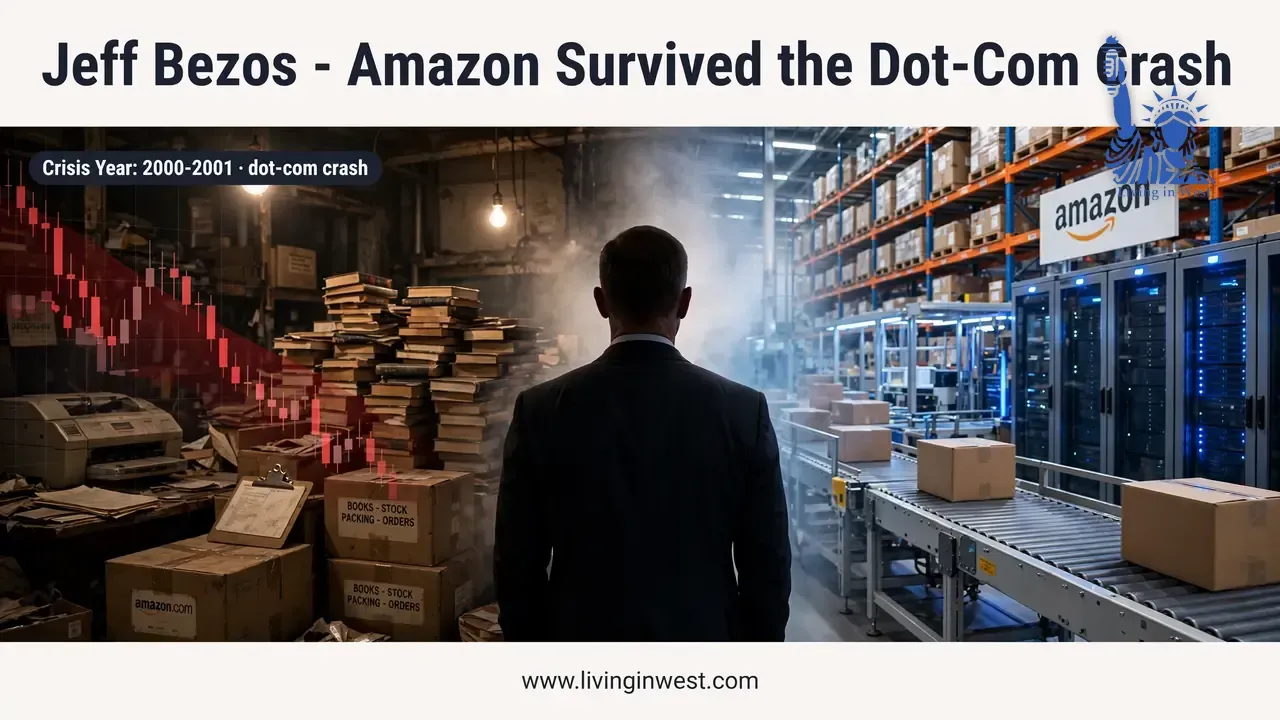
The dot-com bubble collapsed around 2000, destroying the market value of many Internet companies.
Amazon was losing money, carrying significant obligations and facing questions about whether its aggressive expansion could continue.
Amazon's SEC filings show that its cash and cash equivalents fell from about $822 million at the end of 2000 to about $540 million at the end of 2001, while the company continued reporting losses.
The company survived, but it had to become much more disciplined.
The comeback
Bezos did not keep Amazon as simply an online bookstore.
The company expanded into:
- Third-party sellers
- Amazon Marketplace
- Prime
- Fulfillment and logistics
- Digital advertising
- AWS cloud computing
- Streaming
- Artificial intelligence
That transformation changed Amazon from an online retailer into a massive technology and infrastructure business.
The lesson
Bezos didn't simply save the original Amazon.
He expanded the business model until the original business became only one part of a much larger company.
3. Larry Page — Google Was Once Offered for Less Than $1 Million
Company: Google / Alphabet
Founded: 1998
Current net worth: About $277.2 billion
2026 Forbes rank: #2
Larry Page and Sergey Brin created Google in 1998 while they were Stanford graduate students.
Today, Google is one of the world's most valuable technology businesses.
But in the beginning, the founders were reportedly willing to sell it.
The shocking moment
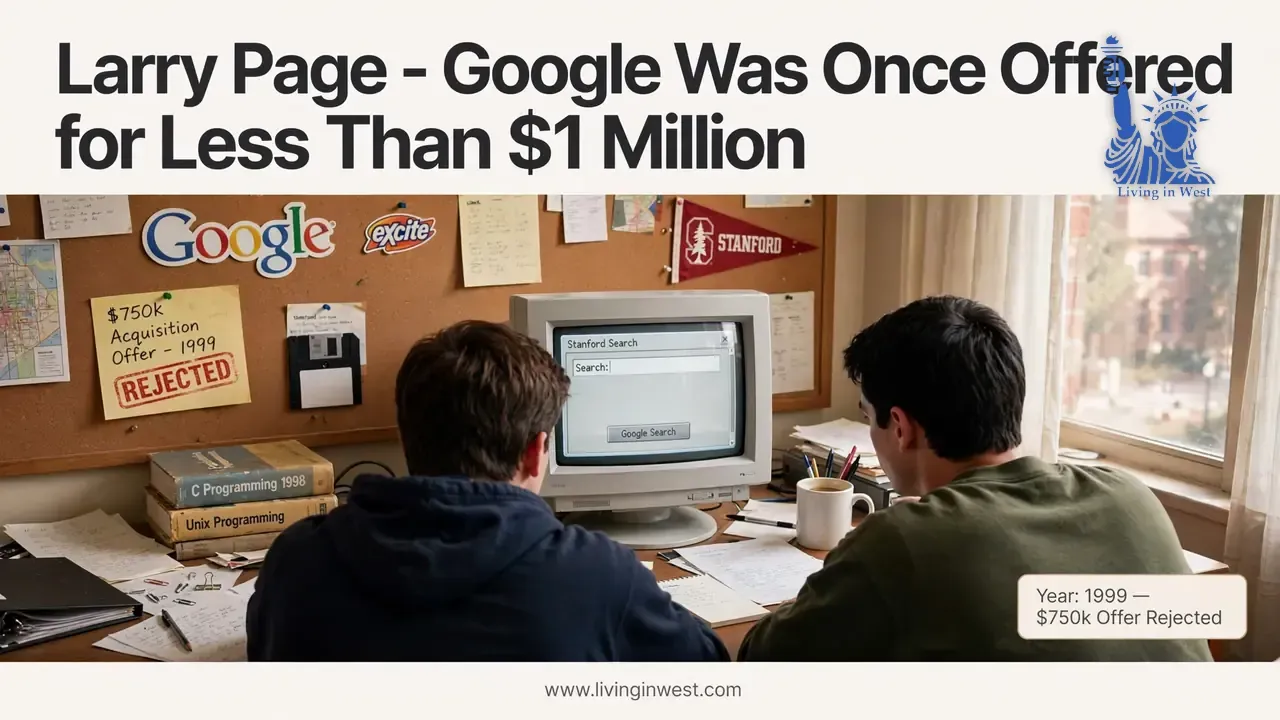
In 1999, Google was reportedly offered to Internet portal company Excite for around $1 million.
According to an account recalled by venture capitalist Vinod Khosla, the price was eventually discussed at approximately $750,000.
Excite ultimately did not buy Google.
Imagine the difference.
A company that could have been sold for less than $1 million eventually became the foundation of Alphabet, one of the world's largest technology companies.
The comeback
After the deal failed, Page and Brin continued developing Google.
The company eventually built an enormous advertising business around its search engine.
Then came:
- Google Search
- AdWords/Google Ads
- YouTube
- Android
- Google Cloud
- AI and Gemini
By 2026, Google's success had made Larry Page the second-richest person in the world, with Forbes estimating his fortune at $277.2 billion on September 1.
The lesson
Sometimes the biggest business mistake is not failing.
It is selling too early.
4. Sergey Brin — The Other Google Founder Who Stayed With the Bet
Company: Google / Alphabet
Founded: 1998
Current net worth: About $255.8 billion
2026 Forbes rank: #4
Sergey Brin's story is closely connected to Larry Page's because the two built Google together.
But Brin deserves his own place because their early decision created one of the largest technology fortunes in history.
The early risk
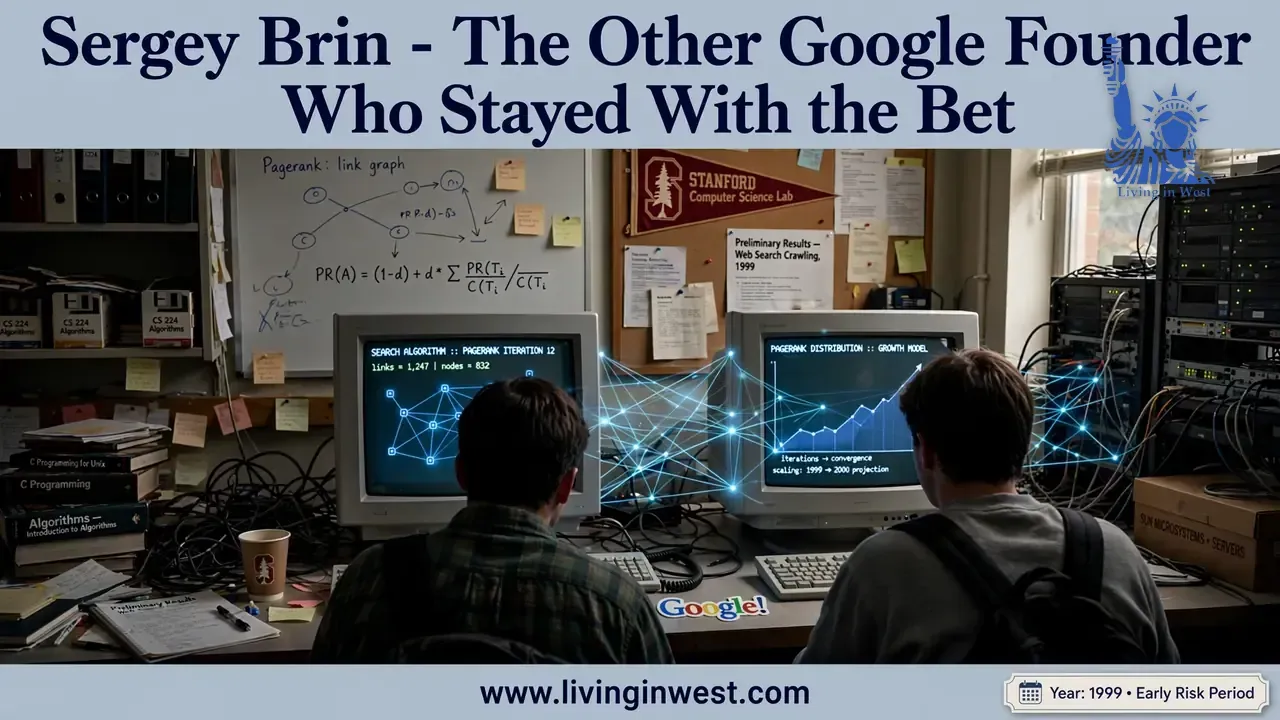
When Google was still a small search project, its founders were not operating a giant corporation.
They had to convince investors and the technology industry that search could become a major business.
Their willingness to continue after the failed Excite acquisition became one of the most important decisions in Google's history.
The breakthrough
Google's search technology became increasingly popular, while its advertising model created a scalable source of revenue.
The company then expanded far beyond search.
Google became a major force in:
- Online advertising
- Video
- Mobile software
- Cloud computing
- Artificial intelligence
Forbes estimated Brin's net worth at $255.8 billion on September 1, 2026, making him the world's fourth-richest person.
The lesson
Page and Brin's story demonstrates why ownership in a scalable technology company can become enormously valuable over decades.
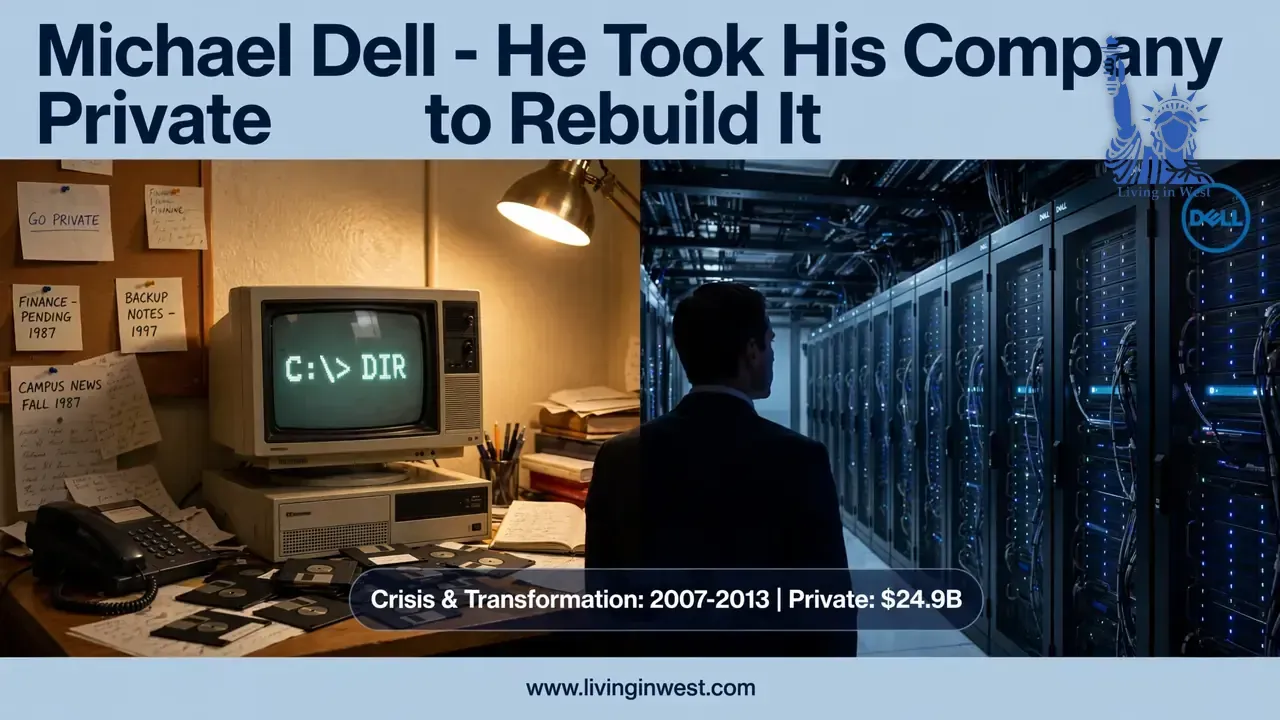
5. Michael Dell — He Took His Company Private to Rebuild It
Company: Dell Technologies
Founded: 1984
Current net worth: About $240.6 billion
2026 Forbes rank: #5
Michael Dell's story is different from Musk's and Bezos's.
Dell did not go through the same type of near-bankruptcy crisis.
Instead, the problem was that the PC industry was changing rapidly.
The crisis
Dell had built its success around selling computers efficiently and directly to customers.
But competition intensified, PC growth slowed and Dell's market position weakened.
Michael Dell returned as CEO in 2007, and company documents show that Dell's stock and PC business had significantly underperformed peers during the following years.
Dell needed a bigger transformation.
The restart
In 2013, Michael Dell and Silver Lake Partners took Dell private in a transaction worth approximately $24.9 billion, according to Dell's corporate history.
Going private gave the company more room to focus on long-term changes without the same public-market pressure.
Then came the much bigger transformation.
In 2016, Dell combined with EMC, creating Dell Technologies and dramatically expanding the company's enterprise technology and infrastructure business.
Dell later returned to the public markets in 2018.
The result
What started as a PC company became a major provider of enterprise infrastructure, servers, storage and AI computing systems.
Forbes estimated Michael Dell's net worth at $240.6 billion on September 1, 2026.
The lesson
Sometimes saving a company does not mean returning to its old business.
It means changing what the company is.
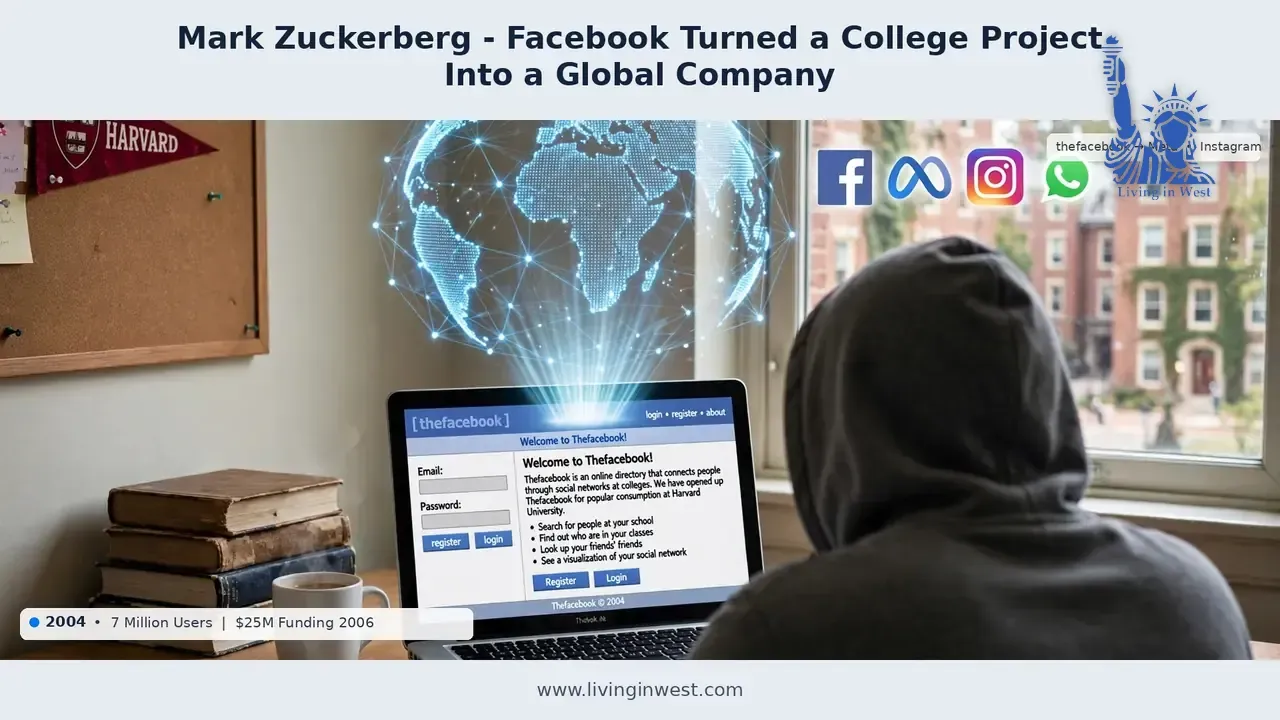
6. Mark Zuckerberg — Facebook Turned a College Project Into a Global Company
Company: Facebook / Meta
Founded: 2004
Current net worth: About $196.6 billion
2026 Forbes rank: #6
Mark Zuckerberg's story needs an important distinction.
Facebook was not a near-bankruptcy company like some of the more dramatic examples in this article.
Its biggest early challenge was deciding whether it should remain a college-focused social network or become a serious technology company.
The big decision
Zuckerberg launched Facebook while attending Harvard in 2004.
The company expanded rapidly, and by April 2006 Facebook announced a $25 million investment while reporting more than seven million users.
Instead of treating Facebook as a short-term startup opportunity, Zuckerberg continued building it as a long-term platform.
The transformation
Facebook eventually expanded through:
Facebook → Instagram → WhatsApp → Reels → Meta → AI
The company also transformed its business model around digital advertising and large-scale technology infrastructure.
Forbes says Zuckerberg still owns roughly 13% of Meta and estimated his fortune at about $196.6 billion on September 1, 2026.
The lesson
Zuckerberg's story isn't really about rescuing a dying company.
It's about recognizing when a startup has the potential to become much bigger—and investing aggressively before competitors can catch up.
What Do These Six Business Leaders Have in Common?
Their stories are very different, but there is one common pattern.
None of them became billionaires simply by having a good idea.
They built wealth by maintaining ownership in businesses that became extremely valuable.
Business leader Company Biggest challenge Key response
Elon Musk
Tesla / SpaceX
2008 financial pressure and launch failures
Keep investing and secure major contracts
Jeff Bezos
Amazon
Dot-com crash and heavy losses
Expand the business model
Larry Page
Early acquisition attempt failed
Keep building Google
Sergey Brin
Early uncertainty
Continue developing scalable search
Michael Dell
Dell
PC business pressure
Take company private and transform it
Mark Zuckerberg
Meta
Scaling a rapidly growing startup
Invest aggressively and expand
The most important pattern is simple:
Crisis → Decision → Transformation → Growth → Ownership → Wealth
How Long Did It Take Them to Build Their Fortunes?
These fortunes were not created overnight.
Their companies were built over decades.
- Michael Dell: started Dell in 1984 — roughly four decades of business development.
- Jeff Bezos: founded Amazon in 1994 — more than 30 years.
- Larry Page and Sergey Brin: founded Google in 1998 — about 28 years.
- Elon Musk: founded SpaceX in 2002 and became involved with Tesla in its early years — more than two decades.
- Mark Zuckerberg: founded Facebook in 2004 — more than two decades.
Their current fortunes reflect long-term ownership and rising company valuations, not simply the salaries they earned as executives.
Did Their Wealth Benefit the United States?
This is where the numbers need to be interpreted carefully.
A billionaire's net worth is not the same thing as money added to the U.S. economy.
For example, if a founder owns $100 billion worth of stock, that does not mean the founder has $100 billion sitting in a bank account.
Much of that wealth is tied to company shares.
The economic impact comes from the businesses themselves through:
- Jobs
- Employee wages
- Corporate taxes
- Income taxes
- Manufacturing
- Research and development
- Infrastructure
- Venture investment
- Supplier networks
- Exports
- Technology development
Amazon, for example, has reported substantial U.S. investment and economic activity, while SpaceX's NASA contracts helped build U.S. commercial space capabilities. NASA says its SpaceX partnership helped restore U.S. cargo transportation capabilities to the International Space Station after the Space Shuttle's retirement.
So the better question isn't:
"How much of their net worth did they give America?"
It's:
"How much economic activity did their companies create in America?"
That's a much more meaningful measure.
What Did Investors Earn From Their Companies?
This is another area where headlines can be misleading.
Not every investor made billions from these companies.
Investors bought shares at different prices and sold at different times.
However, long-term shareholders who bought early and held their investments through major growth periods could have generated extraordinary returns.
The reason is simple:
When the value of a company rises, the value of its shares generally rises too.
That created enormous wealth not only for founders but also for early investors, employees holding stock and long-term shareholders.
However, those gains are not the same as the founders' net worth, and many investors bought after the companies had already become successful.
The Real Business Lesson
The biggest lesson from these six American business leaders isn't:
"Start a company and become a billionaire."
It's this:
The company you start may not be the company you eventually build.
Amazon started with books.
Google started with search.
Dell started with PCs.
Facebook started with college students.
Tesla started with one electric sports car.
SpaceX started by trying to make rockets cheaper and more capable.
The companies became much larger because their founders continued changing the business when circumstances changed.
That may be the most important lesson for entrepreneurs:
Don't confuse your original business model with your ultimate business.
Frequently Asked Questions
Who are the top six richest business leaders in the United States in 2026?
As of September 1, 2026, Forbes' global ranking places Elon Musk, Larry Page, Jeff Bezos, Sergey Brin, Michael Dell and Mark Zuckerberg in the top six positions, respectively. Their estimated fortunes range from about $196.6 billion to $891.9 billion.
Which American billionaire came closest to business failure?
Elon Musk faced one of the most severe combined crises in this group in 2008, when SpaceX had experienced launch failures and Tesla needed additional financing. Tesla secured a $40 million financing commitment in November 2008, while SpaceX later received a $1.6 billion NASA contract.
Did Jeff Bezos almost lose Amazon?
Amazon faced serious financial pressure during the dot-com crash and continued reporting losses. However, it is more accurate to say Amazon faced a severe financial and market crisis rather than claiming that bankruptcy was certain.
Was Google almost sold for $1 million?
Yes. In 1999, Larry Page and Sergey Brin reportedly offered to sell Google to Excite for about $1 million, with the discussion eventually reaching roughly $750,000. Excite declined the deal.
Did Michael Dell take Dell private?
Yes. Michael Dell and Silver Lake Partners took Dell private in 2013 in a transaction valued at approximately $24.9 billion. Dell later returned to the public markets in 2018.
Was Facebook ever close to bankruptcy?
There is no strong evidence that Facebook was close to bankruptcy in the same way Tesla or some other troubled startups were. Facebook's early challenge was rapid scaling and turning a college-based social network into a major technology company. In 2006, Facebook secured $25 million in funding and reported more than seven million users.
How do these business leaders have such high net worth?
Most of their wealth comes from ownership stakes in valuable companies rather than cash salaries. As company share prices and valuations increase, the estimated value of their holdings can increase dramatically.
Can a billionaire lose billions in a single day?
Yes. Because much of billionaire wealth is tied to publicly traded shares, their estimated net worth can rise or fall by billions as stock prices change. Forbes' real-time ranking shows these daily movements.
Final Takeaway
The six richest business leaders in this group did not build their fortunes by avoiding problems.
They built them by surviving problems, changing direction and continuing to invest in businesses they believed could become much larger.
Elon Musk faced a critical 2008 moment.
Jeff Bezos survived the dot-com collapse.
Larry Page and Sergey Brin turned down the opportunity to sell Google for less than $1 million.
Michael Dell transformed a PC company into an enterprise technology giant.
Mark Zuckerberg turned a college social network into Meta.
Their biggest fortunes came after their biggest business decisions—not before them.
And that is what makes their stories more interesting than a simple list of America's richest people.

Editorial Team