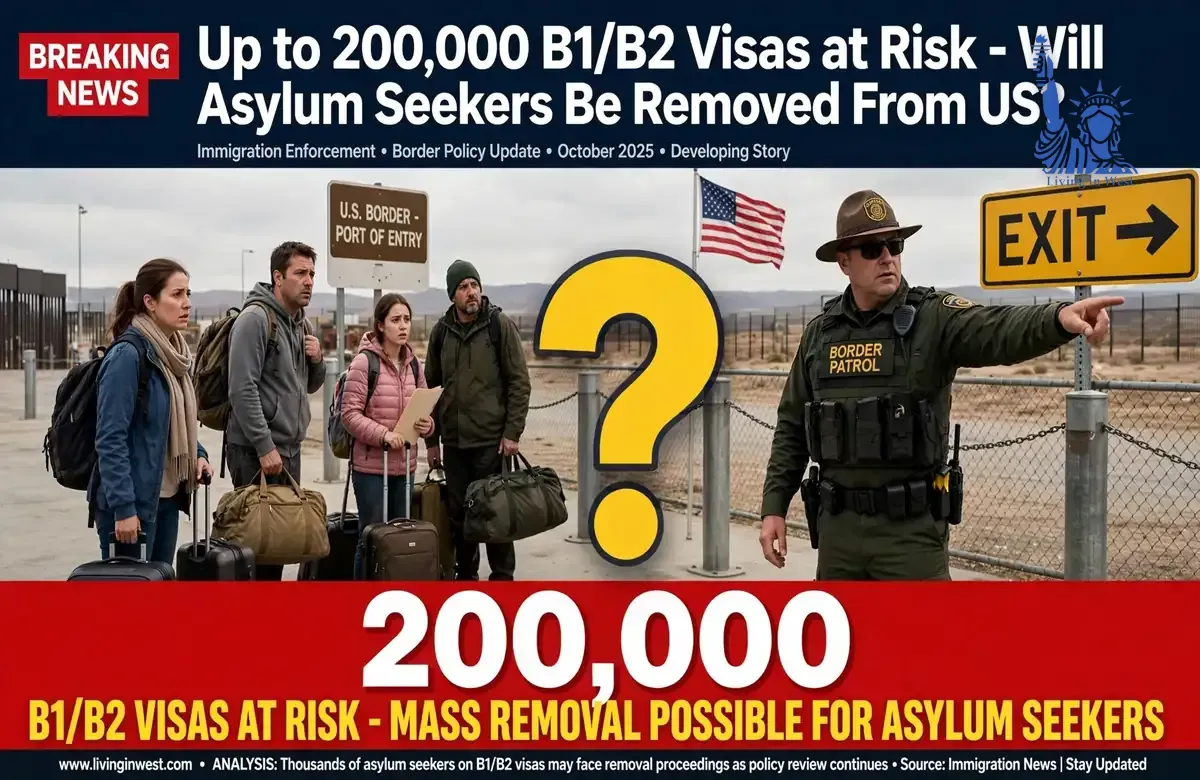
However, one important distinction is needed: this is not a completed deportation order for 200,000 people. The State Department is preparing a mass visa-revocation process, and the exact number remains uncertain. The Associated Press reported that the targeted visas were issued between 2016 and 2026 and that the action is being coordinated with the Department of Homeland Security.
What Are B1 and B2 Visas?
A B1 visa is generally used for temporary business travel, while a B2 visa is commonly used for tourism, family visits and certain medical travel.
The Trump administration argues that these visas are designed for temporary visits and that using a visitor visa before filing an asylum claim can represent misuse of the immigration system.
State Department spokesman Tommy Pigott said the department is coordinating with DHS to identify and revoke nonimmigrant visas belonging to people who entered the country as short-term visitors and later filed for asylum.
Have 200,000 Visas Already Been Revoked?
No.
The figure of 200,000 refers to the potential scale of the planned action. The State Department has not announced that exactly 200,000 visas have already been revoked.
AP reported that the number remains dynamic and that the revocation process could be carried out on a rolling basis.
Therefore, the accurate headline is:
“Trump Administration Plans to Revoke Up to 200,000 B1/B2 Visas”
rather than:
“Trump Deports 200,000 Visa Holders.”
Does Visa Revocation Mean Immediate Deportation?
Not necessarily.
Visa revocation and deportation are different immigration actions. AP and Al Jazeera reported that people with pending asylum cases would not necessarily be immediately deported simply because their B1/B2 visas were revoked. Their visitor classification could be removed while their asylum proceedings continue.
That means:
Visa revocation ≠ automatic immediate deportation.
The person's broader immigration situation, including the outcome of the asylum case and any other legal basis for remaining in the United States, would still matter.
Part of a Broader Immigration Crackdown
The B1/B2 proposal is only one part of the Trump administration's broader immigration strategy.
Other major actions include changes involving:
- CHNV humanitarian parole
- CBP One appointments
- Temporary Protected Status
- Expanded expedited removal
- ICE detention
- Visa screening and revocations
- Deportation enforcement
These policies should therefore be understood as separate actions forming part of a broader immigration enforcement campaign.
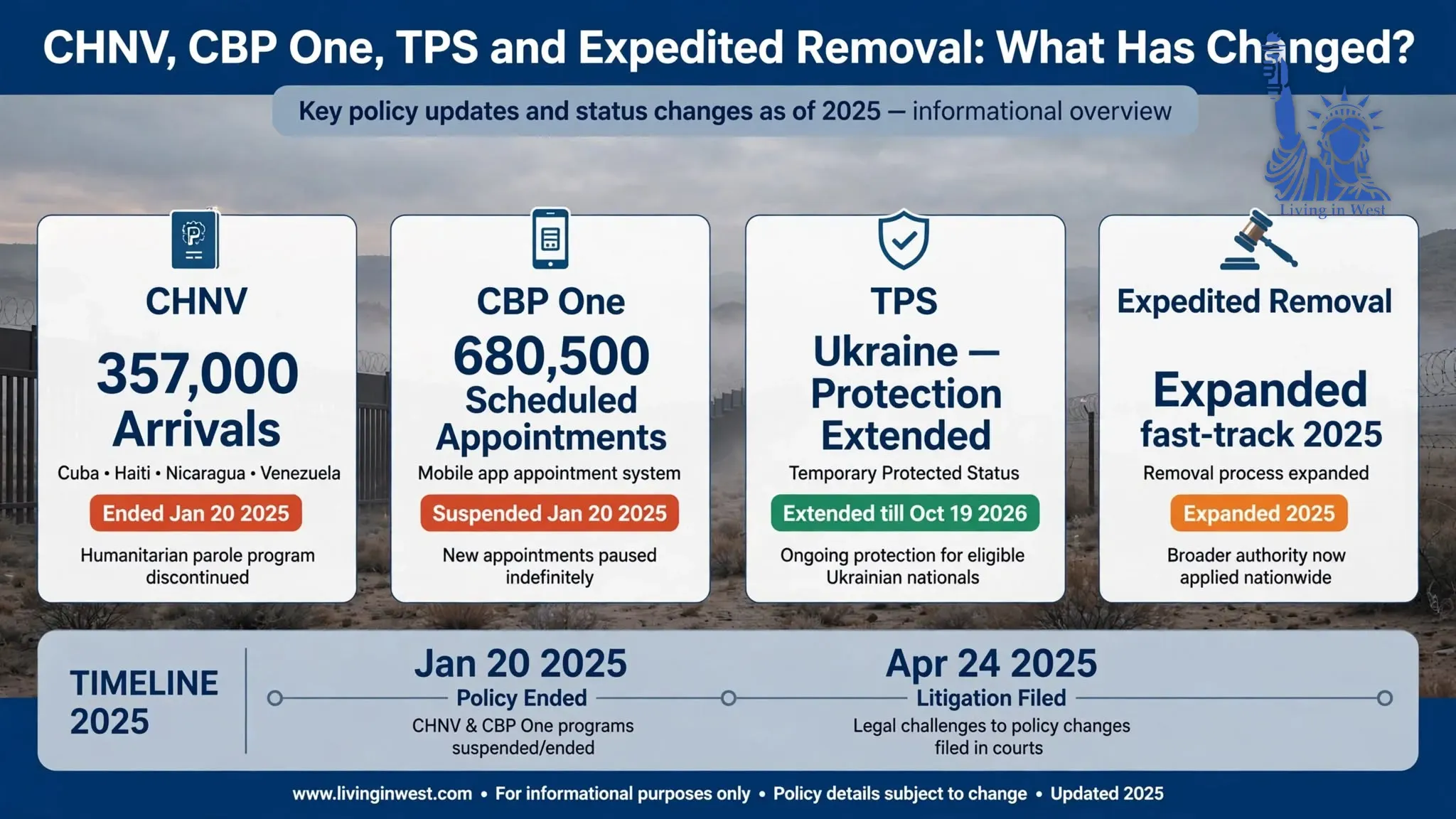
CHNV, CBP One, TPS and Expedited Removal: What Has Changed?
CHNV Humanitarian Parole
The CHNV program covered eligible nationals of Cuba, Haiti, Nicaragua and Venezuela.
The Biden administration created humanitarian parole processes that allowed eligible individuals from those countries to enter the United States after being vetted and approved.
On January 20, 2025, the Trump administration ended the categorical parole programs and moved back toward case-by-case parole decisions. CBP also announced that CBP One and the categorical CHNV parole programs had ended.
The administration also attempted to terminate existing CHNV parole grants as of April 24, 2025. That action became the subject of litigation, meaning it is inaccurate to describe all former CHNV beneficiaries simply as people who received final deportation orders.
Official CBP data had already recorded more than 357,000 CHNV beneficiaries arriving lawfully by January 2024.
CBP One
CBP One was used to schedule appointments at U.S. ports of entry.
The system became a major legal-entry mechanism during the Biden administration. By the end of June 2024, CBP reported that more than 680,500 people had successfully scheduled appointments through the system.
On January 20, 2025, the appointment functionality was removed and existing appointments were canceled.
This is why claims that “937,000 CBP One users are now being deported” should not be presented as an established official figure.
Temporary Protected Status
Temporary Protected Status, or TPS, provides temporary protection and work authorization to eligible nationals of designated countries affected by extraordinary conditions.
The Trump administration has taken actions affecting several TPS designations, but the legal status is not identical for every country.
Some designations have been terminated or challenged, while others have been extended. For example, USCIS records show that Ukraine's TPS designation was extended through October 19, 2026.
Therefore, a responsible 2026 immigration article should avoid saying that all TPS holders from every listed country have already lost protection.
Expanded Expedited Removal
The Trump administration also expanded the use of expedited removal.
Expedited removal is a fast-track immigration removal process that can apply to certain noncitizens who meet specific legal requirements. DHS documents describe the expanded authority as covering certain people encountered anywhere in the country within two years of unlawful entry.
However, expedited removal does not automatically apply to every undocumented immigrant.
Asylum claims, credible-fear procedures, immigration history and other legal circumstances can affect how an individual case is handled.
That distinction is important when reporting on the policy.
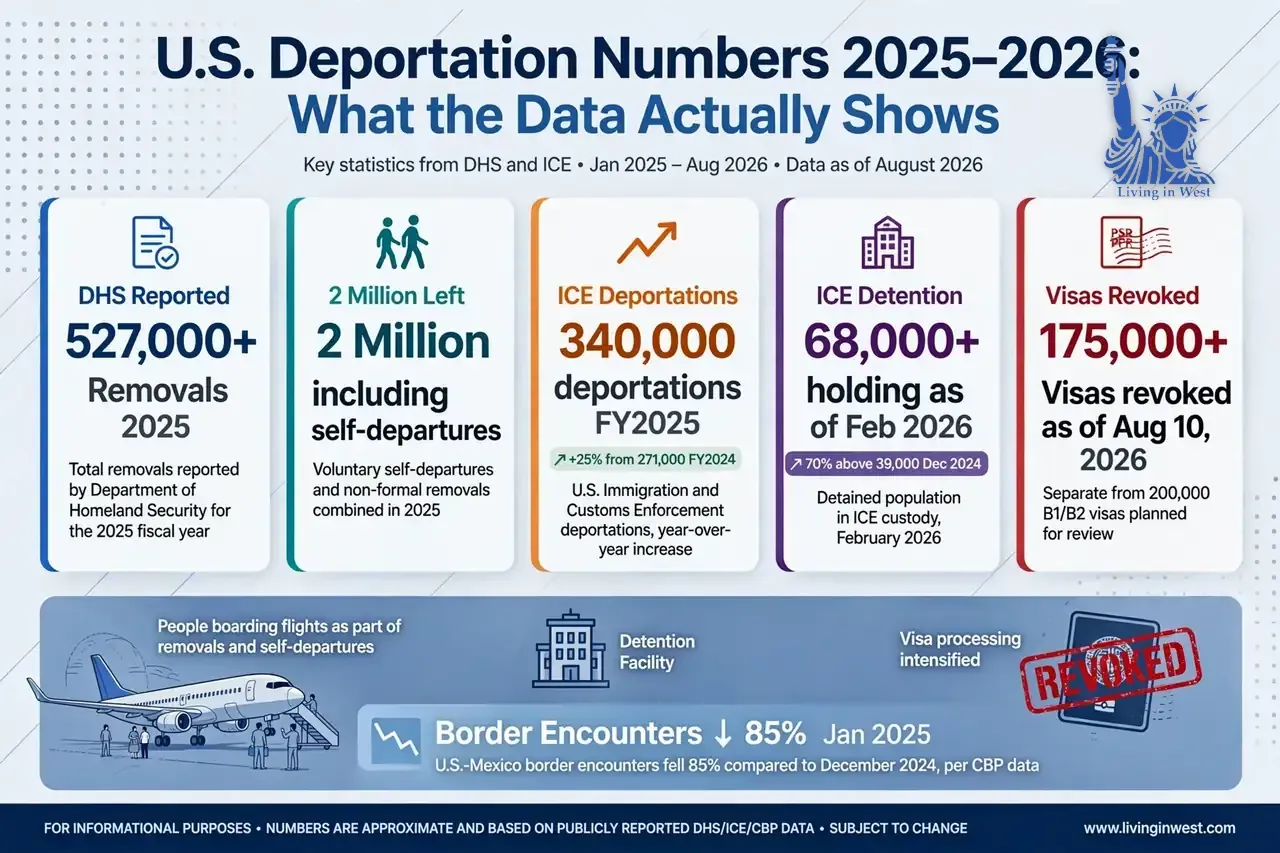
U.S. Deportation Numbers 2025–2026: What the Data Actually Shows
The scale of the Trump administration's immigration enforcement campaign has produced several large numbers, but they do not all measure the same thing.
DHS Reported More Than 527,000 Removals
DHS reported more than 527,000 removals during 2025 in one of its major enforcement announcements.
The administration has also reported that more than 2 million people had left the United States, including a large number of people described by DHS as self-departures.
These figures should not be described as “2 million formal deportations.” Removal, return, voluntary departure and self-departure are different categories and can be counted differently across government reports.
ICE Deportations Were Estimated at About 340,000
The Migration Policy Institute estimated that ICE conducted approximately 340,000 deportations in fiscal year 2025.
MPI said this represented about a 25% increase from the approximately 271,000 ICE deportations recorded in FY2024. Its estimate includes formal removals as well as some voluntary departures and does not include deportations carried out by CBP.
This explains why different reports can show different deportation totals.
ICE Detention Surged
ICE detention also expanded significantly.
By early February 2026, ICE was holding more than 68,000 people in detention facilities across the United States. KFF reported that this was more than 70% above the approximately 39,000 people held at the end of the Biden administration in December 2024.
The American Immigration Council similarly reported more than 68,000 people in immigration detention by the end of 2025, describing the increase as roughly 75%.
This shows that the administration's strategy is not limited to border enforcement. It also includes a major expansion of interior enforcement and detention capacity.
More Than 175,000 Visas Have Already Been Revoked
On August 10, 2026, the State Department announced that the Trump administration had revoked more than 175,000 visas.
According to the department, the revocations involved alleged visa violations, criminal activity, fraud, violence-related conduct and national-security concerns.
This figure is separate from the planned up-to-200,000 B1/B2 asylum-related revocations.
It would therefore be misleading to simply add the two numbers together and claim that 375,000 visas have been canceled.
Border Encounters Also Fell Sharply
The administration has pointed to a major reduction in southwest border encounters as evidence that its enforcement policies are producing results.
CBP reported that Border Patrol apprehensions at the southwest border during January 21–31, 2025 were 85% lower than during the same period in 2024.
The administration attributes the decline to stronger enforcement and deterrence.
However, the broader impact of immigration policy involves much more than border encounters, including asylum processing, visa policy, detention, TPS, parole programs and deportation enforcement.
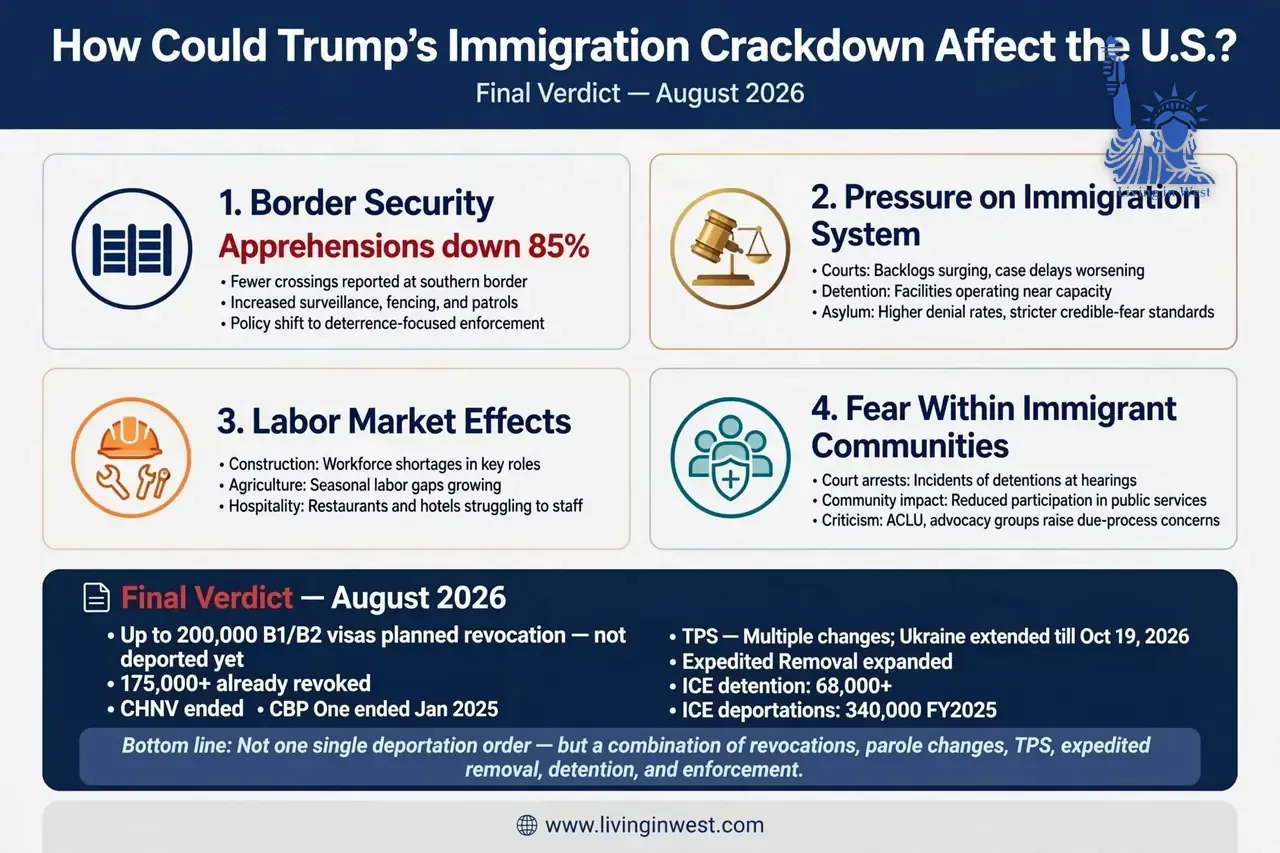
How Could Trump's Immigration Crackdown Affect the U.S.?
The Trump administration's immigration strategy could have consequences beyond immigration enforcement itself. The effects may be visible in border security, the labor market, immigration courts and immigrant communities.
1. Border Security
The administration's main argument is that tougher enforcement will discourage unauthorized border crossings.
The sharp decline in southwest border apprehensions reported by CBP in early 2025 supports the administration's claim that border activity fell significantly after the policy shift.
Supporters of the crackdown argue that stronger enforcement improves border control and reduces incentives for irregular migration.
2. Pressure on the Immigration System
Large-scale enforcement can also increase pressure on immigration courts, detention facilities and asylum-processing systems.
At the same time, several immigration policies have faced legal challenges in federal courts.
This means the final impact of many Trump immigration measures will depend not only on executive actions but also on court decisions and how federal agencies implement the policies.
3. Potential Labor-Market Effects
People affected by CHNV and TPS changes have worked in various parts of the U.S. economy.
If large numbers of workers lose immigration protection or work authorization, some industries could experience local labor shortages, particularly sectors that rely heavily on immigrant labor.
Construction, agriculture, hospitality and other labor-intensive industries could be affected in some regions.
However, it would be premature to claim that mass deportation will automatically create a nationwide labor shortage. The economic impact will depend on the number of workers affected, local labor markets and how quickly employers can find replacement workers.
4. Fear Within Immigrant Communities
Aggressive immigration enforcement has also created concern among immigrant communities.
AP reported in 2025 that immigration officers were arresting some people around immigration court proceedings, including asylum seekers whose cases had been dismissed. The practice generated criticism from immigration lawyers and advocates who argued that it could discourage people from participating in the legal immigration process.
The administration argues that immigration laws must be enforced and that people without a lawful basis to remain in the country can be subject to removal.
Final Verdict: What Is Actually Happening in August 2026?
The latest major development is that the Trump administration is preparing to revoke up to 200,000 B1/B2 business and tourist visas belonging to people who entered the United States as visitors and later sought asylum.
But this should not be reported as “200,000 people have already been deported.”
The verified picture is:
- Up to 200,000 B1/B2 visas: Potentially targeted in a planned mass revocation.
- 175,000+ visas: Already revoked under separate enforcement actions announced by the State Department.
- CHNV: Categorical parole programs ended, with legal disputes surrounding existing parole grants.
- CBP One: Appointment functionality ended in January 2025.
- TPS: Multiple country-specific changes, terminations and extensions have occurred.
- Expedited removal: Authority was expanded for certain eligible noncitizens.
- ICE detention: More than 68,000 people were being held in early 2026.
- ICE deportations: MPI estimated approximately 340,000 in FY2025.
Bottom Line
The Trump administration's 2026 immigration crackdown is not one single deportation order. It is a combination of visa revocations, parole changes, TPS actions, expanded expedited removal, detention expansion and broader deportation enforcement.
The newest B1/B2 development is best described as a planned mass visa revocation that could affect up to 200,000 people, rather than a completed deportation of 200,000 immigrants.

Editorial Team