1. U.S. GDP vs Canada GDP in 2025
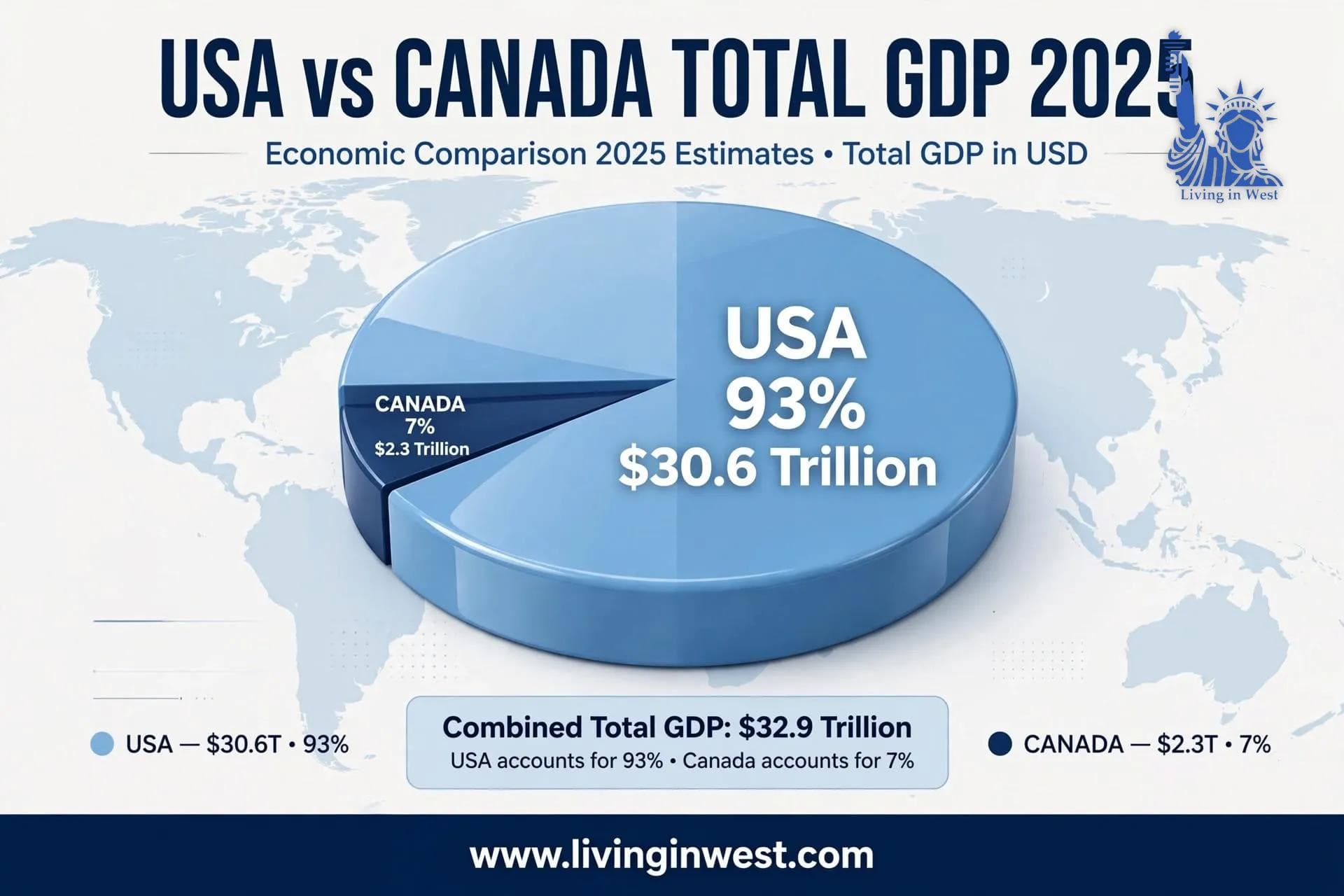
According to World Bank data, the United States recorded nominal GDP of approximately $28.75 trillion in 2024, while Canada recorded approximately $2.24 trillion.
For 2025, international datasets and estimates vary slightly depending on the revision and exchange-rate assumptions. Available estimates put U.S. nominal GDP at roughly $30.6 trillion and Canada at roughly $2.3 trillion. These should therefore be presented as approximate 2025 figures rather than fixed final numbers.
That means the U.S. economy was roughly more than 13 times larger than Canada's economy. However, total GDP does not tell the whole story about living standards. GDP per capita provides a better measure for comparing economic output per person.
2. GDP Per Capita: What Does It Mean for the Average Person?
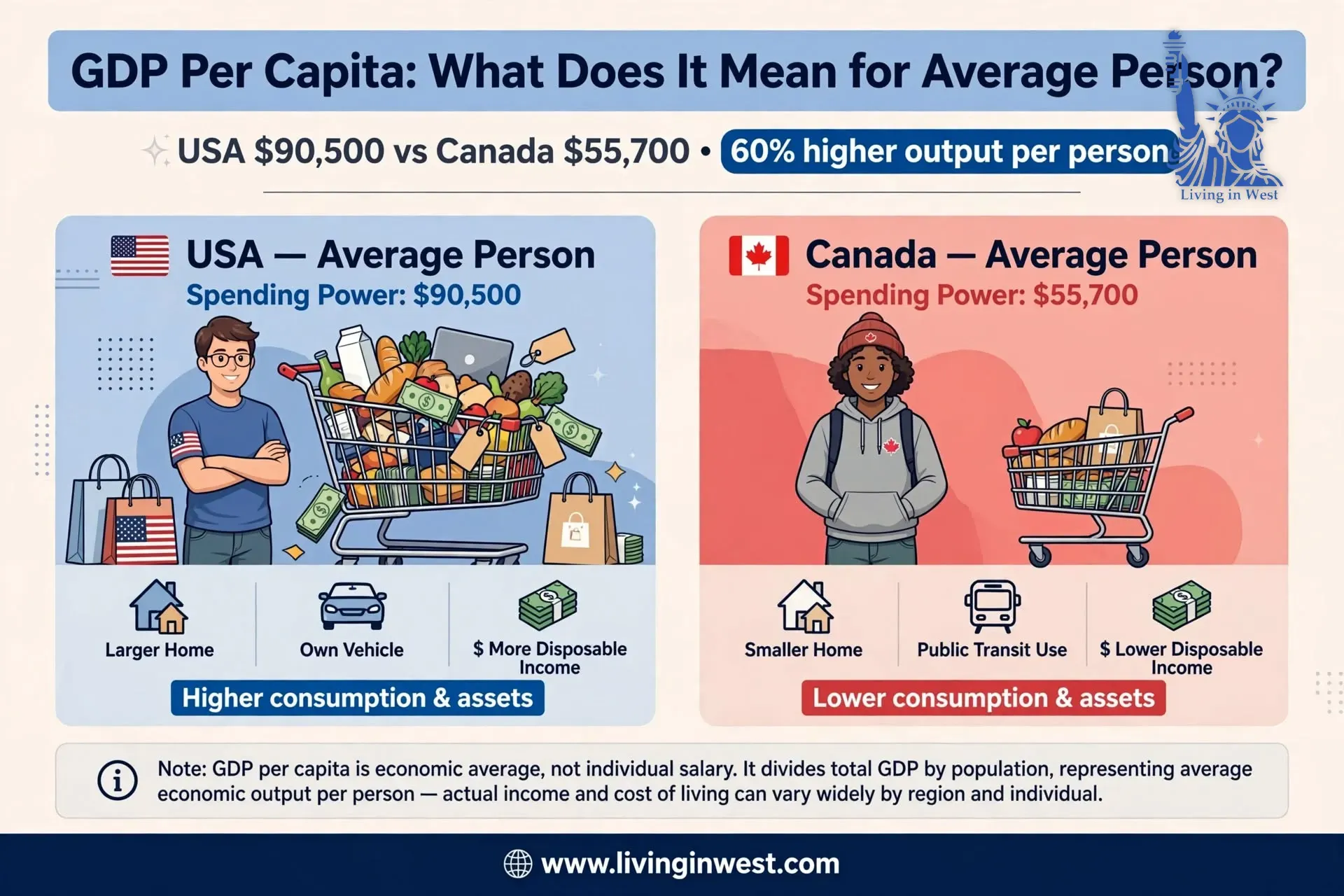
Available 2025 figures put U.S. GDP per capita at roughly $90,500, compared with approximately $55,700 in Canada.
That means economic output per person was more than 60% higher in the United States. However, GDP per capita does not mean that every American earns 60% more than every Canadian. It is an economic average, not an individual salary.
This is why simply looking at GDP and concluding that Americans automatically have a better quality of life would be an incomplete comparison.
3. Taxes vs Healthcare: A Major Difference
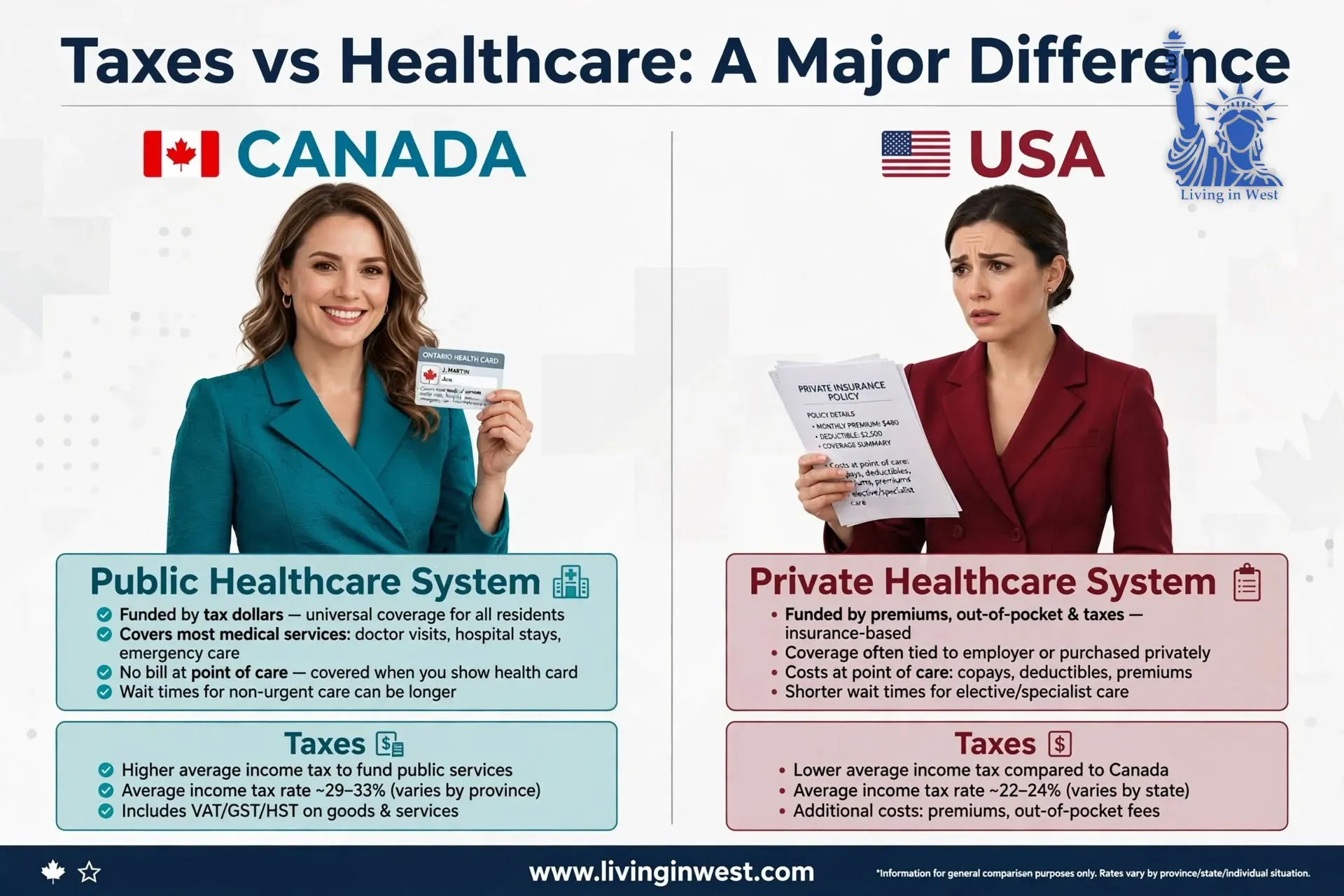
Canada generally operates with a higher-tax and more publicly funded system, while the United States uses a more mixed model of taxation, public programs, employer benefits and private spending.
In Canada, eligible residents receive coverage for medically necessary hospital and physician services through the public healthcare system. However, “free healthcare” should not be interpreted as every medical service being free. Prescription drugs, dental care and several other services may require separate insurance coverage or out-of-pocket payment.
In the United States, Medicare, Medicaid and other government programs provide substantial healthcare funding, but the system is not based on universal public coverage of physician and hospital services in the same way as Canada's system. Private insurance plays a major role.
The U.S. system can offer greater private-sector choice and access to certain specialists and facilities, but premiums, deductibles, copayments and medical bills can create significant household costs.
The tax comparison is also more complicated than simply saying “low-tax America versus high-tax Canada.” Actual tax burdens depend on income, deductions, state or provincial rules and household circumstances. Canada generally relies more heavily on taxation to fund public services, while the United States relies more heavily on private spending and employer-provided benefits.

4. The 50% U.S. Tariff on Canadian Goods
One of the biggest economic developments of 2026 is the escalating U.S.-Canada trade dispute.
On July 20, 2026, the Trump administration announced additional 50% tariffs on certain Canadian products under Section 338 of the Tariff Act of 1930. Covered products include items such as wine, hockey sticks, cement and dairy products. Energy, potash, critical minerals and certain products already covered by Section 232 tariffs were excluded.
The tariffs were announced in July but became effective later, so describing them simply as “tariffs imposed in July” would be technically misleading.
U.S. officials described the covered Canadian imports as worth nearly $20 billion, while Canada's August 25 retaliation announcement covered C$27.6 billion of U.S. imports.
5. How Much Could Canada Be Hurt?
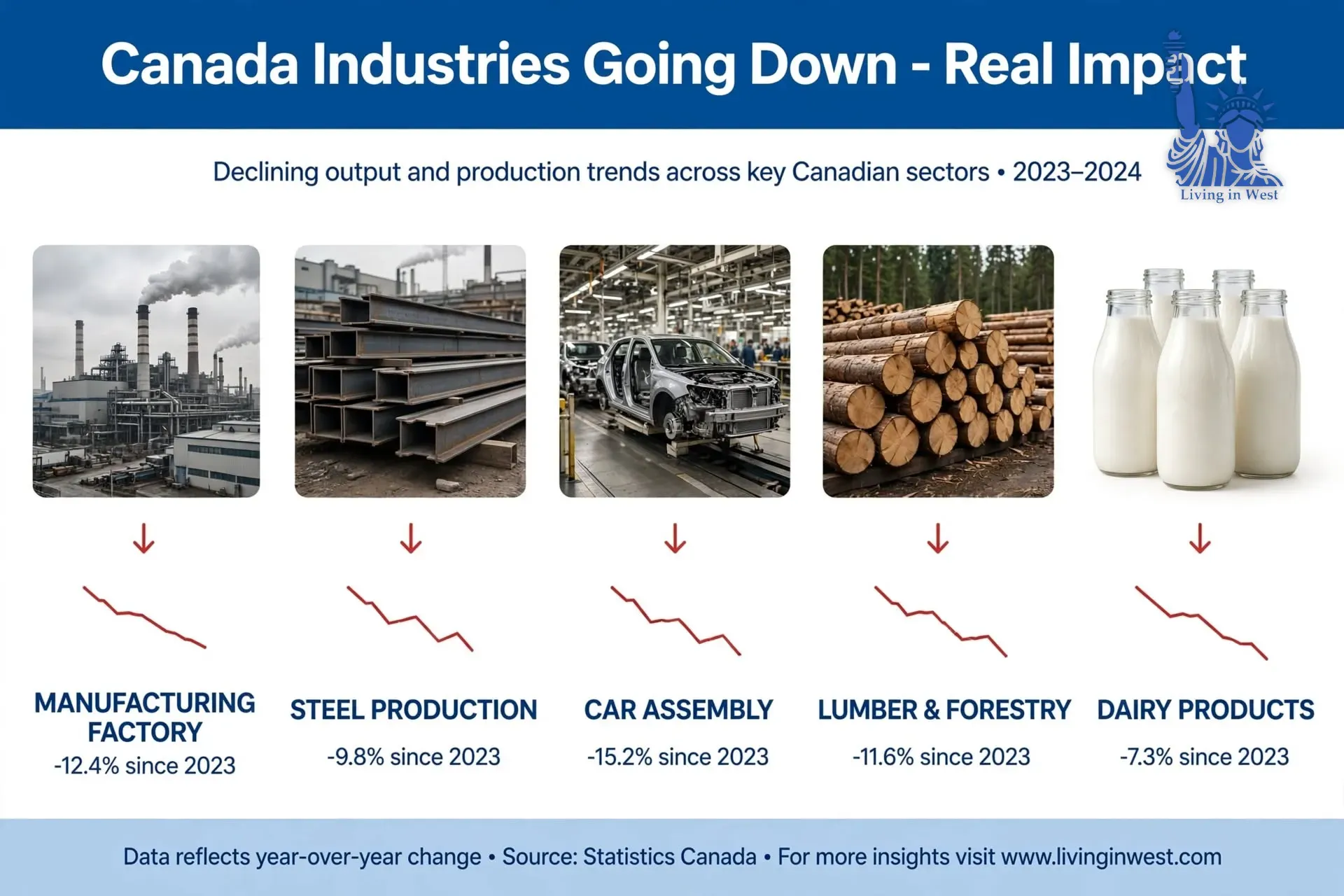
Canada is highly dependent on the U.S. market, so tariffs can have a relatively large effect on Canadian manufacturing, steel, automobiles, forestry and other export-oriented industries.
A Scotiabank model estimated that, under its tariff assumptions, the level of Canadian GDP could be approximately 1.1% lower by the end of 2026 than it would have been without tariffs. Ontario and Quebec were estimated to be among the hardest-hit provinces, with their GDP levels roughly 1.4% lower by the end of 2026 under that scenario.
6. What Happens in 2027?
This is one of the most important parts of the story: the economic damage does not necessarily disappear when 2026 ends.
Scotiabank's model estimated that Canada's GDP level could remain roughly 1.0% below the non-tariff scenario in 2027, while employment could remain about 0.7% lower.
The Bank of Canada has also estimated that tariffs and trade tensions could reduce Canada's potential output by approximately 0.9% in 2027.
This does not mean Canada's GDP must fall in 2027. The economy can still grow, but it may grow from a lower economic base than it would have reached without the trade conflict.
There is also an additional 2027 risk. President Trump has threatened to impose 50% tariffs on Canadian cars, trucks and auto parts starting January 1, 2027. If implemented, this could create additional pressure on Ontario's deeply integrated automobile industry and North American supply chains.
7. Canada's Retaliation
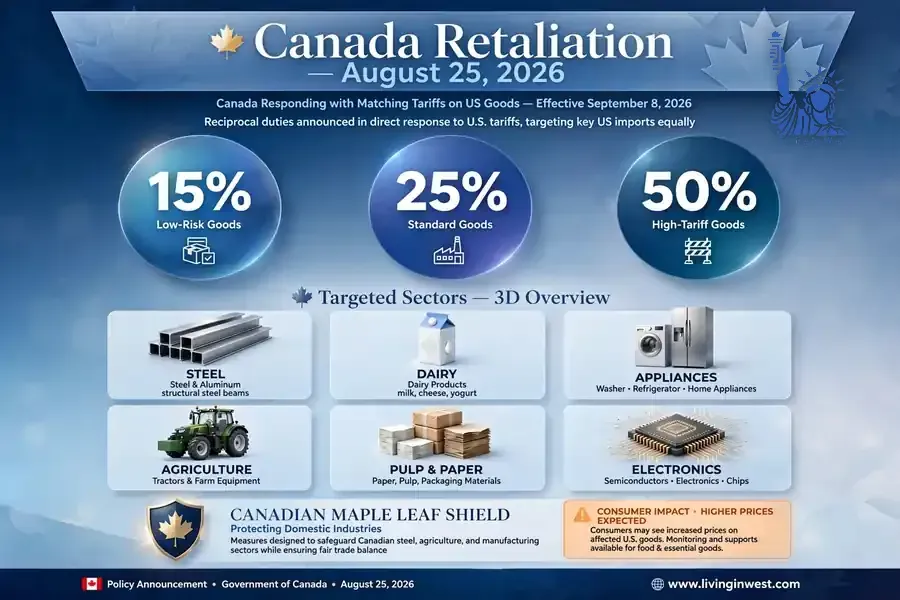
Canada announced on August 25, 2026 that it would respond with matching tariffs on U.S. goods. Beginning September 8, tariffs of 15%, 25% and 50% will apply depending on the product. Targeted sectors include steel, dairy, appliances, agricultural equipment, pulp and paper, and electronics.
Canada is using these measures to protect domestic industries, but retaliation can also create higher prices and fewer choices for Canadian consumers and businesses.
Bottom Line
The U.S. economy is more than 13 times larger than Canada's economy, and its GDP per capita is also significantly higher. Canada relies more heavily on publicly funded services and universal coverage for medically necessary hospital and physician care, while the U.S. system gives a larger role to private insurance and private spending.
Canada could experience greater economic pain from the tariff conflict because its economy is much more dependent on trade with the United States. However, the United States is not immune. Higher prices for Canadian inputs, auto parts, metals, agricultural products and other goods can eventually affect American companies and consumers.
The most important point is that the 2027 impact may be more than a temporary tariff shock. If tariffs and retaliation continue, Canada could face longer-lasting pressure on investment, employment and productive capacity. The United States may experience a smaller overall GDP impact, but supply-chain disruptions and higher prices can still create costs for American businesses and households.

Editorial Team