America Doesn't Hire "Countries" — It Hires People With Skills
When people talk about foreign workers coming to the United States, they often ask one simple question:
Which country sends the most workers to America?
The answer depends on what kind of worker you are talking about.
India dominates the U.S. H-1B specialty-occupation pipeline. China is a distant second in H-1B approvals. The Philippines has a notable presence in healthcare and other professional occupations, while Mexico dominates the H-2B temporary non-agricultural worker pipeline.
That means there is no single government ranking called "the countries America hires from."
Different visa programs serve different parts of the U.S. economy.
For this analysis, we are looking at the countries that matter most across these major workforce pipelines — and ranking them from #5 to #1 based on a combination of recent government data, workforce trends and future potential.
One important clarification: H-1B approval numbers are not the same thing as total jobs or total hires. They represent approved H-1B petitions/beneficiaries, while H-2B numbers represent visas issued to temporary non-agricultural workers.
With that distinction in mind, let's start the reverse ranking.

#5 — Pakistan
A Smaller H-1B Pool With a High-Skill Opportunity
Pakistan does not come close to India or China in total H-1B numbers, but it remains one of the notable South Asian sources of U.S. H-1B talent.
According to USCIS data for FY2024, 3,055 approved H-1B beneficiaries were born in Pakistan, representing about 0.8% of all approved H-1B beneficiaries. That placed Pakistan among the leading countries outside the two dominant India-China pipelines.
The Pakistani H-1B pipeline is concentrated in professional fields such as technology, engineering, medicine and other specialty occupations.
But the rules are changing.
What Changes in FY2027?
For the FY2027 H-1B registration season, the United States replaced the previous purely random selection process with a wage-weighted selection system.
Under the new system, a Level I wage registration receives one selection entry, Level II receives two, Level III receives three and Level IV receives four.
DHS estimated that under the new weighted system, the probability of selection could fall from 29.59% under the old random model to about 15.29% for Level I, while Level IV could reach about 61.16% in its modeling. These are modeled probabilities, not guaranteed individual odds.
What Does That Mean for Pakistani Workers?
The message is not that Pakistanis cannot get U.S. jobs.
The message is that low-wage, entry-level H-1B strategies may become less attractive, while higher-paid and more specialized positions become more competitive in the selection process.
For someone targeting the United States from Pakistan, skills such as:
- Artificial intelligence
- Cloud computing
- Cybersecurity
- Software engineering
- Data engineering
- Advanced healthcare
- Specialized engineering
- Labour work
- Auto mechanic
could become increasingly valuable.
2027 Outlook
Positive, but selective.
Pakistan is unlikely to challenge India or China in total H-1B numbers anytime soon. But its high-skill talent pool can continue to grow in specific technology, healthcare and engineering niches.
The opportunity is less about sending huge numbers of workers and more about producing high-value specialists.
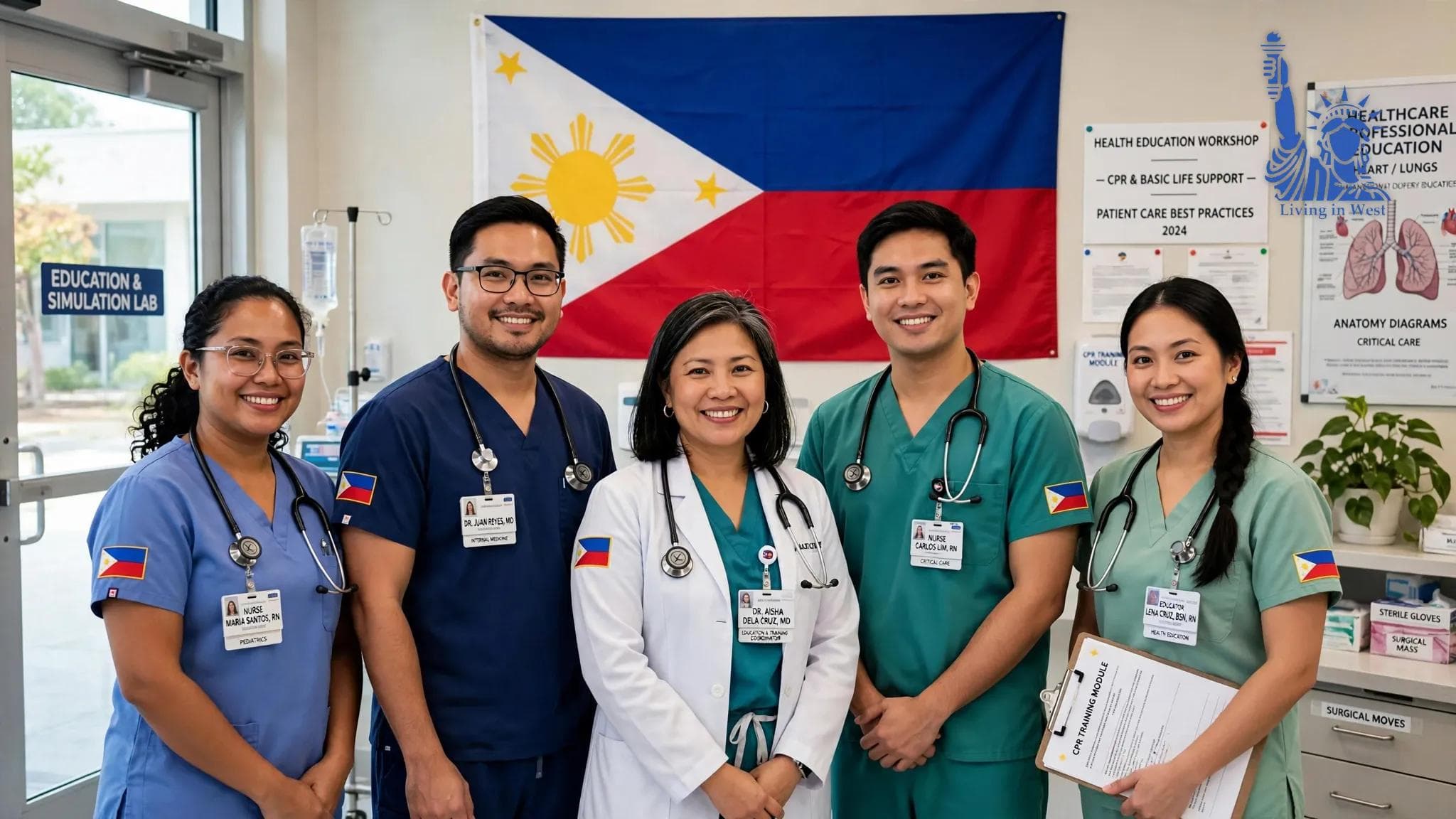
#4 — Philippines
America's Healthcare Connection
The Philippines has a very different workforce story from Pakistan.
It is not just about technology.
The country has a major connection to the U.S. healthcare workforce, particularly nursing and other healthcare professions.
In FY2024, the Philippines accounted for 5,258 approved H-1B beneficiaries, or approximately 1.3% of the total.
But H-1B is only one part of the story.
Healthcare workers can enter the United States through multiple employment-based immigration and licensing pathways, so H-1B numbers alone cannot measure the Philippines' total healthcare contribution.
The U.S. Healthcare Labor Market Still Has Gaps
Mercer's 2024 healthcare workforce analysis projected a shortfall of more than 100,000 healthcare workers nationwide by 2028.
However, there is an important detail that many viral articles leave out.
Mercer did not predict a nationwide shortage of every type of nurse.
It projected that the U.S. could actually have a surplus of nearly 30,000 registered nurses nationally by 2028, while some states and specific healthcare occupations could face serious shortages. Nursing assistants were projected to have a deficit of more than 73,000.
That makes the healthcare story much more complicated — but also more interesting.
America Is Training More Nurses Too
The United States is not simply waiting for foreign workers to solve the problem.
According to the American Association of Colleges of Nursing, entry-level BSN enrollment increased by 7.6% in 2025, adding 19,830 students and bringing total enrollment to 283,303.
At the same time, U.S. nursing schools reported turning away 92,672 qualified applications in 2025 because of limitations involving faculty, clinical placements, classroom capacity, preceptors and budgets.
So the United States is trying to expand its domestic nursing pipeline while still dealing with shortages in specific occupations and locations.
2027 Outlook
Strong in healthcare, but not unlimited.
The Philippines should remain an important source of healthcare talent for the United States, particularly where regional shortages exist.
But saying "the Philippines will supply all America's nurses" would be an exaggeration.
The real story is more nuanced:
U.S. training + foreign-trained professionals + regional recruitment will all be part of America's healthcare workforce strategy.

#3 — Mexico
The Seasonal Workforce Powerhouse
Mexico is where the story changes completely.
If we look only at H-1B professional workers, Mexico is nowhere near India or China.
But H-1B is not the main reason Mexico matters to the U.S. labor market.
The major story is H-2A and H-2B temporary work.
H-2A covers temporary agricultural workers, while H-2B covers temporary non-agricultural workers.
And Mexico dominates the H-2B pipeline.
According to a USCIS report using Department of State data, 90,457 Mexican nationals received H-2B visas in FY2024 out of 139,541 H-2B visas issued worldwide.
That is roughly two-thirds of the entire H-2B visa total.
The U.S. Department of Labor's FY2024 H-2B factsheet also shows Mexico far ahead of other nationalities in H-2B visa issuance.
What Kind of Jobs Are We Talking About?
H-2B workers are used in industries such as:
- Hospitality
- Landscaping
- Construction-related work
- Seasonal recreation
- Seafood processing
- Certain service industries
The H-2A program is also heavily connected to Mexican agricultural workers.
So Mexico's importance is not about competing with India for software engineers.
It is about supplying labor in parts of the U.S. economy where employers need temporary workers.
Will Mexico's Role Grow?
Possibly, but the future is not guaranteed.
The U.S. economy still has seasonal industries that depend on temporary labor, but visa caps, immigration policy, employer demand and labor-market conditions can all change.
So instead of saying:
"Mexico will always dominate America's low-skilled workforce."
A more accurate conclusion is:
Mexico is likely to remain one of the most important sources of temporary workers for U.S. industries that rely heavily on H-2A and H-2B labor.
2027 Outlook
Very strong in temporary and seasonal labor.
Mexico's workforce relationship with the United States is fundamentally different from India's H-1B technology relationship or the Philippines' healthcare connection.
That distinction is important when looking at America's future workforce.

#2 — China
Research, Technology and Specialized Talent
China remains the second-largest country of birth among H-1B beneficiaries by a huge margin.
USCIS reported 46,722 approved H-1B beneficiaries born in China in FY2024, representing about 11.7% of all approved H-1B beneficiaries.
India was far ahead, but China's position was still significant.
The country's U.S. talent pipeline is associated with technology, engineering, research, academia and other highly specialized fields.
Why China's Position Is Complicated
The U.S.-China relationship has become increasingly sensitive in areas involving advanced technology, national security and strategic industries.
That does not mean Chinese nationals will disappear from the U.S. technology or research workforce.
Universities, private companies and research institutions continue to employ international talent.
But sensitive areas such as advanced semiconductors, artificial intelligence, defense technology and other strategically important fields can face additional restrictions or scrutiny.
That makes China's future workforce contribution difficult to predict with a simple "up or down" number.
2027 Outlook
Stable in high-skill professional talent, but more complicated in sensitive sectors.
China is likely to remain one of the largest sources of H-1B talent, particularly in technology, research and engineering.
However, geopolitical tensions could increasingly influence where Chinese-born professionals can work and which industries can employ them.
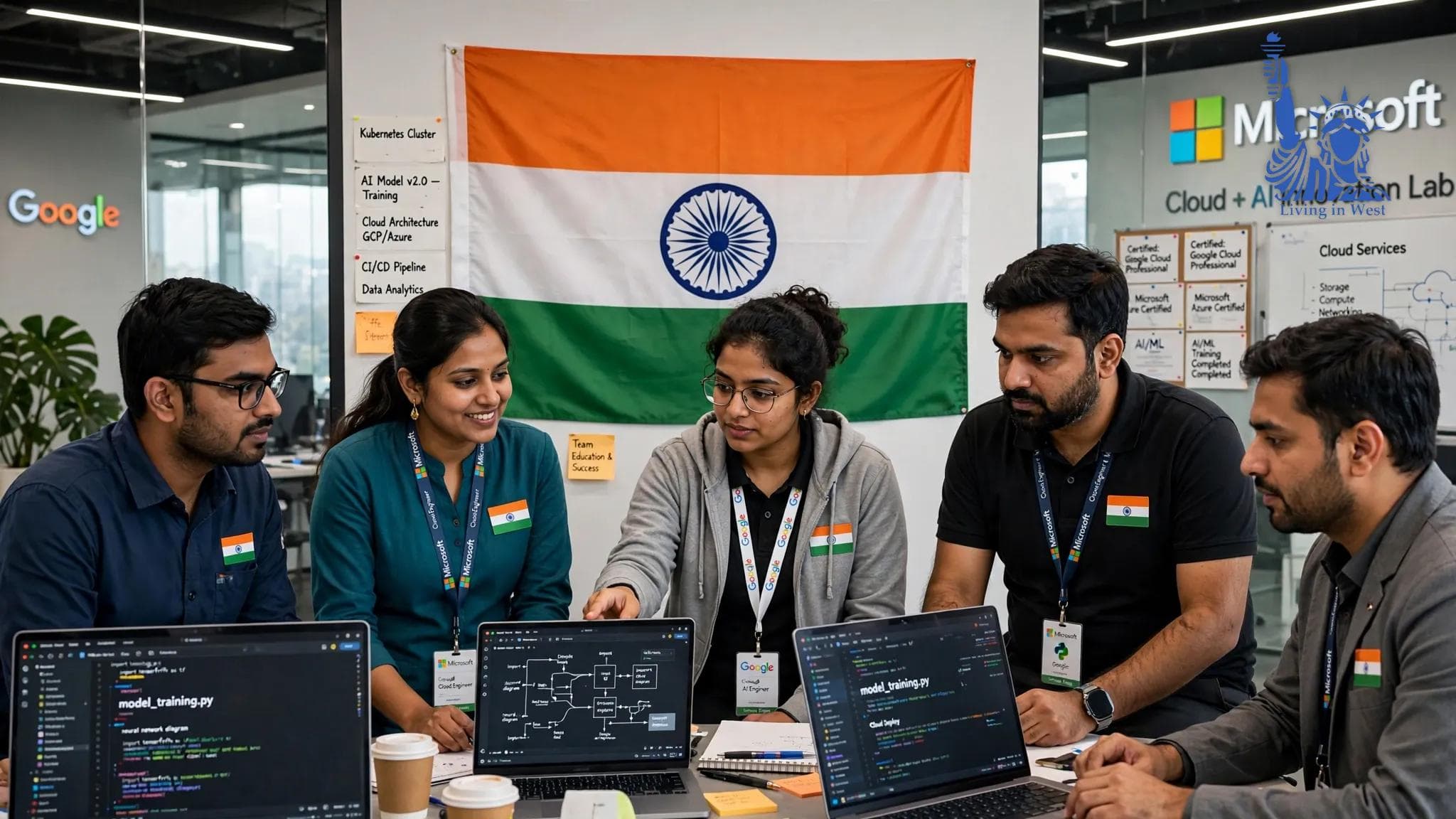
#1 — India
The Unbeatable Giant of the H-1B Pipeline
If the question is:
Which country dominates the U.S. H-1B workforce pipeline?
There is a clear answer.
India.
USCIS reported that 283,755 approved H-1B beneficiaries were born in India in FY2024, representing approximately 71% of all approved H-1B beneficiaries.
China was a distant second at 11.7%.
That means roughly seven out of every ten approved H-1B beneficiaries were India-born in FY2024.
This is not a small lead.
It is a massive structural advantage.
Why Does India Dominate?
India has developed one of the world's largest pools of technology and engineering professionals.
Its workforce feeds U.S. demand for:
- Software engineering
- Cloud computing
- Information technology
- Data engineering
- Artificial intelligence
- Cybersecurity
- Consulting
- Engineering
- Business technology
Large global technology and consulting companies have also built extensive recruitment and delivery networks in India.
That creates a pipeline that is difficult for another country to replicate quickly.
But India's Advantage Is Not Guaranteed Forever
The new H-1B selection system changes the equation.
The FY2027 system gives greater selection weight to higher OEWS wage levels. A Level IV position receives four selection entries, while a Level I position receives one.
That could favor experienced professionals earning higher wages.
It could also make the path more difficult for some entry-level candidates.
But India has a major advantage:
Scale.
Even if the rules become more selective, India has an enormous pool of experienced technology professionals capable of competing for higher-paid roles.
2027 Outlook
India remains the clear #1 in the H-1B pipeline.
That does not mean India will receive 71% every year forever.
It means that, based on the current structure of the U.S. H-1B system and the enormous size of India's professional talent pipeline, India enters the next few years with a major advantage.
What Does This Report Actually Tell Us About America's Next Workforce?
The most interesting part of the data is not simply who ranks #1.
It is the different roles each country plays.
America's foreign-worker pipeline is not one giant competition.
It is several different pipelines operating at the same time.
1. High-Skill Technology
India and China remain major sources of technology, engineering and research talent.
Pakistan and other countries also have growing pools of professionals in AI, cloud computing, cybersecurity and software engineering.
The new H-1B selection system makes compensation and wage level more important than before.
2. Healthcare
The Philippines remains an important international source of healthcare talent.
But the U.S. is also expanding domestic nursing education.
AACN's 2025 data shows that BSN enrollment increased 7.6%, while tens of thousands of qualified applications could not be accommodated because nursing schools lacked sufficient faculty and other resources.
So America's healthcare workforce will likely come from a combination of domestic education and international recruitment.
3. Seasonal and Temporary Labor
Mexico plays a completely different role.
Its dominance in H-2B visas shows how important Mexican workers are to parts of the temporary U.S. labor market.
In FY2024, Mexican nationals received 90,457 H-2B visas, compared with 139,541 H-2B visas issued worldwide.
That is a very different workforce pipeline from H-1B technology workers.
What About American Workers?
There is another side of this story that is often ignored.
Foreign workers are not the only answer to America's workforce needs.
The United States is also trying to expand its domestic talent pipeline.
The nursing example makes this particularly clear.
BSN enrollment increased significantly in 2025, yet nursing schools still reported that they could not accommodate tens of thousands of qualified applications because of faculty and other capacity limitations.
This suggests that America's workforce challenge is not simply:
"There aren't enough Americans."
It is more complicated.
The country has to match workers with the right skills, locations and occupations.
A worker shortage in one state or profession does not necessarily mean there is a shortage everywhere.
Mercer's healthcare projections demonstrate exactly this problem: some regions and occupations are expected to face shortages while others may have sufficient supply or even surpluses.
The same principle applies to technology, construction, hospitality and other industries.
So Where Will America's Next Foreign Workforce Come From?
Based on the current data and policy direction, our 2027 outlook looks like this:
#1 India
Technology, engineering, AI, cloud and other H-1B specialty occupations
#2 Philippines
Healthcare and other professional occupations
#3 Mexico
Temporary agricultural and seasonal/non-agricultural labor
#4 China
Technology, research and engineering, with greater geopolitical constraints in sensitive sectors
#5 Pakistan
Technology, engineering, healthcare and other high-skill niches
But there is an important warning:
This is an analytical ranking, not an official U.S. government ranking.
The U.S. government does not publish a single table ranking countries by "total jobs supplied to America."
Different visa programs measure different things.
The Biggest Lesson for Someone Trying to Move to the USA
The most important takeaway is not whether your country is #1 or #5.
It is whether your skill is valuable enough to compete in the U.S. labor market.
For H-1B professionals, the new wage-weighted selection system makes this even more important.
A worker earning at a higher OEWS wage level receives greater weight in the selection process than someone at a lower wage level.
So if you're preparing for a U.S. career, don't focus only on getting a degree.
Focus on building a skill that employers are willing to pay for.
AI.
Cloud.
Cybersecurity.
Advanced software engineering.
Specialized healthcare.
Engineering.
Other high-demand professional skills.
The future U.S. workforce will not simply be about which country sends the most people.
It will increasingly be about which countries produce the skills American employers need — and which workers can meet the wage, qualification and immigration requirements.
Important Note About the Data
This article uses different U.S. government datasets for different purposes.
H-1B figures refer to approved H-1B beneficiaries/petitions and should not be interpreted as a count of all people hired in the United States.
H-2B figures refer to H-2B visa issuance and represent a temporary-worker category.
Healthcare workforce projections are estimates, not guarantees, and shortages vary by occupation and location.
The 2027 rankings and predictions in this article are our analysis based on current data and policy trends, not official forecasts from the U.S. government.
Immigration rules can also change, so readers should check current USCIS, Department of State and Department of Labor requirements before making immigration or employment decisions.

Editorial Team