Meta Faces $942 Million New Mexico Judgment Over Child Safety
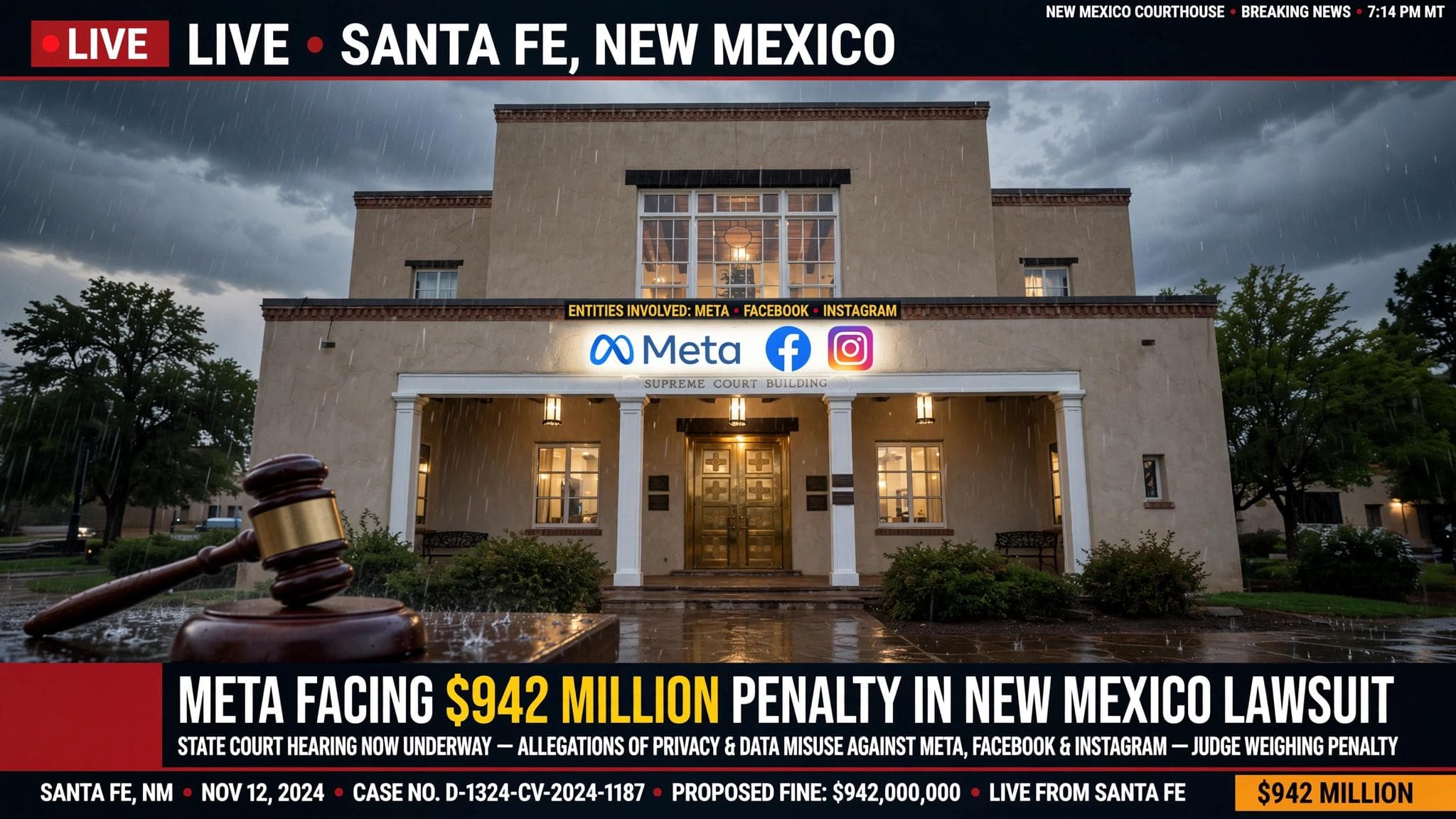
Meta Platforms, the parent company of Facebook and Instagram, has been ordered to pay a total of $942 million following a landmark child-safety case in New Mexico.
The amount combines a $375 million civil penalty imposed after a jury verdict in March 2026 with an additional $567 million fund ordered by a New Mexico judge on August 6, 2026.
The case centered on allegations that Meta misled consumers about the safety of its platforms and failed to adequately protect children from risks including sexual exploitation and harmful experiences online.
Meta has disputed the allegations and said it plans to appeal.
: How Did the Meta Case Begin?
December 2023: New Mexico Files Its Lawsuit
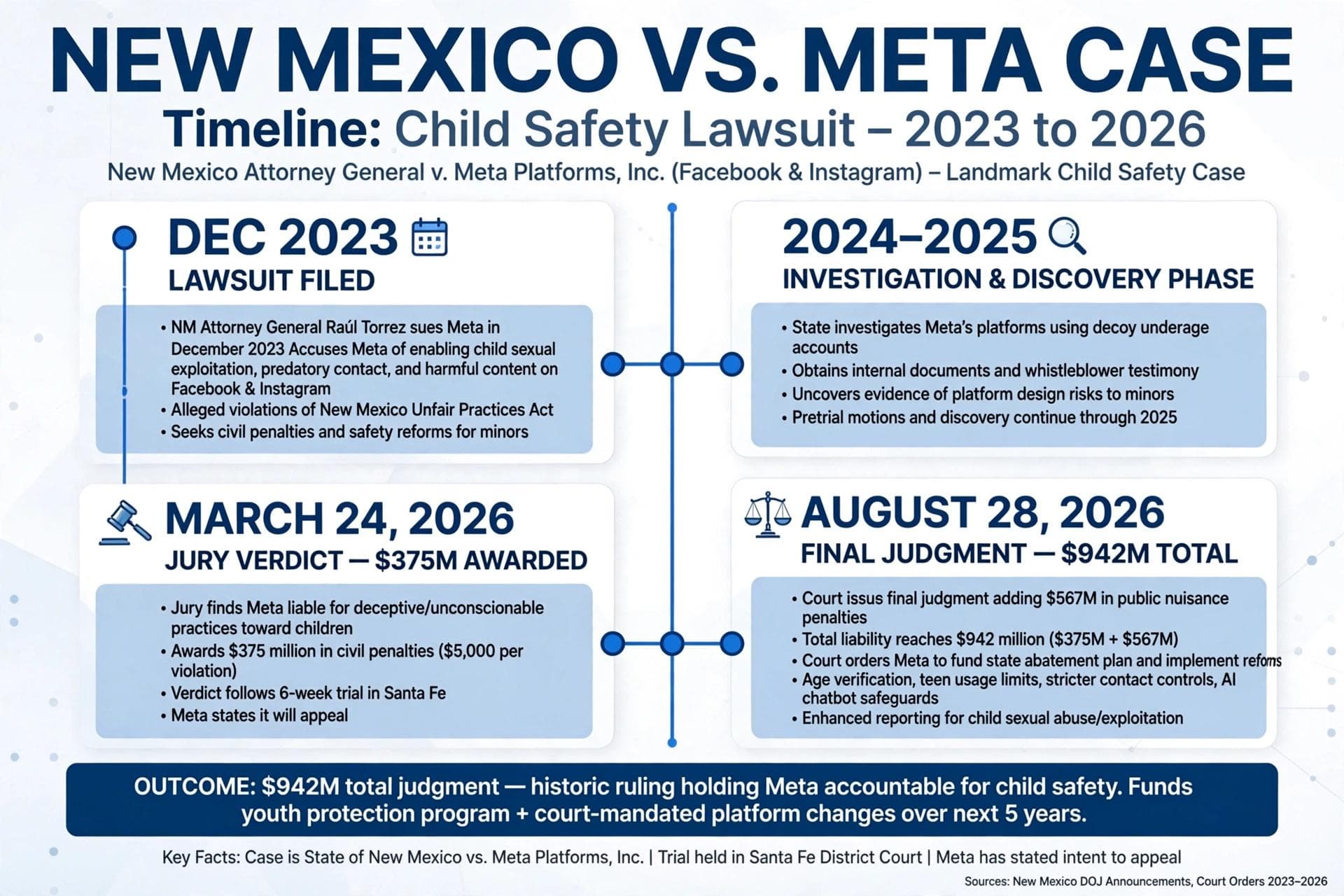
New Mexico Attorney General Raúl Torrez filed the lawsuit against Meta on December 6, 2023.
The state alleged that Meta's platforms exposed children to serious risks, including sexual exploitation and inappropriate contact with adults.
Before filing the lawsuit, the New Mexico Attorney General's Office conducted an undercover investigation. Investigators created decoy accounts representing children age 14 and younger and documented what they said were recommendations of sexually explicit material and attempts by adults to contact minors.
The state accused Meta of violating New Mexico's Unfair Practices Act and argued that the company had not done enough to protect young users.
2024–2025: Evidence and Investigation
The case developed through extensive litigation and evidence gathering.
The trial included internal Meta documents and testimony concerning the company's approach to youth safety and platform design.
New Mexico prosecutors argued that certain design features could contribute to harmful experiences for young users and that Meta had not adequately addressed known risks.
Meta rejected the state's allegations and maintained that it has invested heavily in safety systems designed to protect young people.
March 24, 2026: The First Major Verdict
After a trial lasting several weeks, a New Mexico jury found Meta liable under the state's consumer-protection law.
The jury ordered Meta to pay $375 million in civil penalties, calculated at the maximum statutory penalty of $5,000 per violation.
New Mexico described the verdict as the first time a state had prevailed at trial against a major technology company over allegations involving harm to young people.
Meta said it disagreed with the verdict and planned to appeal.
What Did the Judge Decide in August 2026?
On August 6, 2026, Judge Bryan Biedscheid issued the second major ruling in the case.
The court ordered Meta to provide $567 million for programs intended to address harms to young people.
Combined with the earlier $375 million civil penalty, Meta's total financial liability in the New Mexico case now stands at $942 million.
According to reporting on the ruling, approximately $420 million of the new fund will go toward treatment services for young people, with additional money supporting prevention and other programs over a multi-year period.
The judge also ordered a series of changes designed to strengthen protections for minors using Meta's platforms in New Mexico.
5 Major Changes Ordered for Young Users
1. Limits on Teen Usage
The ruling requires Meta to impose a 90-hour-per-month usage limit for users under 18 in New Mexico.
That works out to an average of about three hours per day, although the court's requirement is structured as a monthly limit.
2. Stronger Age Verification
Meta must strengthen its systems for determining whether users are minors.
The court also addressed protections involving children under 13, including measures involving age prediction and the handling of information collected from underage users.
3. More Restrictions on Notifications
The ruling requires restrictions on certain push notifications during school hours and overnight periods.
The goal is to reduce interruptions and potentially excessive engagement among young users.
4. Greater Protection From Adult Contact
The court ordered stronger controls designed to reduce inappropriate contact between minors and adults.
The measures are particularly focused on protecting children from potential exploitation and unwanted interactions.
5. Additional Controls Around Teen Content and AI
The ruling includes additional safeguards involving teen content, including parental consent requirements related to displaying "likes" on certain teen content.
The court also ordered safeguards around interactions between minors and Meta's AI chatbot systems, including restrictions on sexualized interactions involving minors.
Importantly, not every proposed remedy was approved. The judge rejected some requested changes, including certain demands related to altering Meta's algorithms, citing legal and practical concerns.
Could Other States Follow New Mexico?
The New Mexico decision could become important beyond the state, but it does not automatically change the law nationwide.
Attorney General Raúl Torrez has described the ruling as a potential roadmap for other jurisdictions pursuing similar cases.
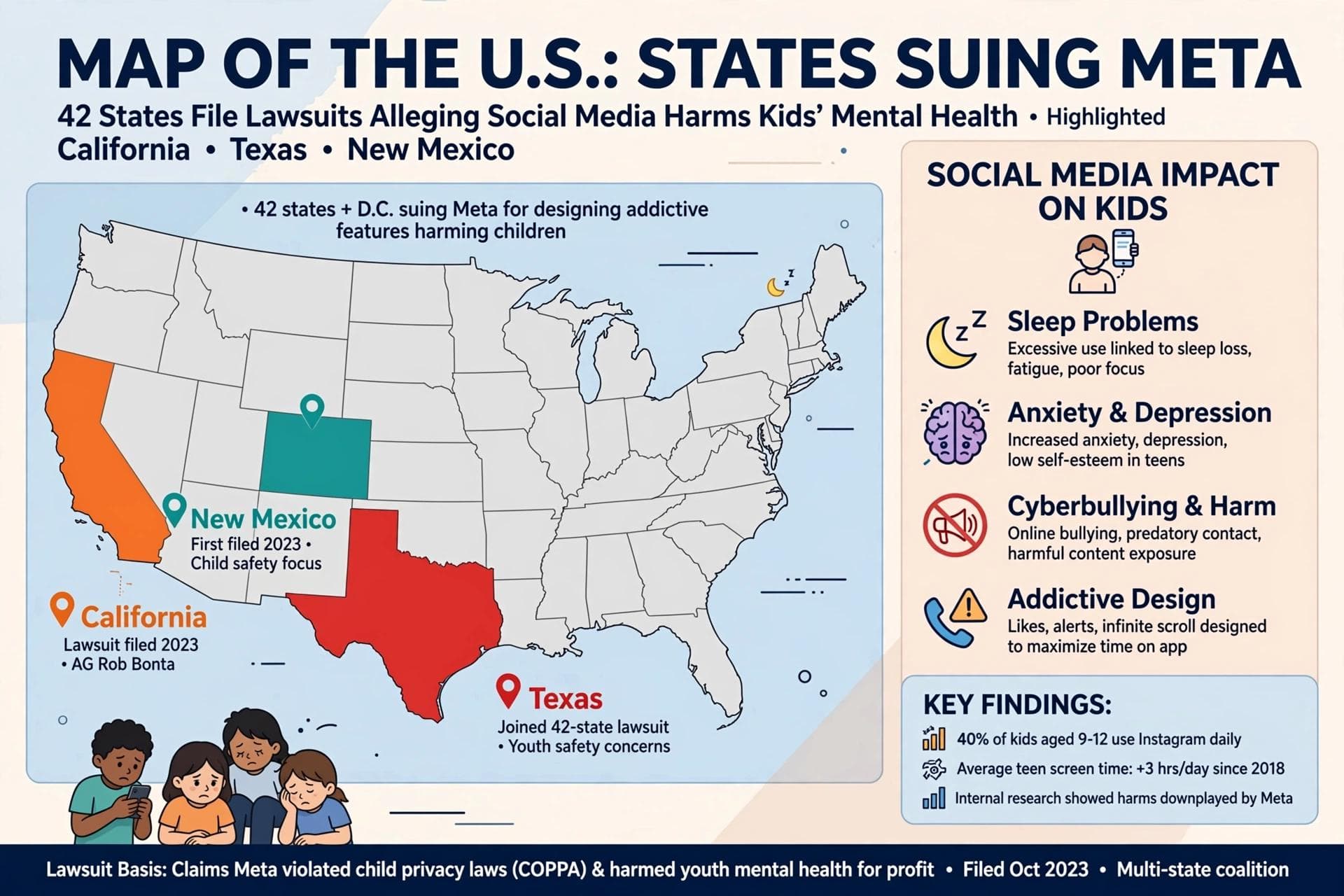
Meta is facing lawsuits and legal claims from numerous states and other plaintiffs concerning the safety and design of its social-media platforms. Reuters reported that a broader federal case involving 29 states is also part of the continuing legal pressure on the company.
Another major case involving California, Colorado, Kentucky and New Jersey is seeking approximately $1.4 trillion in potential penalties, according to a figure disclosed by Meta in a court filing.
That figure is a proposed penalty calculation, not an amount a court has awarded. The states' case is scheduled for trial in Oakland, California, in August.
This distinction is important because a proposed $1.4 trillion penalty should not be reported as if Meta has already been ordered to pay it.
What Could This Mean for Families in California, Texas, Arizona and Other States?
For families outside New Mexico, the August ruling does not automatically mean that Instagram and Facebook will immediately introduce the same restrictions everywhere.
However, the case could influence future litigation, negotiations and child-safety policies in other states.
Parents may therefore see more discussion around:
- Teen screen-time limits
- Age verification
- Parental controls
- Restrictions on adult-to-minor contact
- Notification controls
- AI chatbot safeguards
- Greater transparency about youth safety
Whether these measures become nationwide requirements will depend on future court decisions, legislation, settlements and Meta's appeals.
What Does the Case Mean for Meta Financially?
The $942 million figure is significant, but it should be put into context.
Meta reported $60.8 billion in revenue during the second quarter of 2026. The company also reported $15.85 billion in net income for the quarter.
At the same time, Meta recorded $2.4 billion in charges related to legal proceedings during Q2 2026.
Therefore, the New Mexico judgment is not necessarily a financial threat that would cripple Meta by itself.
The bigger issue could be the cumulative effect of multiple lawsuits and potential regulatory changes.
If courts in other jurisdictions impose additional penalties or require significant product changes, Meta could face much greater legal and compliance costs.
Could Instagram and Facebook Actually Change for Everyone?
Possibly, but it is too early to say that the entire U.S. will receive the same restrictions.
The New Mexico order applies to the case and remedies imposed by that court. It does not automatically establish a nationwide rule.
However, if similar lawsuits produce additional judgments or settlements, Meta could eventually decide to make certain safety changes across its platforms rather than operate different systems in every state.
That could potentially lead to broader changes involving age verification, teen accounts, notifications, parental controls and AI interactions.
Why This Case Matters
The New Mexico case is significant because it moves the debate beyond questions about individual pieces of content.
The legal fight has focused heavily on how social-media platforms are designed and how those designs may affect young users.
That could have broader implications for the technology industry if other courts reach similar conclusions.
For parents, however, the most immediate takeaway is simpler: social-media companies are facing increasing legal pressure to demonstrate that their platforms are safer for children and teenagers.
Bottom Line
New Mexico's $942 million judgment is one of the largest legal actions against Meta involving youth safety.
The case began with a 2023 lawsuit, led to a $375 million jury verdict in March 2026, and culminated in a $567 million youth-focused fund and additional safety requirements in August 2026.
For now, the ruling directly affects Meta's obligations in New Mexico. Its wider impact will depend on appeals and the outcome of similar cases around the United States.
For families in California, Texas, Arizona and other states, the safest conclusion is not that Instagram and Facebook will definitely change within the next six months, but that the legal pressure for stronger protections for minors is clearly increasing.
Parents can also use the safety and parental-control features already available on Meta's platforms while the broader legal process continues.
Official source: New Mexico Department of Justice — Meta verdict
Editorial Team