Introduction
New York City is one of the most expensive cities in the United States. But if you're moving to NYC from Pakistan, India or another country with a $3,000 monthly budget, can you actually afford to live there?
Yes — but probably not alone in a Manhattan apartment.
If you choose shared housing or co-living, live in a more affordable neighborhood, cook at home and use public transportation, a $3,000 monthly budget can be manageable.
The important part is knowing where your money goes.
Rent is only the beginning. Newcomers also need to think about security deposits, utilities, groceries, transportation, phone bills, laundry, household expenses and unexpected costs.
Here's a realistic look at what living in New York City can cost in 2026.
How Much Does Rent Cost in NYC?
Housing is usually the biggest expense in New York City.
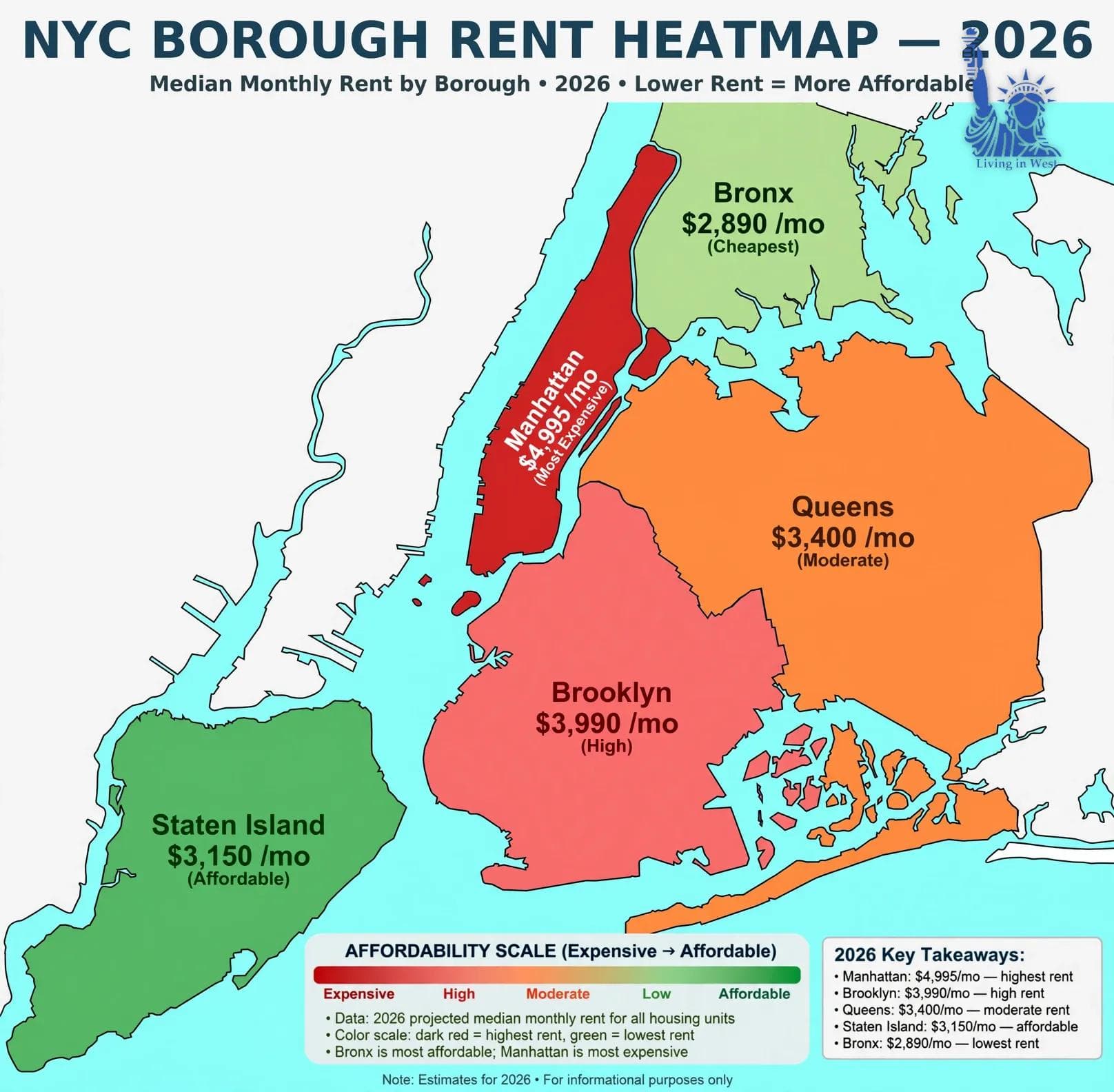
According to StreetEasy's July 2026 market data, the median asking rent across NYC was $4,200 per month. Manhattan was at $4,995, Brooklyn at $3,990 and Queens at $3,400.
That does not mean every apartment costs that much. Rent varies significantly depending on neighborhood, apartment size, building quality and whether the landlord is offering concessions.
NYC Rental Picture by Borough
Borough July 2026 Median Asking Rent$3,000 Budget Reality
Manhattan
~$4,995
Solo apartment is generally unrealistic
Brooklyn
~$3,990
Sharing is usually the better option
Queens
~$3,400
Shared housing can be more manageable
Bronx
Generally more affordable
Better for budget-conscious renters
Staten Island
Generally lower than Manhattan
Longer commute can be a trade-off
Manhattan
Manhattan is still the most expensive part of the city for many renters.
Its July 2026 median asking rent was almost $5,000 per month. But Manhattan is not uniformly expensive. Neighborhoods in Upper Manhattan can be significantly cheaper than Midtown, Downtown and luxury areas.
Brooklyn
Brooklyn is popular with young professionals, families and newcomers, but it is no longer automatically a cheap alternative to Manhattan.
The July 2026 median asking rent was about $3,990.
Queens
Queens can offer more affordable options than Manhattan and is home to large immigrant communities.
Its July 2026 median asking rent was around $3,400, although prices vary considerably by neighborhood.
Bronx
The Bronx is generally one of the more affordable boroughs, although prices can vary significantly from one neighborhood to another.
Staten Island
Staten Island can offer lower housing costs, but the trade-off is a longer commute for people working in Manhattan or other parts of the city.
The Most Practical Option for Foreigners and Students — Room Sharing
If you're arriving in NYC from Pakistan, India or another country with a $3,000 monthly budget, renting an entire apartment by yourself may not be the smartest move.
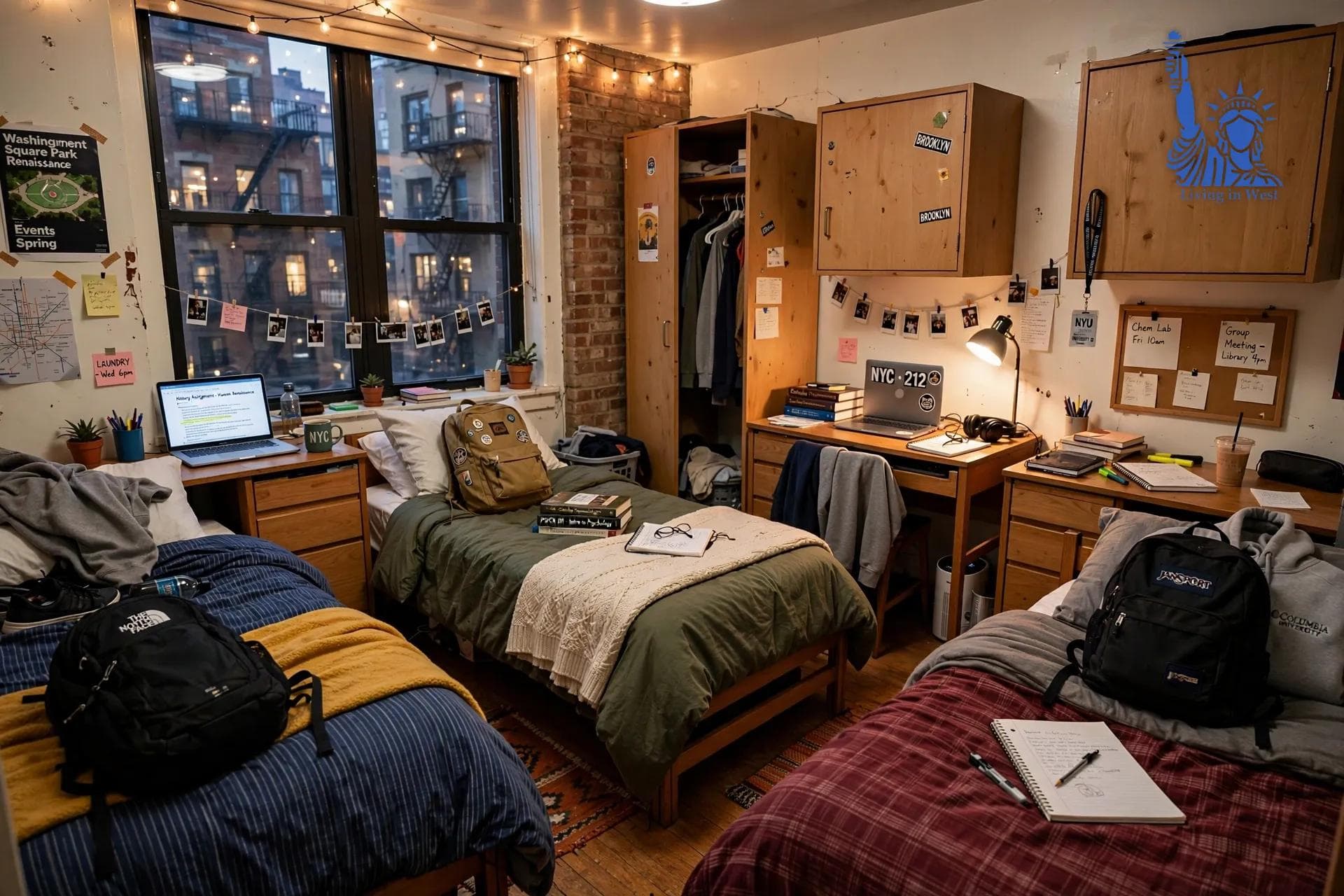
A private room in a shared apartment can make much more sense.
You may share the kitchen and bathroom with other tenants while keeping your own bedroom.
A practical target
For a budget-conscious newcomer:
Private room/shared apartment: roughly $900–$1,500+ per month
Co-living: varies widely depending on the location, room type and services included.
These are planning ranges, not fixed NYC prices.
Queens, the Bronx and parts of Upper Manhattan can offer more budget-friendly options than prime Manhattan neighborhoods.
Important: The $6,600 Security Deposit Claim Is Wrong
The original version of this article suggested that a newcomer could face a $6,600 security deposit on a $3,000 budget.
That is not a general NYC rule.
New York City landlords generally cannot charge more than one month's rent as a security deposit. Apartment application fees are also generally capped at $20.
There is also another major change renters should know about.
NYC's Fairness in Apartment Rental Expenses (FARE) Act took effect on June 11, 2025. It generally prevents a landlord's broker from passing that broker's fee on to the tenant.
For newcomers, understanding these rules can prevent thousands of dollars in unnecessary upfront costs.
Utilities and Monthly Bills
Rent is not your only housing expense.
You may also have to pay for:
- Electricity
- Natural gas
- Internet
- Mobile phone service
- Laundry
- Household supplies
- Renter's insurance
But there is no single "NYC utility bill."
Your actual cost depends on the apartment, heating system, air-conditioning use, building and lease terms.
Practical monthly planning range for one person sharing an apartment
Expense
Rough Monthly Budget
Electricity/gas share
$50–$150+
Internet share
$20–$50
Cell phone
$30–$80
Laundry/household supplies
$30–$70
Renter's insurance/misc.
$10–$30+
These are budgeting estimates, not official fixed rates.
What Happened to Con Edison Rates in 2026?
Con Edison has new electric and gas rate plans covering 2026–2028. The company had previously estimated average bill impacts of 11.4% for electricity and 13.3% for gas under its proposed 2026 rates.
However, it would be misleading to tell readers that every customer simply received an 11.4% or 13.3% bill increase. Actual bills depend on usage, rate components and the approved tariff structure.
Grocery Costs in NYC
Food is another major part of the monthly budget.
The good news is that groceries are much easier to control than rent.
If you cook at home, shop carefully and avoid daily restaurant meals, you can keep food costs manageable.
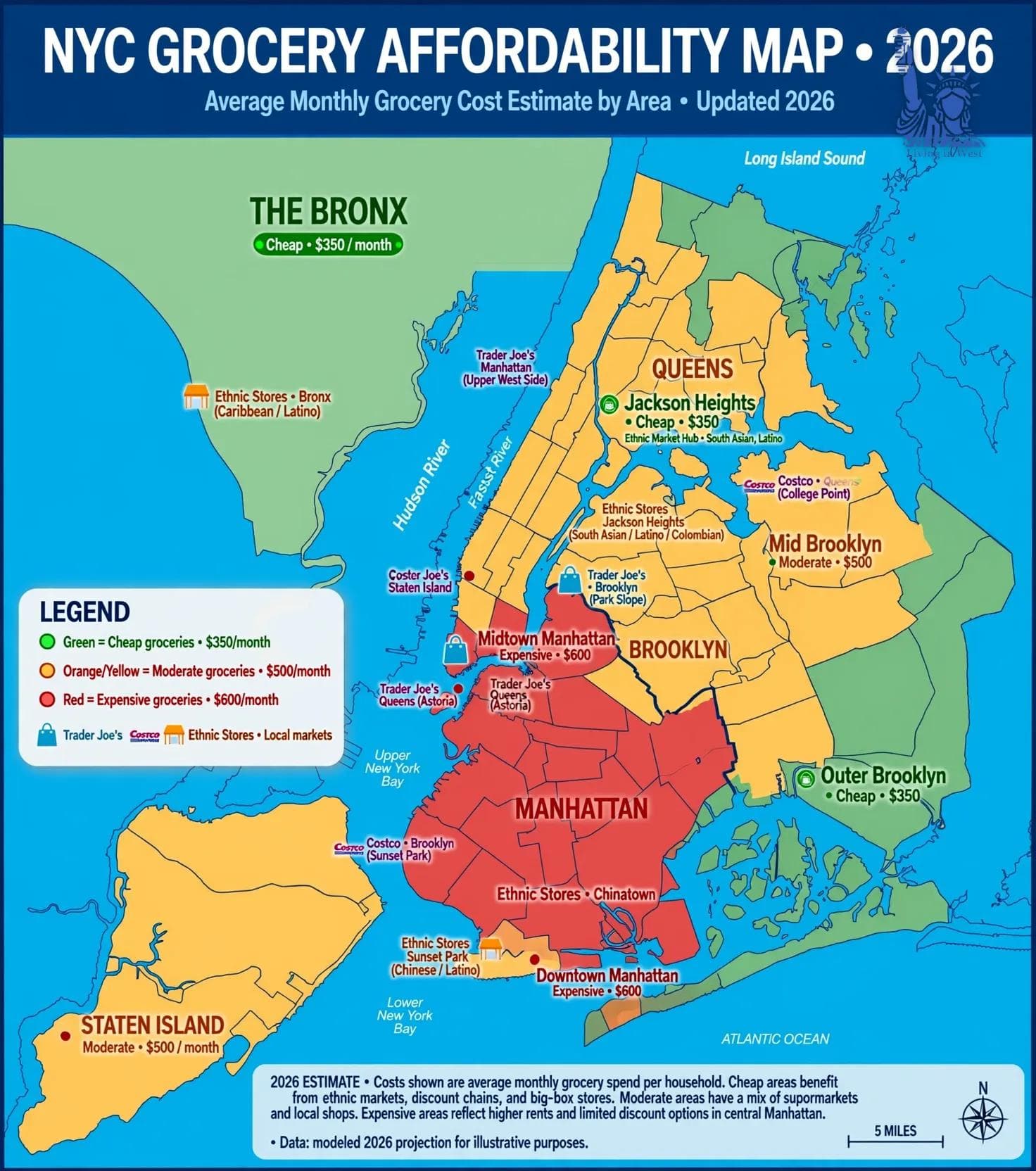
A practical starting budget for one person is roughly:
$350–$600 per month
Your actual number can be lower or much higher depending on your diet.
A typical grocery basket might include:
- Milk
- Bread
- Rice
- Chicken
- Eggs
- Vegetables
- Fruit
- Lentils
- Spices
- Halal meat
Queens and other immigrant-heavy neighborhoods have many South Asian and halal grocery options.
How to save money
Instead of buying prepared food in Manhattan every day:
Buy groceries → cook at home → use public transportation → compare supermarkets.
Discount stores, warehouse clubs and local ethnic markets can all be useful.
However, avoid claiming that NYC city-owned grocery stores are automatically 30% cheaper unless you are citing a specific current program and verified prices.
Transportation — Subway or Car?
If you're trying to live in NYC on $3,000 a month, transportation can either help your budget or destroy it.
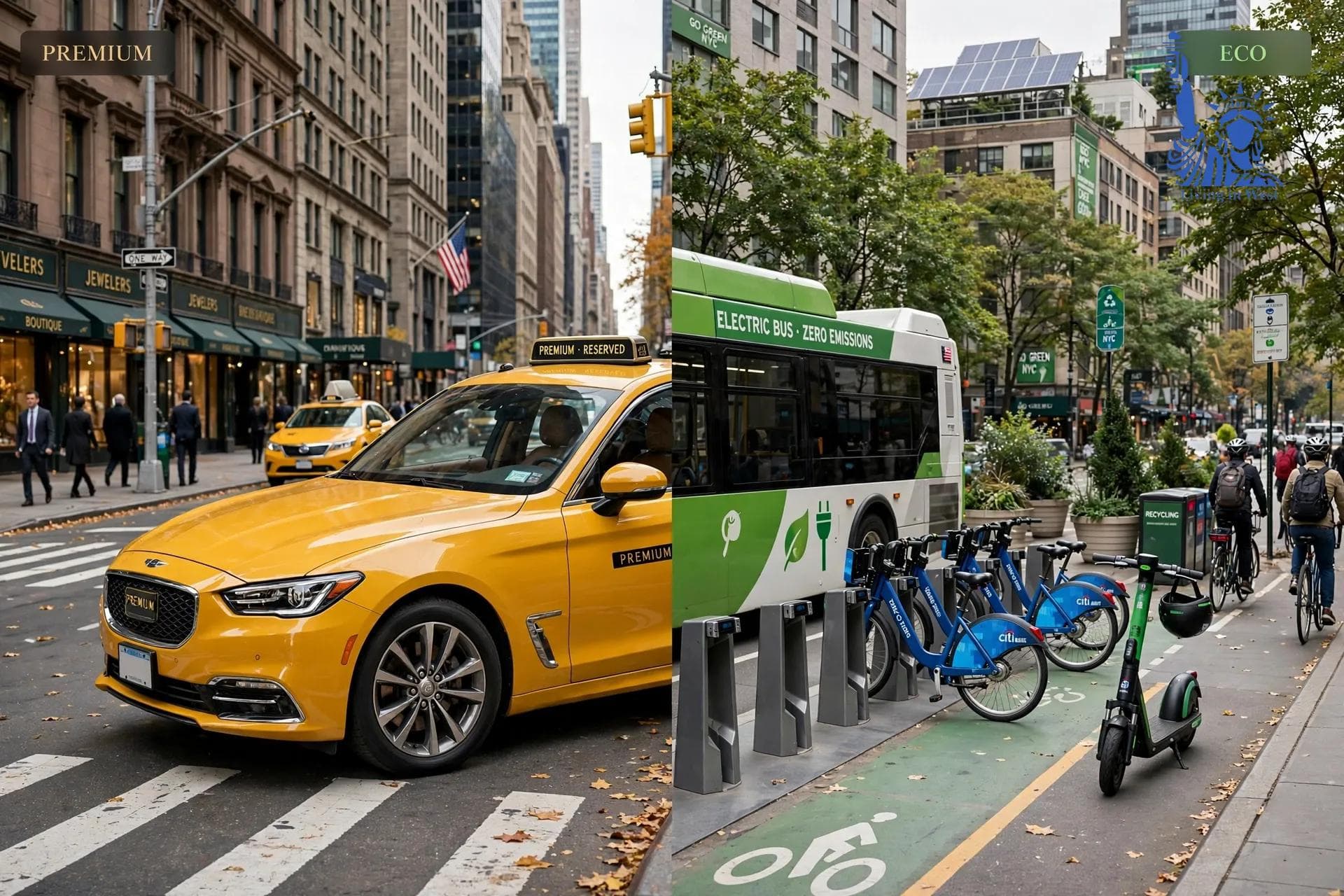
For most people living near subway or bus routes, public transportation is the cheaper option.
MTA Subway and Bus
As of January 2026, the NYC subway and local bus base fare is $3.00.
The OMNY weekly fare cap is $35.
The old $132 monthly unlimited MetroCard figure should not be presented as the current 2026 standard.
If you hit the $35 weekly cap every week, four weeks would be approximately $140.
Practical monthly transportation budget
Around $130–$150 is a reasonable planning figure for a regular subway/bus commuter.
Should You Own a Car?
If your entire monthly budget is $3,000, owning a car in NYC deserves serious thought.
Your real cost includes:
- Insurance
- Gas
- Parking
- Tolls
- Maintenance
- Repairs
- Registration
Parking rules are also strict, and illegally parked vehicles can be towed.
Our Take
If you live in Manhattan, Queens, Brooklyn or the Bronx and have convenient subway access:
Living without a car is usually the smarter financial choice.
Staten Island and some outer neighborhoods are different, especially if your job requires driving.
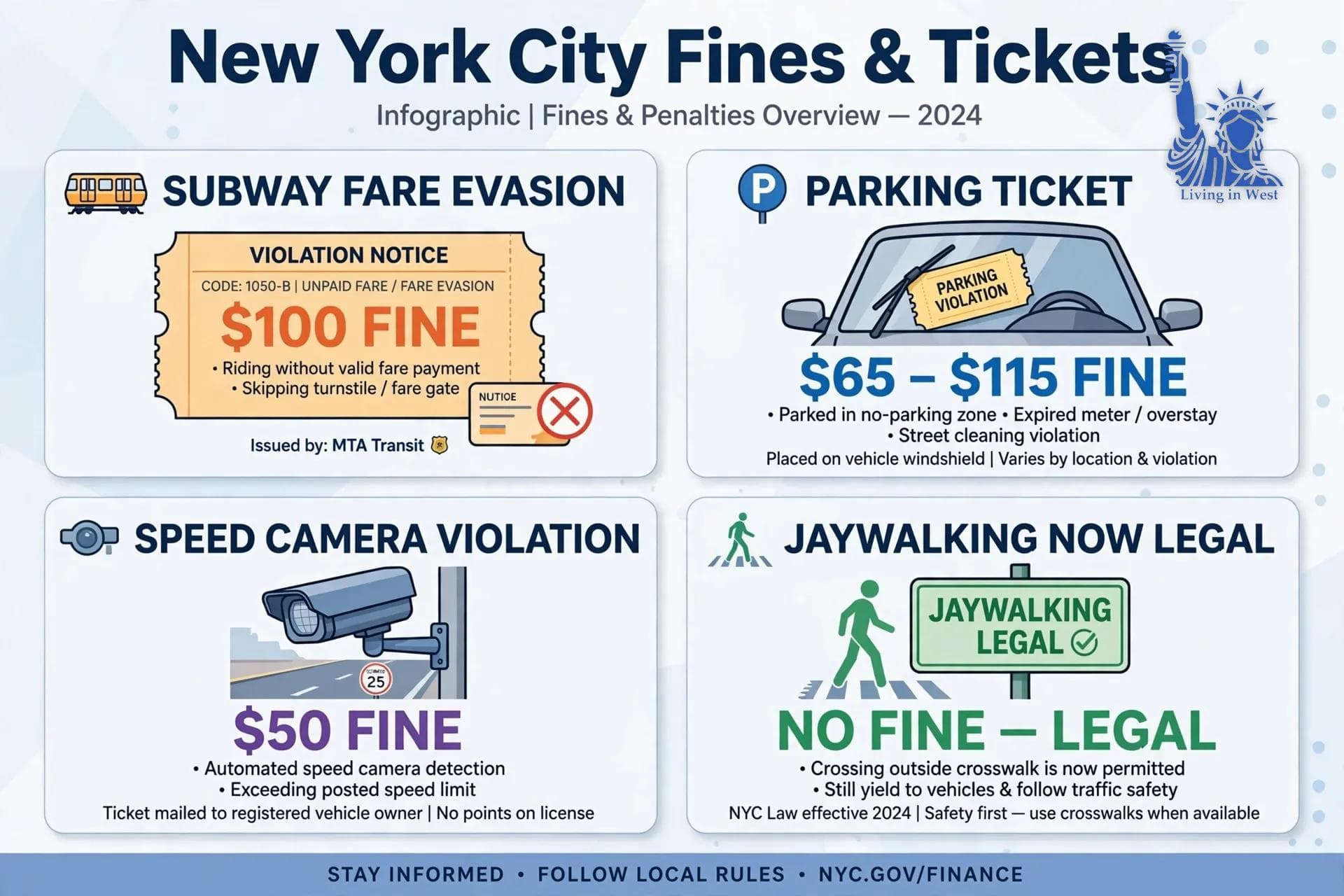
NYC Fines and Rules Newcomers Should Know
A small mistake in New York can turn into an unnecessary expense.
1. Jaywalking
NYC changed its jaywalking rules through Local Law 98 of 2024.
The rule took effect on June 26, 2025, decriminalizing jaywalking and allowing pedestrians to cross outside marked or unmarked crosswalks without receiving a jaywalking summons.
But remember:
Legal does not mean safe.
Traffic still poses a serious risk, so pedestrians should use good judgment.
2. Subway Fare Evasion
Don't try to save $3 by skipping the fare.
Fare-evasion enforcement can result in a summons carrying a $100 fine.
For newcomers, the rule is simple:
Pay the fare every time.
3. Parking Tickets
Parking fines vary depending on the violation.
NYC's current Department of Finance schedule includes examples such as:
- Some expired-meter violations: around $65
- Certain no-standing/stopping violations: $115
- Other violations can be higher
So don't present "$65–$115" as a universal parking-ticket range.
4. Speed Camera
NYC speed-camera violations generally carry a $50 fine.
5. Red-Light Camera
A red-light camera violation carries a $50 fine.
Can You Really Survive in NYC on $3,000 a Month?
Let's build a realistic example.
Example: Shared-Room Lifestyle
Expense
Monthly Estimate
Shared/private room
$1,200
Groceries
$450
MTA
$140
Utilities + Internet
$150
Phone
$50
Household/Laundry/Misc.
$100
Total
$2,090
Remaining
$910
This is an example budget, not a guaranteed cost.
If your room costs $1,500 instead of $1,200, groceries rise to $550 and utilities reach $200, your remaining money will fall quickly.
And there is one more important distinction:
Is your $3,000 income gross or take-home?
If $3,000 is your gross monthly salary, taxes and payroll deductions will reduce the amount you actually have available.
So someone earning $3,000 gross should not use this calculation as if they have $3,000 in spendable cash.
Final Answer: Can You Live in NYC on $3,000?
Yes — but your housing choice determines almost everything.
With a $3,000 monthly budget:
Manhattan solo 1-bedroom: ❌ Usually unrealistic
Brooklyn solo apartment: ❌ Generally difficult
Queens shared apartment: ✅ Possible
Bronx private/shared room: ✅ More realistic
Staten Island: ✅ Possible, but commute matters
Co-living/room sharing: ✅ One of the most practical choices for newcomers
The biggest mistake would be spending most of your monthly budget on rent.
A smarter strategy is:
Keep housing around $1,000–$1,500 → use public transportation → cook at home → avoid unnecessary car costs → keep an emergency fund.
That is how a $3,000 monthly budget can become manageable in New York City.
FAQ: Living in New York City on $3,000
Can I live alone in Manhattan on $3,000 a month?
Usually not comfortably. Manhattan's July 2026 median asking rent was about $4,995, which is already above the entire $3,000 monthly budget.
Which NYC borough is cheapest for a newcomer?
The Bronx and Staten Island generally offer lower-cost options than Manhattan and Brooklyn, while Queens can provide a middle ground. Exact prices vary by neighborhood.
Is $3,000 enough for a student in NYC?
It can be possible with shared housing, home cooking and public transportation. Tuition, health insurance and other education-related expenses are separate.
How much can a NYC landlord charge for a security deposit?
Generally, no more than one month's rent.
Can a landlord charge me a large broker fee?
Under NYC's FARE Act, a landlord's broker generally cannot pass that broker's fee to the tenant. The law took effect June 11, 2025.
How much does the NYC subway cost in 2026?
The base subway/local bus fare is $3, and the OMNY weekly fare cap is $35.
Is owning a car worth it in NYC?
For someone with a $3,000 monthly budget, usually not if they live near reliable subway or bus service. Insurance, parking, gas, tolls and maintenance can consume a large part of the budget.
Is jaywalking legal in New York City?
NYC decriminalized jaywalking effective June 26, 2025. Pedestrians should still prioritize safety and obey traffic signals where appropriate.
What is the easiest way to reduce living costs in NYC?
Focus on the two biggest controllable expenses: housing and transportation. Sharing a room and avoiding car ownership can save far more than cutting a few dollars from groceries.
Disclaimer: NYC rents, utility costs, transportation expenses and other living costs vary by neighborhood, building, lifestyle and market conditions. Figures in this article are estimates or current market indicators, not guaranteed prices. Always verify current rent, lease terms, fees and utility responsibilities before signing a rental agreement.

Editorial Team