![Headache vs Migraine in the USA: Why 40 Million Americans Live With Migraine, WHO Global Data & Real Relief Tips [2026 Update]](/_next/image?url=https%3A%2F%2Fcdn.sanity.io%2Fimages%2Ffspcj0ni%2Fproduction%2F6e32eac8370c60c8dfc3efea9d7dc0b908c3be80-1920x1280.webp&w=3840&q=75)
!!This article is for general educational purposes only and is not a substitute for professional medical advice, diagnosis, or treatment.
1. Headache vs. Migraine — What Is the Difference?
Many people use the words "headache" and "migraine" as if they mean the same thing. They don't.
Tension-Type Headache
Tension-type headache is one of the most common headache disorders.
It often feels like:
- Pressure or tightness around the head
- A band-like sensation around the forehead
- Mild to moderate pain
- Pain on both sides of the head
- Tightness or discomfort around the neck
Stress and musculoskeletal problems involving the neck can contribute to tension-type headaches.
Unlike migraine, a typical tension-type headache usually does not cause severe nausea or strong sensitivity to light and sound.
Migraine
Migraine is not simply a bad headache. It is a neurological disease that can significantly interfere with work, school, family life and everyday activities.
A migraine attack can include:
- Moderate to severe head pain
- Throbbing or pulsating pain
- Pain on one side or sometimes both sides
- Nausea or vomiting
- Sensitivity to light
- Sensitivity to sound
- Pain that becomes worse with normal physical activity
According to WHO, a typical migraine attack can last 4 to 72 hours. Some people also experience an aura before or during an attack, which can cause temporary visual, sensory or other neurological symptoms.
Migraine is also considerably more common in women. American Migraine Foundation data has estimated migraine prevalence at around 18% among American women and 6% among American men.
2. Why Does Headache or Migraine Happen?
There isn't one single cause.
Migraine is a neurological disorder, and researchers believe attacks involve complex interactions between nerves and pain-sensitive structures around the brain. The exact cause of migraine is still not completely understood.
Different people can also have completely different triggers.
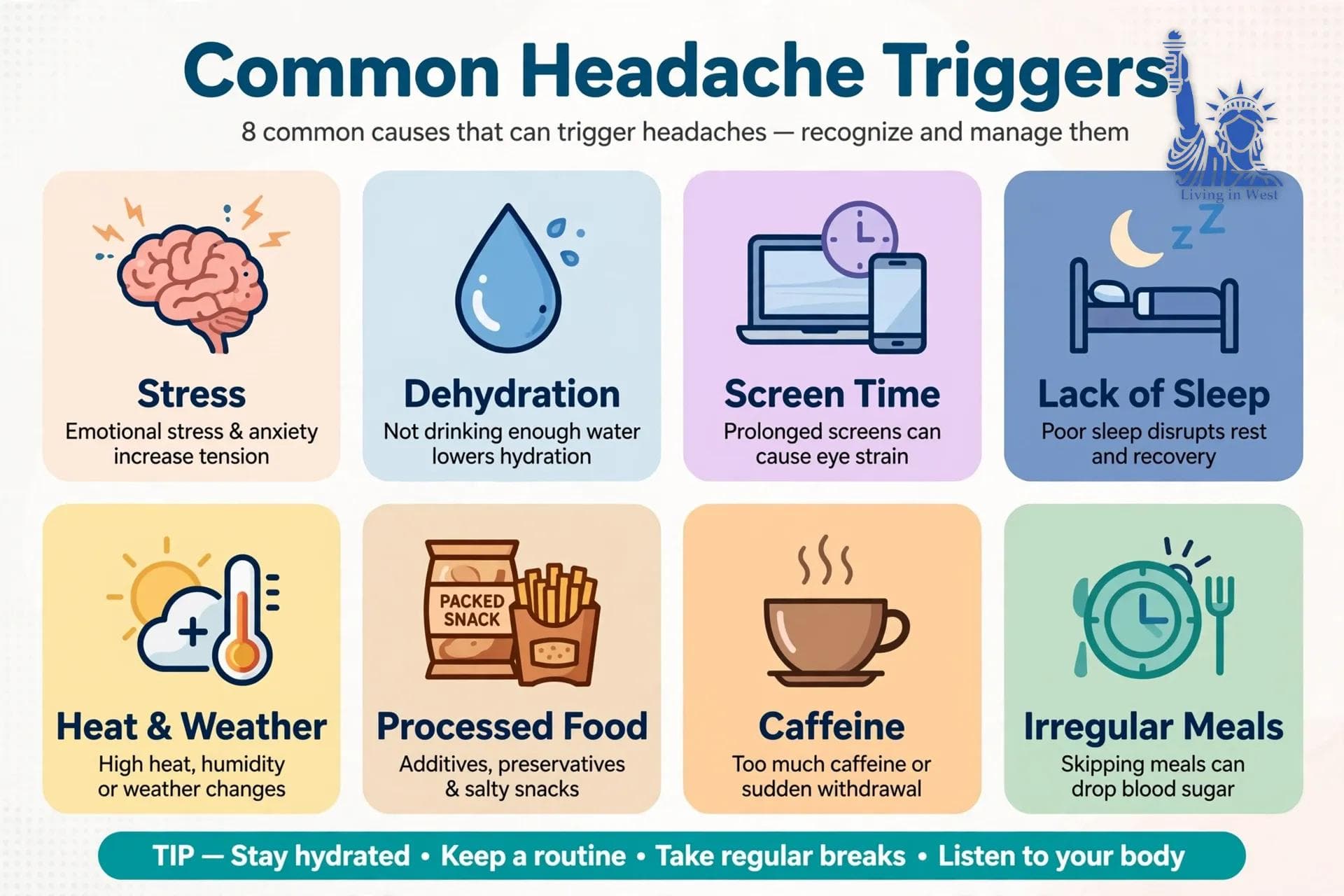
Some common factors include:
1. Stress
Stress can contribute to tension-type headaches and may also trigger migraine attacks in some people.
2. Dehydration
Not drinking enough fluids can contribute to headaches in some people. Staying adequately hydrated is therefore a simple habit worth maintaining.
In my own case, hydration made a noticeable difference. But that does not mean dehydration is the cause of every headache or migraine.
3. Sleep Changes
Too little sleep, disrupted sleep or major changes in sleeping patterns can trigger headaches or migraine attacks in some people. WHO specifically identifies sleep disruption as a possible migraine trigger.
4. Long Screen Sessions
Spending many hours on a phone or computer can contribute to eye strain, poor posture and neck tension. These factors may contribute to headache symptoms.
If you work at a computer all day, regular breaks are a simple habit to try.
5. Heat and Weather
Some people report that heat, changes in weather or environmental conditions trigger their headaches. However, weather is not a universal trigger, and individual responses vary.
6. Food, Caffeine and Alcohol
Certain foods, alcohol and changes in caffeine consumption can trigger migraine in some people. However, there is no single food that causes migraine in everyone.
Instead of eliminating large numbers of foods from your diet, it can be more useful to keep a headache diary and look for your own patterns.
7. Hormonal Changes
Hormonal changes can play an important role in migraine, which is one reason migraine is significantly more common among women.
8. Skipping Meals
Going long periods without eating may trigger headaches or migraine in some people. Maintaining regular meals and adequate hydration can be a useful part of headache management.
3. What Does WHO Say About Headache Around the World?
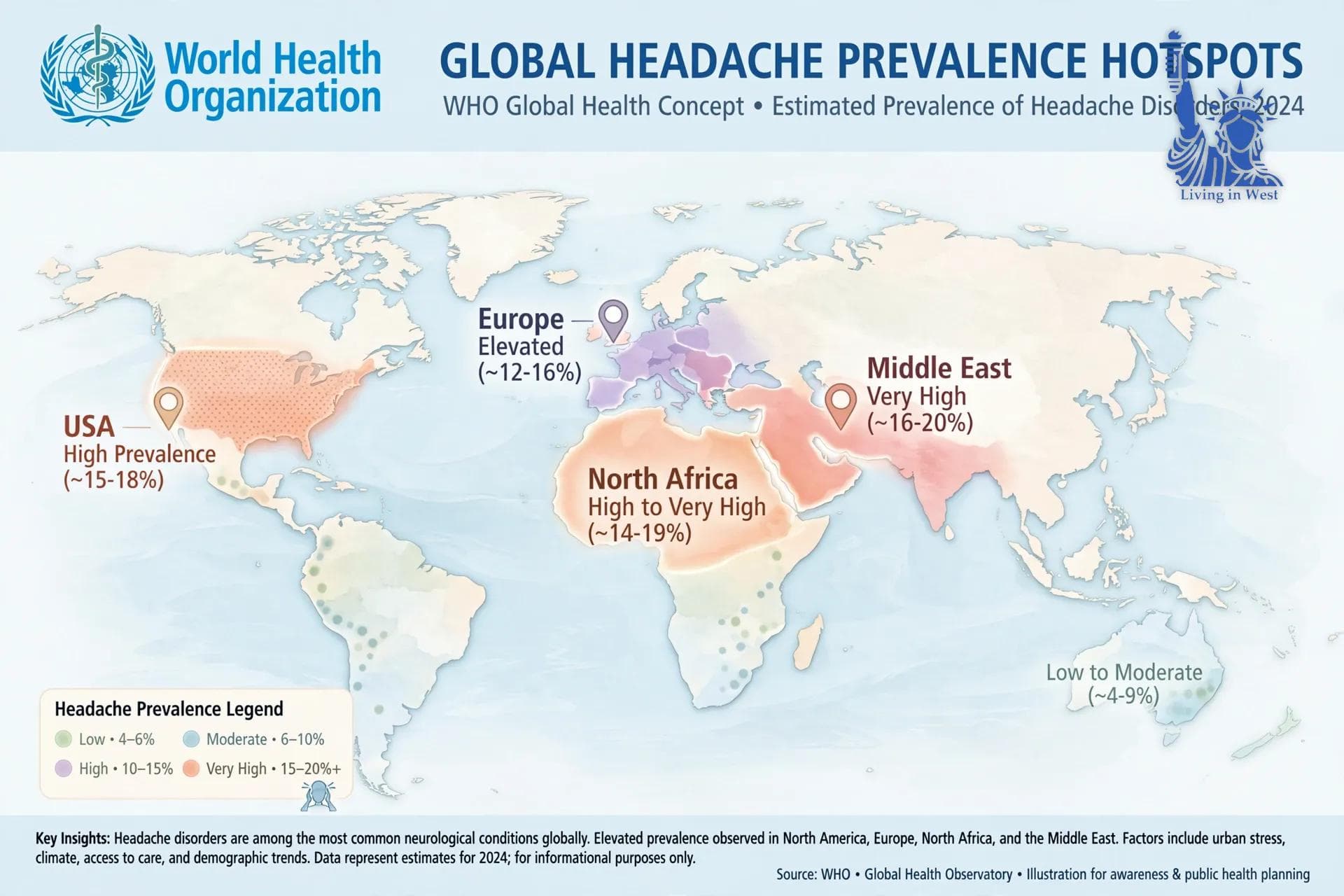
Older global research estimated that approximately 46% of adults had an active headache disorder, including migraine and tension-type headache.
However, the more recent WHO fact sheet published in 2025 gives a different headline figure: headache disorders affect approximately 40% of the global population, representing around 3.1 billion people in 2021.
That is an important distinction when publishing a 2026 article.
Rather than claiming that one specific continent or country has "the highest headache rate," it is safer to say that headache disorders occur worldwide and that prevalence estimates vary because studies use different populations, definitions and methods.
Standardized studies conducted through the Global Campaign against Headache have found substantial headache burdens in countries across Europe, Asia, Africa and other regions. For example, published country estimates have shown high one-year headache prevalence in places including Nepal, Pakistan, India, Russia and several European countries.
What Has WHO Done?
WHO has recognized headache disorders as an important global health problem.
The Global Campaign against Headache, developed through collaboration between WHO and Lifting The Burden, has worked to improve knowledge, awareness and healthcare services for people with headache disorders around the world. The campaign has involved academic collaborators from dozens of countries.
WHO also emphasizes several practical approaches, including accurate diagnosis, appropriate treatment, patient education, regular sleep and exercise, healthy eating, adequate hydration and identifying personal triggers.

4.What Does WHO Say About Headache Around the World?
Older global research estimated that approximately 46% of adults had an active headache disorder, including migraine and tension-type headache.
However, the more recent WHO fact sheet published in 2025 gives a different headline figure: headache disorders affect approximately 40% of the global population, representing around 3.1 billion people in 2021.
That is an important distinction when publishing a 2026 article.
Rather than claiming that one specific continent or country has "the highest headache rate," it is safer to say that headache disorders occur worldwide and that prevalence estimates vary because studies use different populations, definitions and methods.
Standardized studies conducted through the Global Campaign against Headache have found substantial headache burdens in countries across Europe, Asia, Africa and other regions. For example, published country estimates have shown high one-year headache prevalence in places including Nepal, Pakistan, India, Russia and several European countries.
What Has WHO Done?
WHO has recognized headache disorders as an important global health problem.
The Global Campaign against Headache, developed through collaboration between WHO and Lifting The Burden, has worked to improve knowledge, awareness and healthcare services for people with headache disorders around the world. The campaign has involved academic collaborators from dozens of countries.
WHO also emphasizes several practical approaches, including accurate diagnosis, appropriate treatment, patient education, regular sleep and exercise, healthy eating, adequate hydration and identifying personal triggers.
6. My Personal Experience With Headaches
I am not writing this article only from research.
I have personally dealt with recurring headaches for around eight or nine years.
At first, I treated them like an ordinary problem. I would sometimes take common pain medicines such as acetaminophen or NSAIDs and get temporary relief.
But the pain would sometimes return.
Sleep often helped. But when my sleep was poor, the next day could become difficult.
In 2026, I started noticing something interesting.
My headaches seemed to become more frequent during hot weather.
So I started paying more attention to my water intake.
Previously, I might drink only seven or eight glasses of water during the day. I began drinking fluids more consistently and tracking my intake.
For me, this made a noticeable difference. I estimate that my headache days became around 40% less frequent or severe.
That is my personal experience — not a medical guarantee.
It taught me something important:
A trigger that matters to one person may not matter to another.
Today, I try to maintain regular hydration, take breaks from screens, get better sleep and avoid spending unnecessary hours on my phone late at night.
I also try not to rely on pain medication every time a headache appears.
If headaches become frequent, severe or unusual, however, self-treatment is not enough. Getting the correct diagnosis is important.

6. Can Migraine Be Cured?
At present, there is no cure that permanently eliminates migraine for everyone.
However, migraine can often be managed with a combination of lifestyle changes, acute treatments and preventive treatments.
Modern migraine treatment has also changed significantly.
For example, CGRP-targeting medicines are now among the preventive treatment options available for migraine. These are not "brand-new 2026 drugs": the FDA approved Aimovig in 2018, while Ajovy was also approved in 2018 for preventive migraine treatment in adults.
The right treatment depends on the individual, so medication decisions should be made with a qualified healthcare professional.
FAQ
Q1. Can migraine go away permanently?
Migraine currently has no universal cure, but many people can significantly reduce the frequency and severity of attacks with appropriate treatment and lifestyle management.
Q2. Can a mobile phone cause migraine?
A phone does not automatically cause migraine.
However, long screen sessions can contribute to eye strain, poor posture, sleep disruption and other factors that may worsen headaches or trigger symptoms in some people.
Q3. Can drinking water help a headache?
If dehydration is contributing to your headache, restoring normal hydration may help.
However, water does not automatically cure every headache or migraine.
My own experience with hydration is personal and should not be treated as medical evidence for everyone.
Q4. What type of doctor treats migraine?
A primary-care doctor can evaluate recurring headaches and help determine whether you need specialist care.
For difficult or frequent migraine, a neurologist or headache specialist may be appropriate.
The American Migraine Foundation also provides a Find a Doctor resource for people looking for headache and migraine specialists.
Final Thoughts
Headache and migraine are not simply "normal pain" that everyone should ignore.
According to WHO, headache disorders affect around 40% of the world's population, while the American Migraine Foundation estimates that roughly 39–40 million Americans live with migraine.
The good news is that understanding your triggers can make a real difference.
For some people, better sleep may help.
For others, regular meals, hydration, stress management or reducing screen-related strain may be important.
And for people with frequent or severe migraine, professional diagnosis and modern preventive treatment can provide options that did not exist decades ago.
My biggest lesson from living with headaches is simple:
Don't assume every headache is the same, and don't assume you have to live with severe or recurring pain without help.
If you have a technique that helps your headaches — whether it is a particular drink, exercise, sleep routine or another habit — share your experience in the comments. Your experience may help someone else identify a pattern worth discussing with their doctor.
! Medical Disclaimer
The information provided in this article is for general educational and awareness purposes only and is not intended to be a substitute for professional medical advice, diagnosis, or treatment.
The personal experiences shared in this article are my own and should not be considered medical evidence or a recommendation for others. Individual symptoms, triggers, and responses to treatment can vary from person to person.
Some information in this article is based on publicly available resources from reputable health organizations, including the World Health Organization (WHO), the U.S. Food and Drug Administration (FDA), the Centers for Disease Control and Prevention (CDC), and the American Migraine Foundation (AMF).
If you are experiencing frequent, severe, recurring, or unusual headaches or migraines, do not rely on this article for self-diagnosis or treatment. Consult a qualified healthcare professional, doctor, neurologist, or headache specialist for proper evaluation and personalized medical advice.

Editorial Team