Top 6 Critical Minerals the USA Needs in 2026
From electric vehicles and smartphones to semiconductor manufacturing, fighter aircraft and renewable energy, modern technology depends on materials most people rarely think about.
The United States has formally recognized 60 critical minerals on its 2025 Critical Minerals List. These materials are considered essential to the U.S. economy or national security while having supply chains that can be vulnerable to disruption.
The problem is not simply where minerals are mined.
Mining is only the first step.
A mineral may be extracted in one country, chemically processed in another, refined somewhere else and finally turned into a component in a fourth country. That is why processing and refining capacity can be just as strategically important as the mine itself.
The International Energy Agency has highlighted this concentration, noting that China is a dominant supplier of refined graphite, cobalt and rare earths, while the average market share of the three largest refining countries for key energy minerals reached about 86% in 2024.
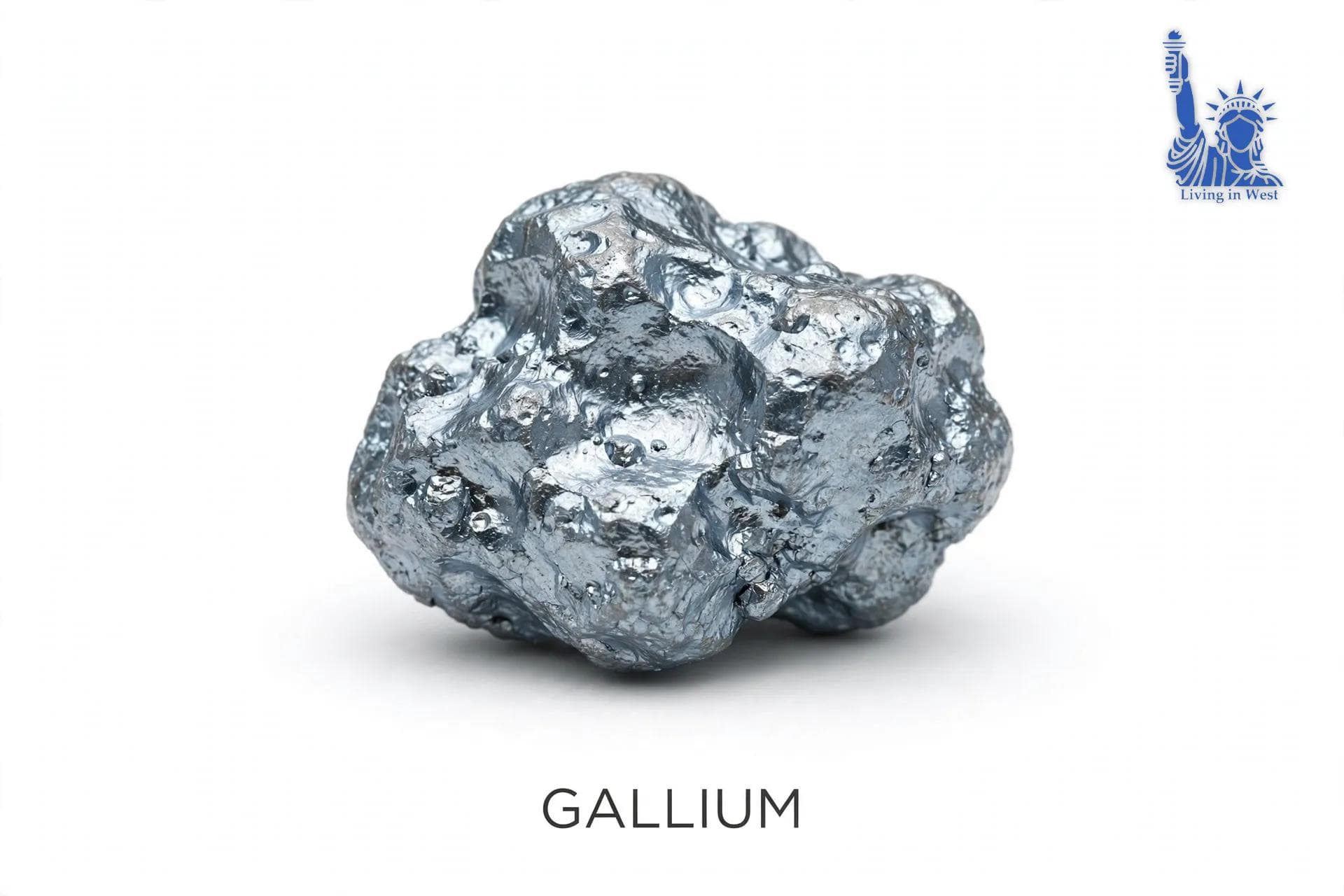
1. Gallium — The Semiconductor Metal
Why Gallium Matters
Gallium is a soft, unusual metal with a melting point of about 29.8°C (85.6°F), meaning it can melt in your hand under the right conditions.
Its strategic importance comes from its role in semiconductor materials such as gallium nitride (GaN) and gallium arsenide.
These materials are used in applications including:
- High-frequency electronics
- 5G and communications equipment
- Radar
- Satellite systems
- Power electronics
- High-efficiency chargers
- Aerospace and defense electronics
USGS research identifies China as the dominant producer and refiner of gallium. China accounted for approximately 98% of global gallium production in the latest USGS data.
How Is Gallium Produced?
Gallium is unusual because it is generally not mined as a primary gallium ore.
Instead, it is recovered mainly as a byproduct of processing aluminum ores and, to a lesser extent, zinc ores. During alumina refining, gallium can accumulate in process solutions and then be recovered through additional chemical processing.
This is one reason China's large aluminum-refining industry gives it an enormous advantage.
U.S. Dependence
The USGS reported the United States as 100% net-import reliant on gallium in the 2025 data.
2026 Indicative Price
Prices vary significantly according to purity and location. For example, a July 2026 market reference for 99.99% gallium metal was around $293/kg in China, while other purity and delivery specifications were higher.
Bottom line: Gallium is a small-volume material with enormous strategic importance because advanced semiconductor technologies depend on it.
2. Natural Graphite — The Battery Anode Material
Why Graphite Matters
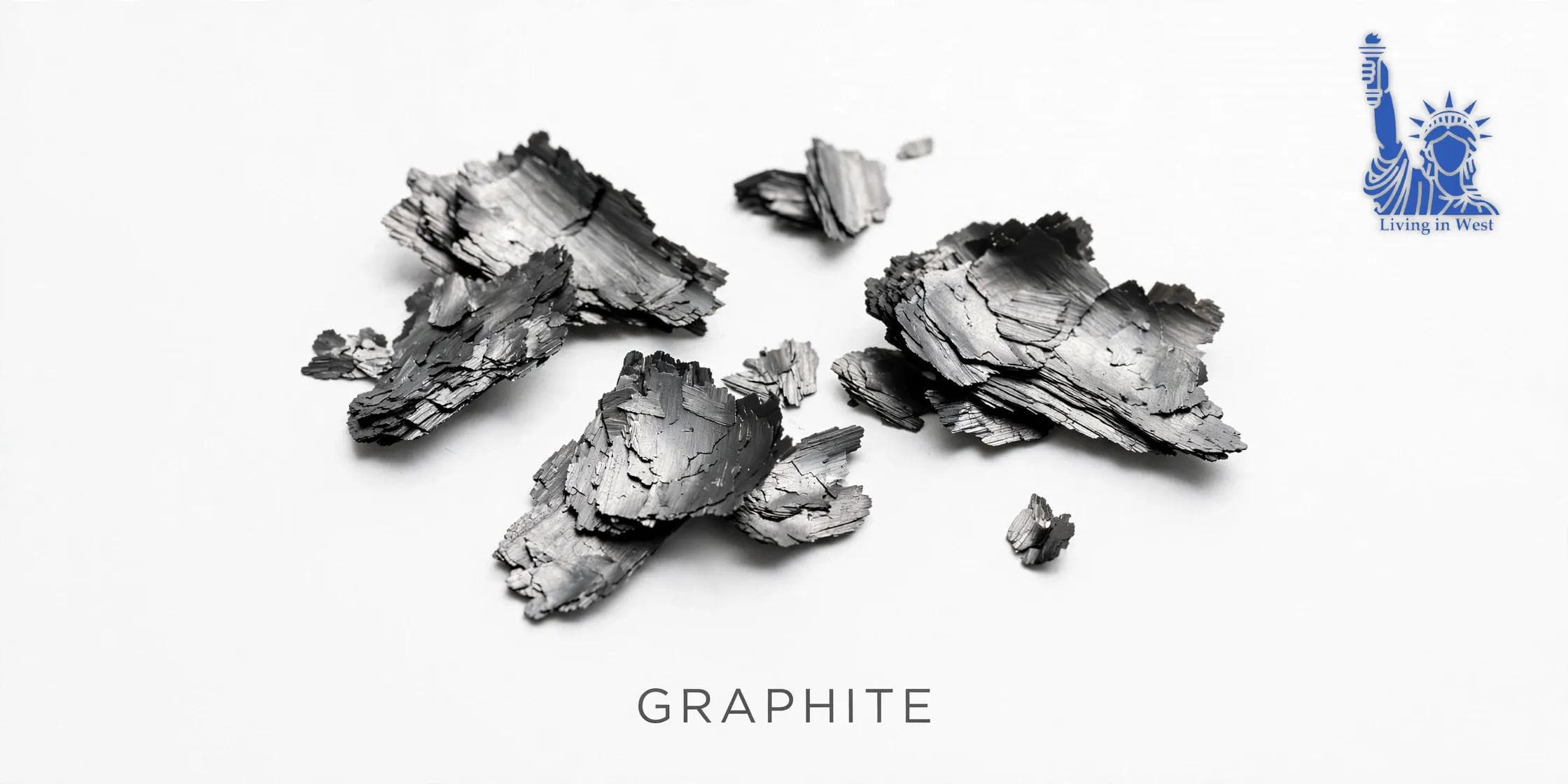
Graphite may not receive as much attention as lithium, but it is essential to modern batteries.
It is used in:
- Lithium-ion battery anodes
- Steelmaking
- Refractories
- Lubricants
- Fuel cells
- Some nuclear applications
The USGS lists graphite among the country's critical minerals.
China Dominates Production
China is the world's leading producer of natural graphite, with roughly 79% of global production in the latest USGS-related data.
But mining is only part of the story.
China also has enormous importance in the processing and battery-grade graphite supply chain. The IEA identifies China as the dominant supplier of refined graphite and says supply concentration remains a major vulnerability.
How Is Graphite Mined?
Natural graphite can be extracted through open-pit or underground mining, depending on the deposit.
After mining, the ore is:
- Crushed and ground.
- Concentrated using flotation.
- Purified.
- Sometimes chemically or thermally treated to reach the purity required for advanced applications.
- Further processed into battery-grade material where required.
The original claim that every graphite operation simply “roasts graphite at 3,000°C” is too broad. High-temperature treatment is one purification route, but processing depends on the graphite type and final product.
U.S. Dependence
The United States was 100% net-import reliant on natural graphite in the relevant USGS data.
Why It Matters for EVs
Graphite is a major component of the battery anode, and the IEA identifies graphite as one of the key minerals driving the energy-transition supply chain.
Bottom line: Even if the United States secures more lithium, battery manufacturing still needs a reliable graphite supply chain.
3. Neodymium & Rare Earths — The Permanent-Magnet Powerhouse
Why Neodymium Matters
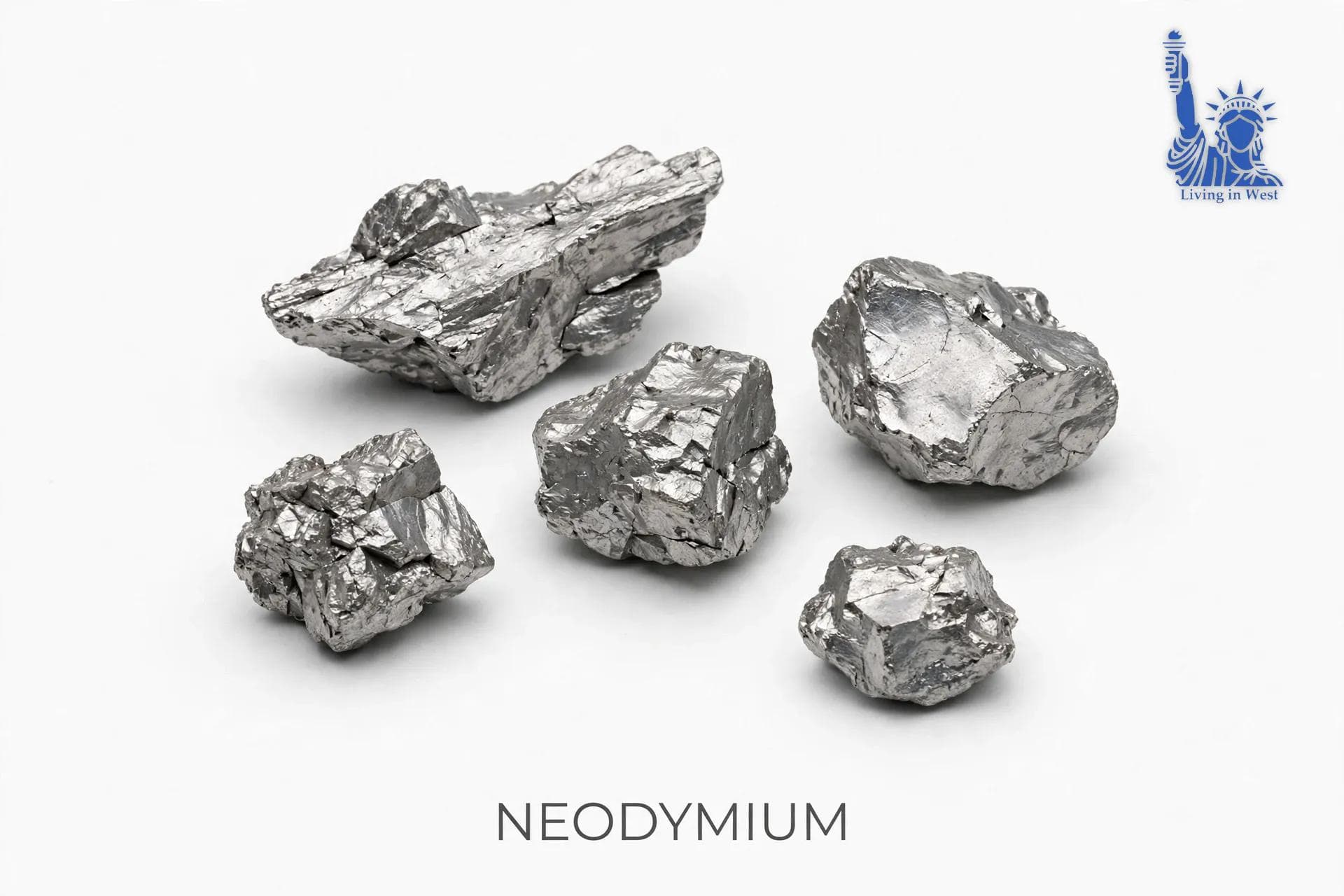
Neodymium is one of the most important rare-earth elements for high-performance permanent magnets.
Neodymium-iron-boron (NdFeB) magnets are used in:
- Electric vehicle motors
- Wind turbines
- Industrial motors
- Robotics
- Consumer electronics
- Aerospace systems
- Defense technologies
One important correction: neodymium is a rare-earth element, but it is not accurate to call the entire rare-earth supply chain “neodymium production.”
China’s Mining Dominance
USGS estimates that the world produced about 390,000 metric tons of rare-earth-oxide equivalent in 2025, with China producing approximately 270,000 tonnes, or about 69.2% of global mine production. The United States produced about 51,000 tonnes.
But China's advantage becomes even more significant further down the supply chain.
The IEA and other industry analyses show that China has a much larger share of rare-earth separation, refining and permanent-magnet manufacturing than its mining share alone suggests.
How Are Rare Earths Processed?
Rare earths are commonly found together in minerals such as:
- Bastnäsite
- Monazite
- Xenotime
- Ion-adsorption clays
The general process involves:
Mining → crushing → concentration → leaching → separation → purification → oxide → metal/alloy → magnet
The difficult part is separating chemically similar rare-earth elements from one another. This requires sophisticated hydrometallurgical and solvent-extraction processes.
2026 Neodymium Price
Market prices depend on whether the material is neodymium metal, oxide or an NdPr product. A July 2026 reference for neodymium metal was around $148/kg, illustrating why the specific product specification must always be stated when quoting a price.
Bottom line: The strategic issue is not simply “Who has rare-earth mines?” It is who can turn rare-earth ore into high-performance magnets at industrial scale.
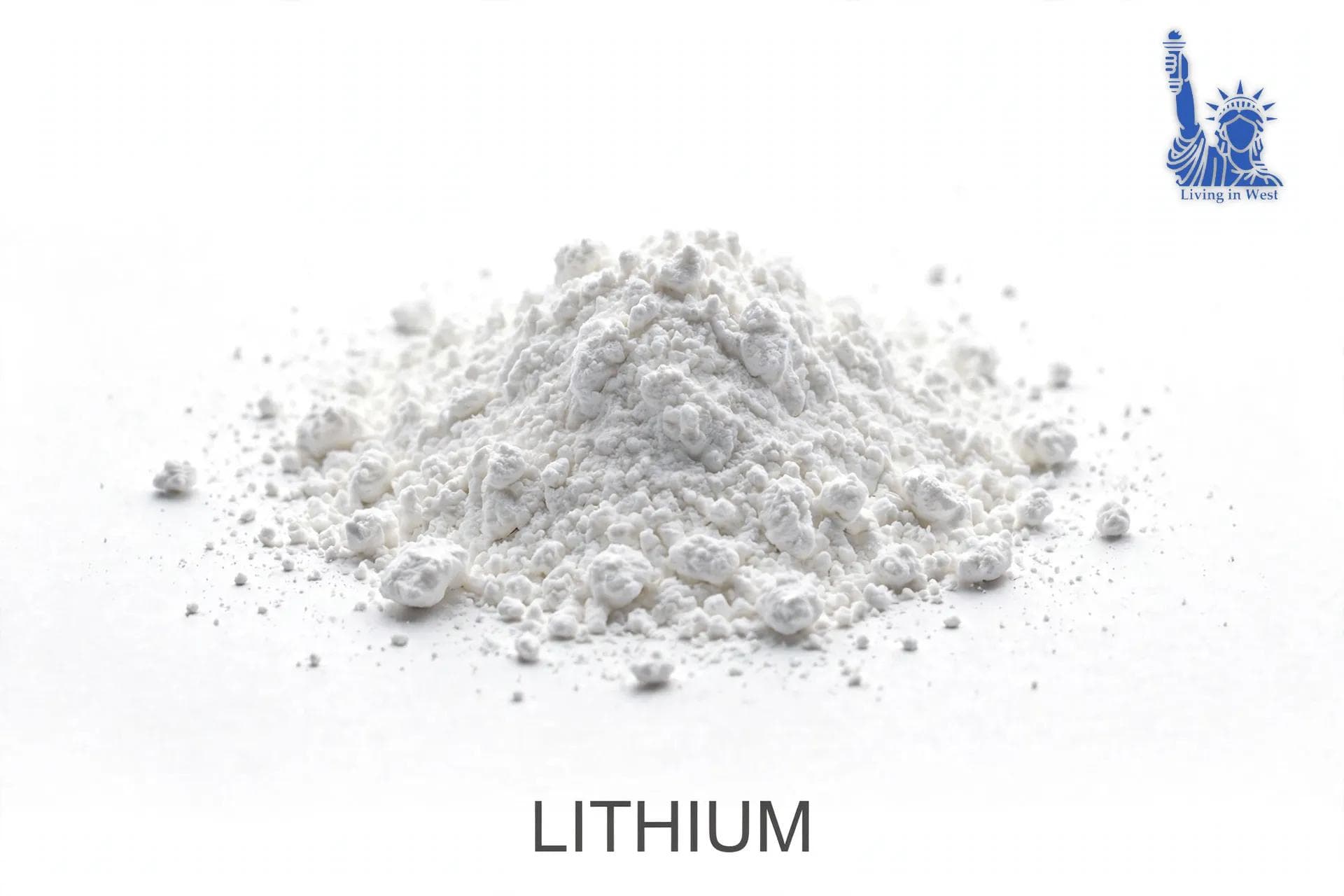
4. Lithium — The Battery Metal
Why Lithium Matters
Lithium is one of the best-known critical minerals because rechargeable batteries depend heavily on lithium-based chemistry.
USGS estimates that batteries accounted for approximately 88% of global lithium end use in the latest data.
Lithium is used in:
- Electric vehicles
- Smartphones
- Laptops
- Grid energy storage
- Power tools
- Consumer electronics
Who Produces the Most Lithium?
The original figures in the draft needed correction.
According to USGS 2026 data, 2025 lithium mine production was approximately:
Country2025 production
Australia
92,000 tonnes
China
62,000 tonnes
Chile
56,000 tonnes
Zimbabwe
28,000 tonnes
Argentina
23,000 tonnes
Brazil
12,000 tonnes
Mali
9,400 tonnes
Global production was approximately 290,000 tonnes, excluding undisclosed U.S. production.
That means Australia, China and Chile together accounted for roughly 72% of global production.
How Is Lithium Extracted?
There are two major commercial approaches.
Hard-Rock Mining
Australia is the leading example.
Lithium-bearing spodumene rock is mined, crushed and concentrated. The concentrate can then undergo thermal and chemical processing to produce lithium chemicals such as lithium carbonate or lithium hydroxide.
Brine Extraction
Chile and Argentina are major examples.
Lithium-rich brine is pumped from underground aquifers or salt-flat systems and processed to concentrate and recover lithium compounds.
Newer direct-lithium-extraction technologies are also being developed, potentially reducing the time and land requirements associated with conventional evaporation methods.
2026 Price Outlook
Lithium prices have been highly volatile.
S&P Global's 2026 outlook projected an average lithium carbonate price around $9,093 per metric ton of lithium carbonate equivalent, while other market observations during 2026 showed prices moving substantially above that level at times.
That is why a single “2026 lithium price” can be misleading.
Bottom line: Lithium mining is becoming geographically more diversified, but China remains extremely important in downstream battery processing and manufacturing.
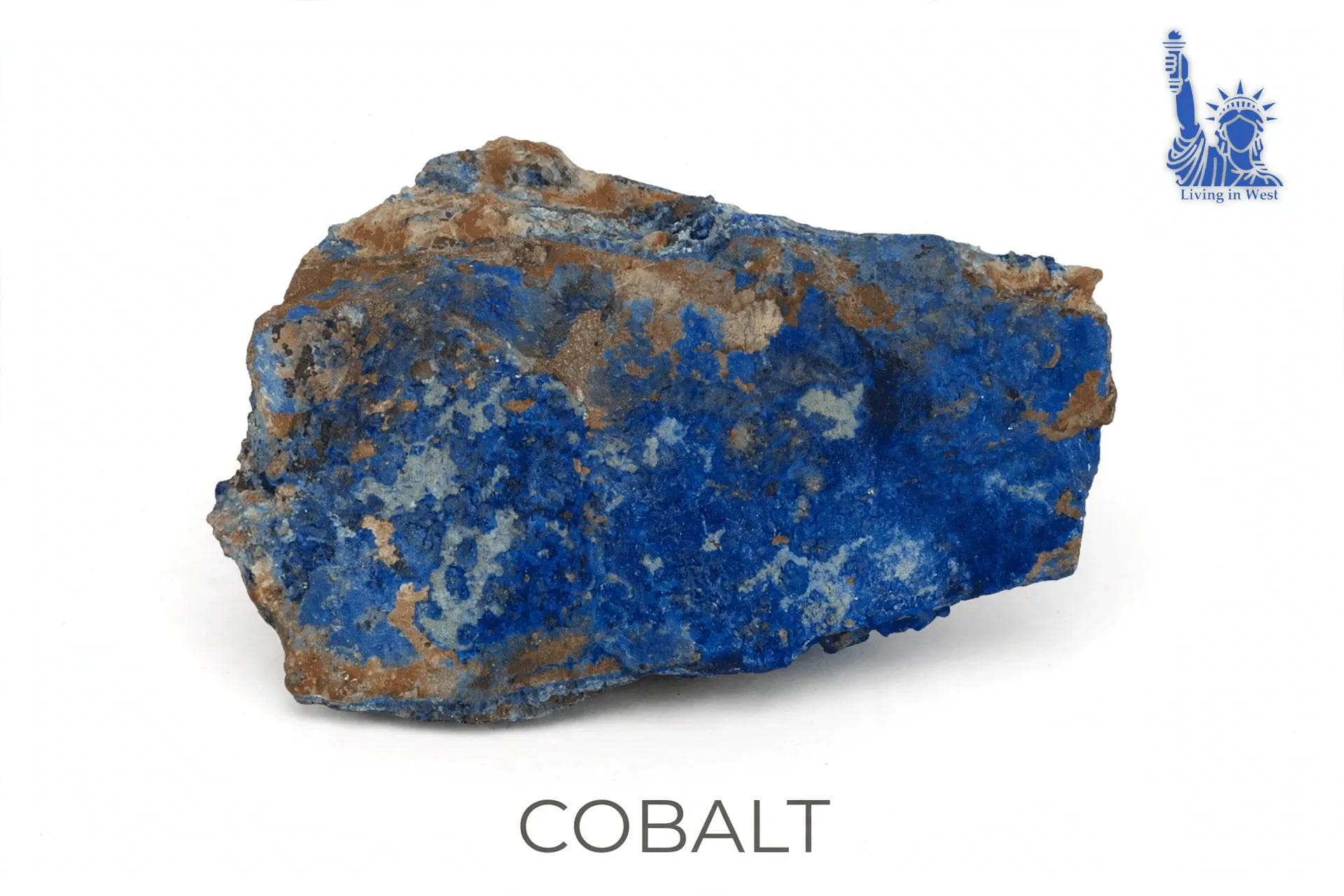
5. Cobalt — The High-Performance Battery & Aerospace Metal
Why Cobalt Matters
Cobalt is important in several industries, including:
- Lithium-ion battery materials
- Aerospace superalloys
- Gas turbines
- Cutting tools
- Chemical applications
The U.S. also uses cobalt in high-temperature applications such as aircraft gas-turbine engines.
The Democratic Republic of Congo
The Democratic Republic of the Congo (DRC) remains by far the world's most important source of mined cobalt.
USGS data have placed DRC production at roughly three-quarters of global mine output, with the country accounting for about 76% in the 2024 data.
China is particularly important further down the chain because it has extensive cobalt refining and battery-material capacity.
How Is Cobalt Produced?
Cobalt is commonly recovered as a byproduct of copper or nickel mining.
The general process can involve:
Mining → crushing → concentration → leaching → purification → cobalt hydroxide/intermediate → refined cobalt
Both hydrometallurgical and pyrometallurgical processes are used.
2026 Price
Cobalt prices have been extremely volatile.
For example, S&P Global assessed 30% cobalt hydroxide at $23.50/lb CIF China on July 13, 2026, while Reuters reported that cobalt prices had surged sharply from early 2025 levels amid DRC supply restrictions. These are different products and should not be treated as the same “cobalt price.”
A Major 2026 Development
The DRC has tightened control over cobalt exports, including quota mechanisms and restrictions intended to encourage more domestic processing.
Bottom line: Cobalt demonstrates why a country can be dependent not only on a mine but also on the geopolitical decisions of the country where that mine is located.
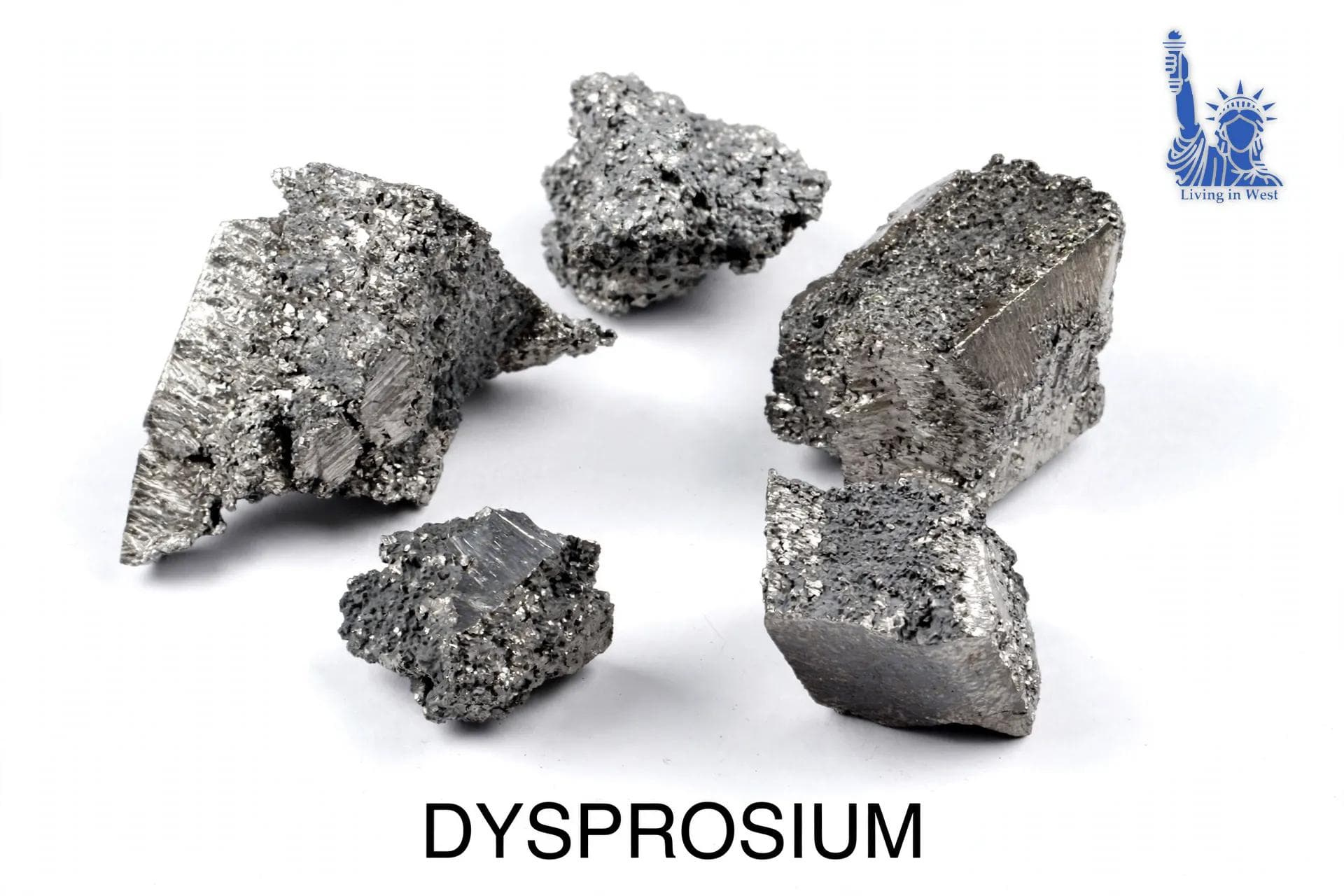
6. Dysprosium — The High-Temperature Rare-Earth Element
Why Dysprosium Matters
Dysprosium is a heavy rare-earth element that is especially valuable in high-performance permanent magnets.
It helps improve magnet performance at elevated temperatures, making it useful in demanding applications such as:
- Electric motors
- High-performance magnets
- Defense systems
- Lasers
- Data-storage technologies
- Specialized industrial equipment
The USGS specifically lists dysprosium as a critical mineral used in permanent magnets, data-storage devices and lasers.
China and Heavy Rare Earths
China has an especially strong position in heavy rare-earth processing.
Unlike the overall rare-earth mining figure of about 69%, heavy rare-earth supply chains can be far more concentrated, particularly in processing and separation.
How Is Dysprosium Produced?
Some dysprosium comes from rare-earth-bearing ores, while heavy rare earths have historically been associated with ion-adsorption clay deposits, particularly in southern China.
The processing sequence can include:
Ore/clay → leaching → solution purification → solvent extraction → separation → dysprosium oxide → metal
Because rare-earth elements have similar chemical properties, separating them into individual products is technically difficult.
2026 Price
There is no single universal dysprosium price because oxide and metal are different products.
For example, July 2026 market references placed 99.5% dysprosium oxide around $197/kg and dysprosium metal around $264/kg in the cited China market assessments.
A New U.S. Approach
The United States is also looking beyond conventional mining.
In June 2026, the Department of Energy announced $134 million for two rare-earth recovery projects, including approximately $67 million for a Louisiana project led by Colorado School of Mines and ElementUSA.
The project aims to recover rare earths from “red mud,” a bauxite-refining waste product, rather than relying entirely on newly mined ore.
The proposed facility could recover several rare-earth elements, including dysprosium, from existing industrial waste.
Bottom line: Dysprosium shows that the future mineral race is not only about finding new mines. It is also about developing better ways to recover valuable materials from existing waste streams.
🇺🇸 Why the U.S. Is Building a Critical-Minerals Reserve
America's dependence on imported minerals has become a national-security issue.
USGS's 2026 data show that the United States was 100% net-import reliant on 16 minerals in 2025, while imports supplied more than half of U.S. apparent consumption for 54 nonfuel mineral commodities.
The government has therefore started several initiatives to strengthen domestic and allied supply chains.
Project Vault
One of the biggest developments is Project Vault, launched in February 2026.
The U.S. Export-Import Bank approved up to $10 billion in financing, while the initiative was backed by nearly $2 billion in private-sector investment. It establishes the U.S. Strategic Critical Minerals Reserve as a public-private partnership designed to maintain supplies during market disruptions.
So calling it a “$12 billion Project Vault” is reasonable as a rounded description of the total financing structure, but it is more accurate to explain the components rather than describe the entire amount as direct government spending.
🇺🇸 What Happens on January 1, 2027?
Another important development is the tightening of U.S. defense procurement rules.
Under 10 U.S.C. §4872 and related DFARS provisions, restrictions on certain materials sourced from China, Russia, Iran and North Korea become broader on January 1, 2027.
The covered materials include:
- Samarium-cobalt magnets
- Neodymium-iron-boron magnets
- Tantalum metals and alloys
- Tungsten metal powder
- Tungsten heavy alloys
The 2027 rules expand the restrictions to parts of the supply chain including mining, refining or separation, depending on the material.
This is not a blanket U.S. ban on every mineral imported from these countries. It is primarily a restriction affecting covered materials and defense acquisition.
That distinction is important.
The Bigger Picture: Why Critical Minerals Matter
These six materials represent different parts of the modern economy:
MineralMajor strategic useMajor supply concern
Gallium
Semiconductors, GaN electronics
China dominates production
Graphite
Battery anodes
China dominates mining and processing
Neodymium / Rare Earths
Permanent magnets
China dominates processing and magnets
Lithium
Batteries
Rapidly growing global demand
Cobalt
Batteries, aerospace alloys
DRC dominates mining
Dysprosium
High-temperature magnets
Highly concentrated heavy-REE supply
The important lesson is that mining alone does not equal supply security.
A country can have a mine and still depend on another country for refining, separation, metal production or manufacturing.
That is exactly why the United States is investing in domestic processing, recycling, waste recovery, strategic stockpiles and allied supply chains. The IEA expects supply chains to diversify somewhat, but warns that concentration in refining remains high.
Conclusion
The global race for critical minerals is becoming a race for technology, manufacturing capacity and national security.
Gallium affects advanced semiconductors. Graphite is essential to battery anodes. Lithium powers rechargeable batteries. Cobalt remains important for batteries and aerospace alloys. Neodymium enables powerful permanent magnets, while dysprosium helps those magnets operate under demanding conditions.
China remains a dominant force in several of these supply chains, while countries such as Australia, Chile, the DRC, the United States and others play major roles in mining different materials.
For the United States, the challenge is therefore bigger than simply opening more mines. America also needs refineries, separation plants, magnet factories, battery-material processing, recycling infrastructure and strategic reserves.
Project Vault, new federal funding programs and the tightening of defense procurement rules show that Washington is treating critical minerals as a long-term strategic issue rather than simply a mining-sector problem.
The country that can reliably mine, process, refine and manufacture these materials will have a major advantage in EVs, artificial intelligence, semiconductors, renewable energy and advanced defense technology.
Disclaimer
This article is for general educational and informational purposes only. Mineral production figures are primarily based on the U.S. Geological Survey's 2026 Mineral Commodity Summaries, while market-price examples come from publicly available 2026 market assessments and may vary by purity, grade, location, contract terms and date. Production percentages should not be interpreted as market share of refining or finished products. Critical-mineral policies and U.S. defense-acquisition rules can change, so readers should consult official government sources before making business, investment or policy decisions. This article does not constitute financial or investment advice.
Recommended SEO headings
For your WordPress article, these are the main searchable headings:
- Top 6 Critical Minerals the USA Needs in 2026
- Gallium: Why China Dominates Semiconductor Supply
- Natural Graphite: Why the USA Depends on Imports
- Neodymium and Rare Earths: The Permanent-Magnet Supply Chain
- Lithium: Global Production and Extraction Methods
- Cobalt: Why the DRC Matters to the Global Battery Industry
- Dysprosium: The Rare-Earth Element Behind High-Temperature Magnets
- Why the USA Is Building a Critical Minerals Reserve
- What Happens to Critical Mineral Rules on January 1, 2027?
- Conclusion: The Global Race for Critical Minerals
This version is much safer for Living in West than the original because it removes the inaccurate “60 rare earth minerals,” corrects the lithium production percentages, separates mining from refining, and describes the 2027 restriction as a defense procurement rule rather than a blanket import ban.

Editorial Team