Size and Population
Arkansas covers approximately 53,179 square miles (137,732 square kilometers), making it the 29th-largest U.S. state by total area.
According to the U.S. Census Bureau, Arkansas had an estimated population of 3,114,791 in 2025, compared with about 3,011,524 people in the 2020 Census. The state remains relatively sparsely populated compared with many other parts of the United States.
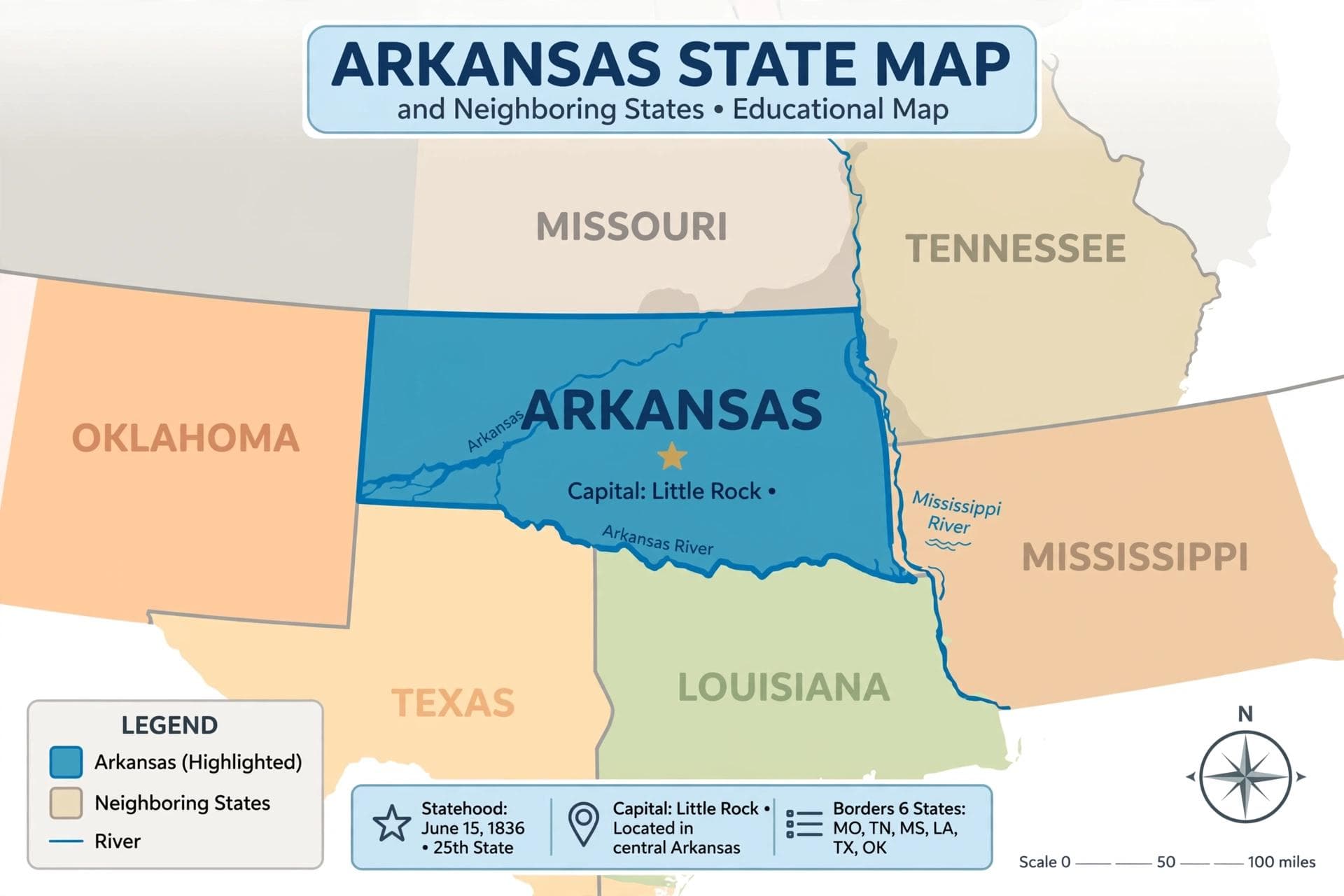
Little Rock is the state capital and largest city.
2. Which States Border Arkansas?
Arkansas shares borders with six states:
- Missouri to the north
- Tennessee to the east
- Mississippi to the east
- Louisiana to the south
- Texas to the southwest
- Oklahoma to the west
The Mississippi River forms part of Arkansas's eastern boundary with Mississippi and Tennessee.
What Is Arkansas Known for Producing?
Agriculture remains an important part of Arkansas's economy, particularly in the eastern and southern parts of the state.
Rice, Soybeans, Cotton and Corn
Arkansas is especially famous for rice production. It is the No. 1 rice-producing state in the United States. In 2024, Arkansas accounted for approximately 49.3% of total U.S. rice production, with more than 1.4 million acres planted.
Other major agricultural products include:
- Soybeans
- Cotton
- Corn
- Wheat
- Poultry
- Eggs
- Cattle
Arkansas's agricultural economy is supported by extensive farmland, irrigation systems, rivers, and a long growing season.
Poultry and Tyson Foods
Arkansas has a major poultry industry. Tyson Foods, one of the world's largest food companies and a major producer of chicken, beef, and pork, is headquartered in Springdale, Arkansas.
Walmart
Arkansas is also home to Walmart, one of the world's largest retailers. Walmart's headquarters are located in Bentonville, in Northwest Arkansas.
Transportation and Logistics
Arkansas has a strong transportation and logistics sector. J.B. Hunt Transport Services, one of the largest transportation and logistics companies in the United States, is headquartered in Lowell, Arkansas.
Together, agriculture, food production, retail, transportation, manufacturing, and logistics play major roles in the state's economy.
4. What Makes Arkansas Special?
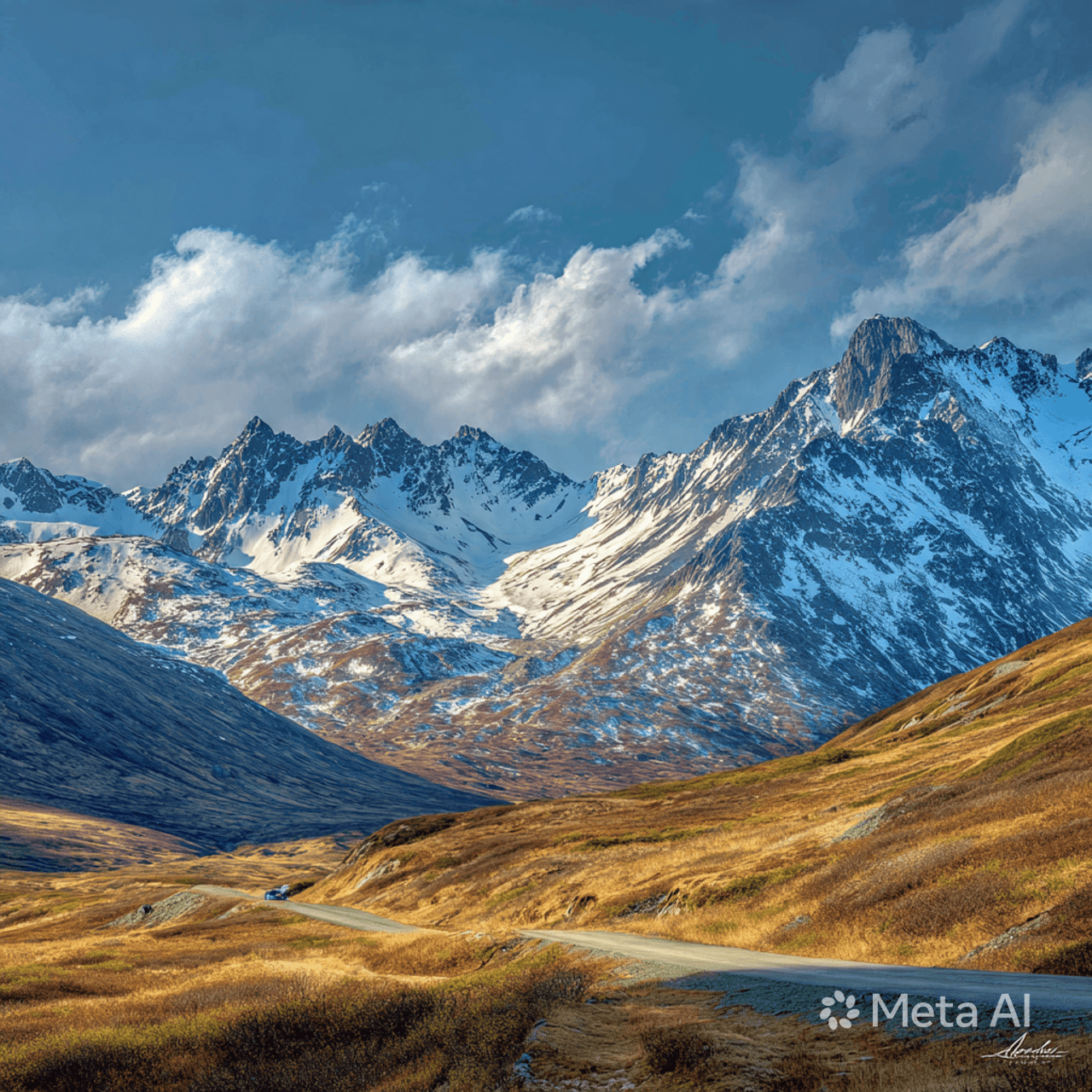
Arkansas has the nickname "The Natural State", reflecting its large forests, mountains, lakes, rivers, caves, waterfalls, and outdoor recreation opportunities.
Crater of Diamonds State Park
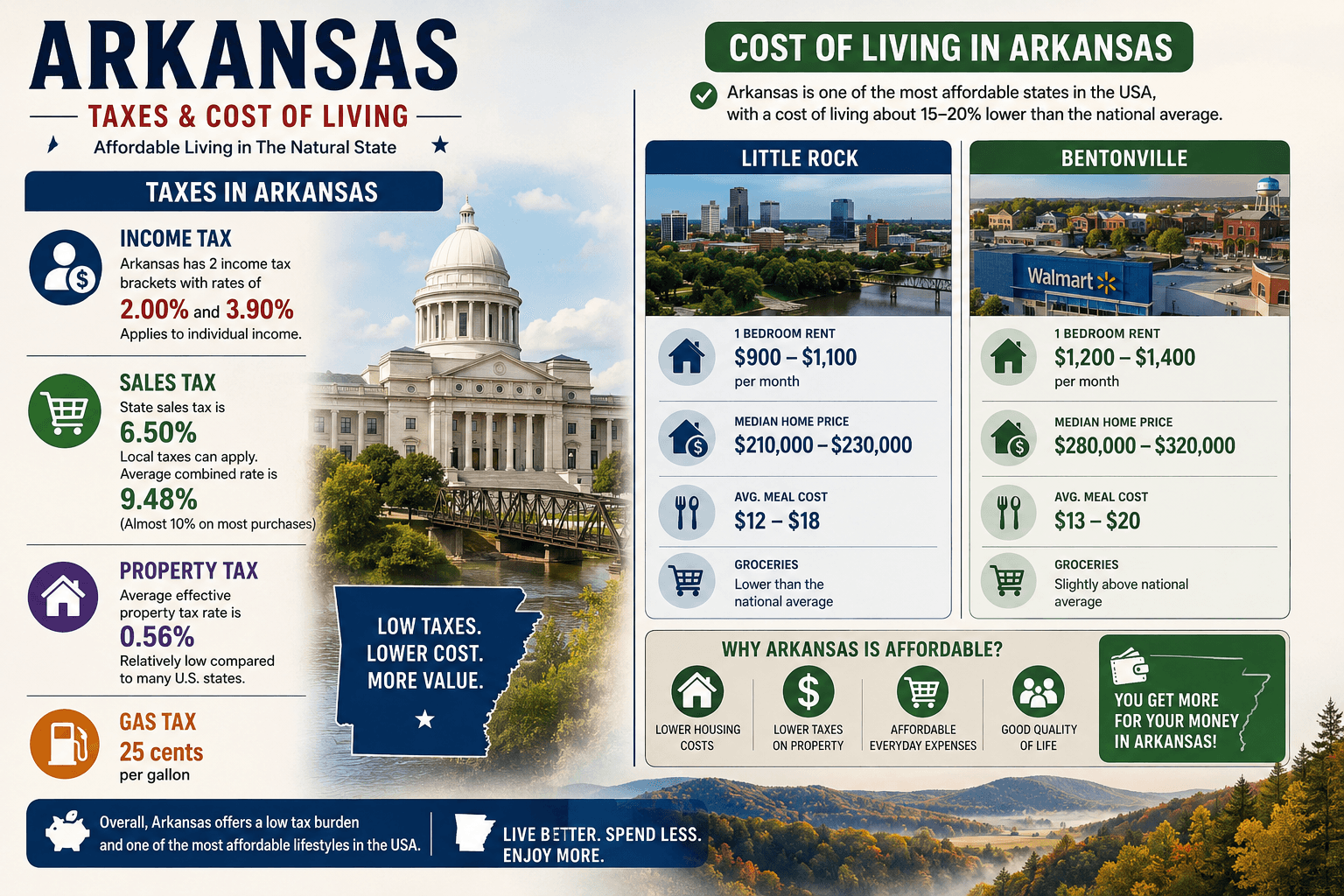
One of Arkansas's most unusual attractions is Crater of Diamonds State Park near Murfreesboro.
It is famous because visitors can search for diamonds in a real diamond-bearing volcanic field. Most importantly, visitors are allowed to keep the diamonds and other minerals they find under the park's rules.
The park is one of the few places in the world where the public can search for naturally occurring diamonds and potentially take their discoveries home.
Hot Springs National Park
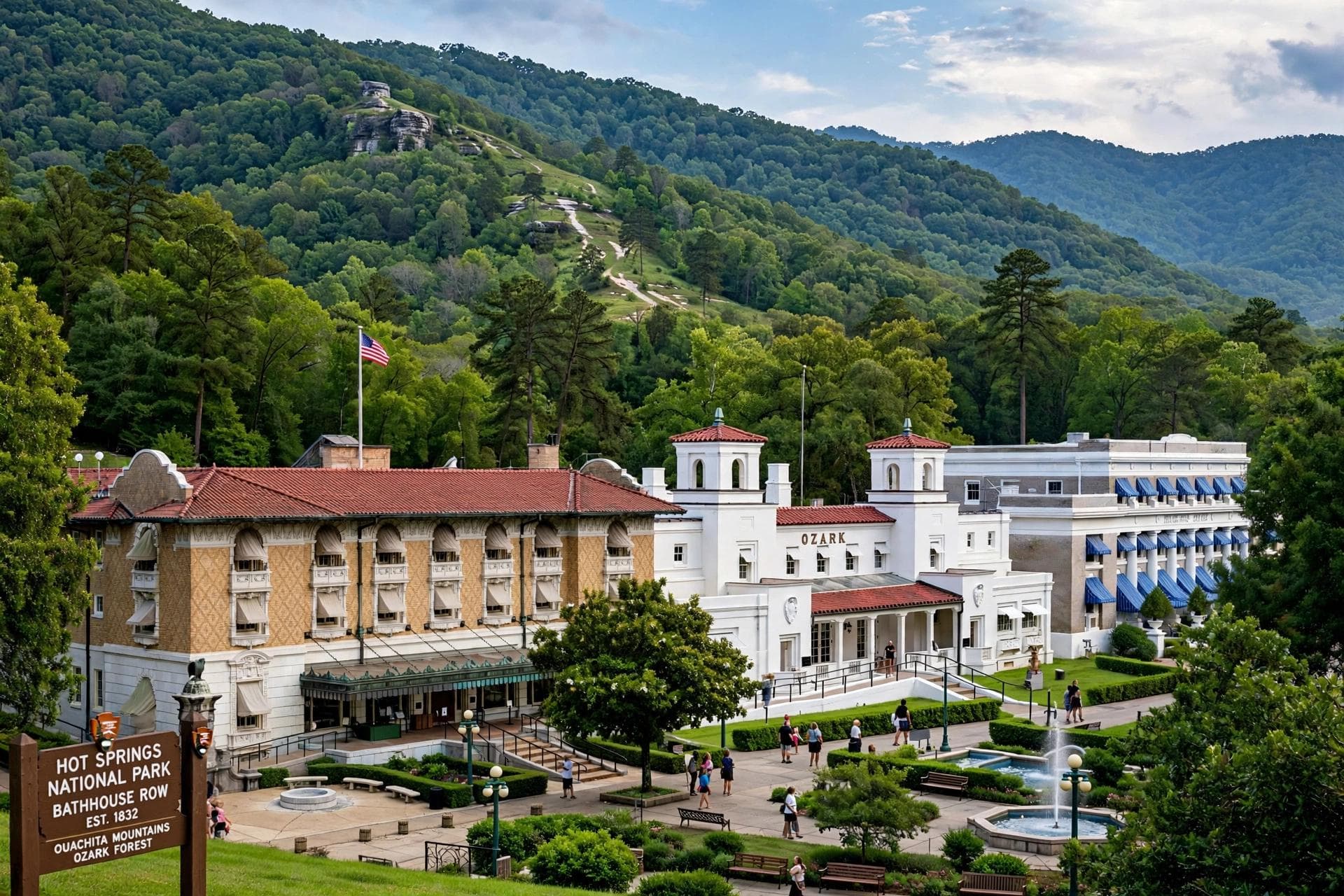
Hot Springs National Park is another major attraction. The area is famous for its naturally heated thermal water and historic Bathhouse Row.
The national park itself has no entrance fee, but visitors cannot simply swim or bathe in the outdoor thermal springs. Bathing in the thermal water is available through designated bathhouses, including the Buckstaff and Quapaw bathhouses.
Bill Clinton
Former U.S. President Bill Clinton was born in Hope, Arkansas, and grew up in the state. Little Rock is home to the Clinton Presidential Center, which contains exhibits, documents, and artifacts related to his presidency.
Crystal Bridges
Bentonville is home to the Crystal Bridges Museum of American Art, founded by Alice Walton. General admission to the museum is free, although some temporary exhibitions and special experiences may require tickets.
The museum's 134-acre campus also includes walking trails, outdoor sculptures, gardens, and architectural features.
5. History of Arkansas
Long before European settlement, the region was home to Native American peoples, including the Quapaw and Osage.
In 1803, the area became part of the United States through the Louisiana Purchase.
Arkansas became the 25th state of the United States on June 15, 1836.
During the American Civil War, Arkansas joined the Confederate States of America in 1861. However, the state was deeply divided, and thousands of Arkansans also served in Union forces.
After the Civil War, Arkansas went through Reconstruction and eventually developed into the modern state known today for agriculture, manufacturing, business, and outdoor tourism.
6. Trade and Economy
Arkansas has an economy that combines agriculture with major corporations, transportation, manufacturing, retail, and services.
Some of the best-known companies headquartered in Arkansas include:
- Walmart — Bentonville
- Tyson Foods — Springdale
- J.B. Hunt Transport Services — Lowell
The state is particularly important in:
Rice and soybean production
Poultry and food processing
Timber and forestry
Transportation and logistics
- Retail and supply-chain management
- Manufacturing
- Steel production
- Aerospace and defense-related industries
Northwest Arkansas, especially the Bentonville–Fayetteville region, has become one of the state's most important economic centers.
7. Taxes in Arkansas
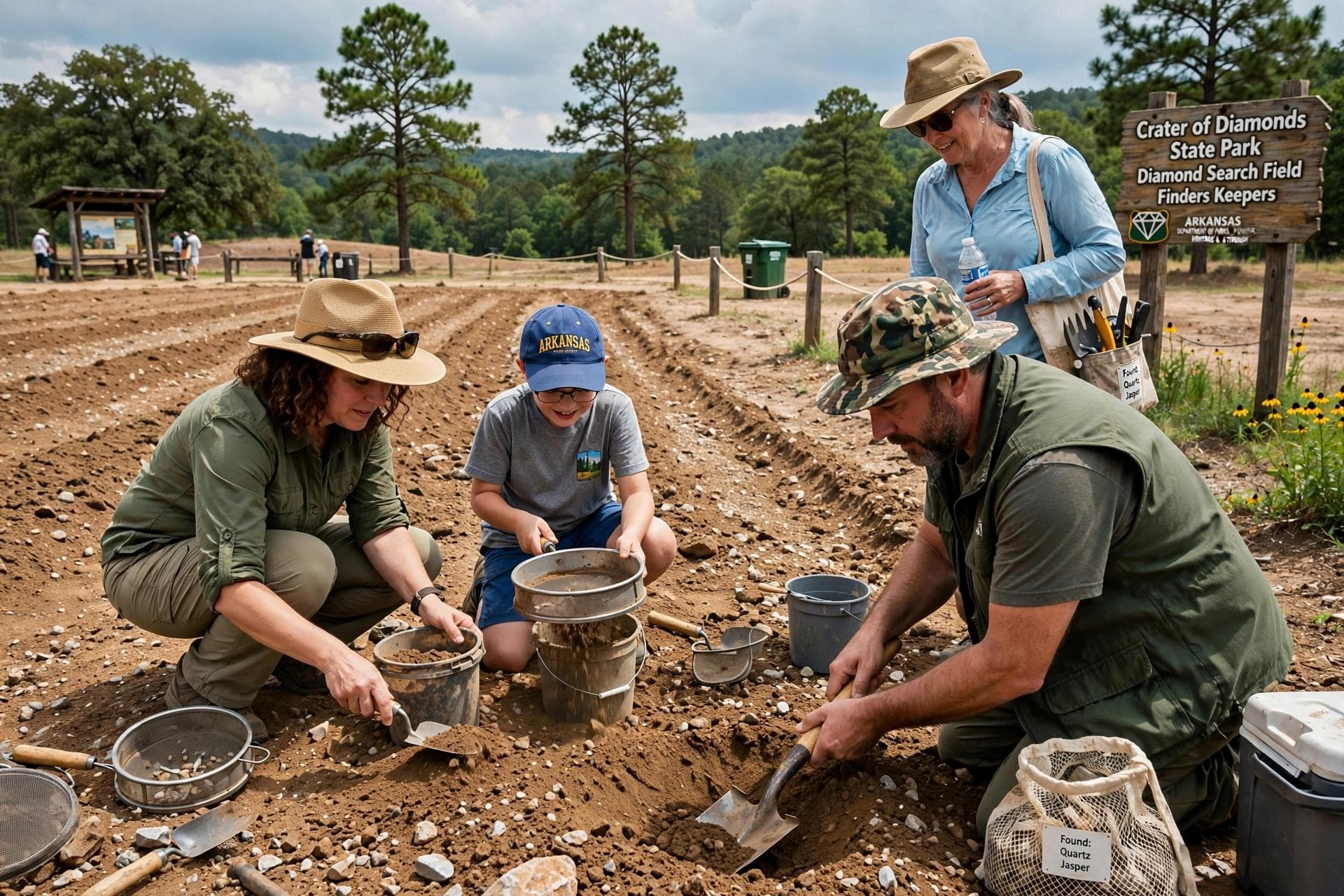
Arkansas has a relatively low property-tax burden but a noticeable state sales tax.
Individual Income Tax
Arkansas uses a graduated individual income-tax system, with rates ranging from approximately 2% to 3.9%, depending on income and filing circumstances.
Sales Tax
The statewide sales tax rate is 6.5%. Local governments can add additional sales taxes, meaning the final rate paid at the register can be significantly higher depending on the location.
Arkansas has also eliminated the state sales tax on groceries, although local taxes and other rules can still apply.
Property Tax
Arkansas has relatively low property taxes compared with many states. The average effective property-tax rate is approximately 0.56%.
Gas Tax
Arkansas's gasoline tax is approximately 22 cents per gallon, while diesel is taxed at approximately 23 cents per gallon.
Tax rates and rules can change, so residents and businesses should check the latest Arkansas Department of Finance and Administration information before making financial decisions.
8. Cost of Living — Is Arkansas Cheap?
Yes. Arkansas is generally considered one of the more affordable states in the United States.
According to the Arkansas Economic Development Commission, the state's overall cost of living is about 11% below the national average, with housing being one of the biggest reasons for the difference.
However, costs vary considerably from one city to another.
Little Rock
Little Rock remains relatively affordable compared with many major U.S. cities. As of mid-2026, Zillow reported an average home value of roughly $223,000, while average rent across all property types was around $1,220 per month.
A one-bedroom apartment can often be found for less than the citywide average, depending on the neighborhood, property, and amenities.
Bentonville
Bentonville has become more expensive as Northwest Arkansas has grown rapidly around Walmart and other major employers. Current rental prices are generally higher than in many other Arkansas communities.
This means Arkansas is affordable overall, but Bentonville and parts of Northwest Arkansas should not be treated as representative of the entire state's housing market.
9. Best Places to Visit in Arkansas
Arkansas offers a wide variety of attractions for travelers.
1. Hot Springs National Park
Explore historic Bathhouse Row, hiking trails, mountain views, and the famous thermal springs.
The park has free entrance, although bathing services and other activities can cost extra.
2. Crater of Diamonds State Park
Visit the diamond field near Murfreesboro and try your luck searching for diamonds and other minerals.
One of the biggest attractions is that visitors can generally keep what they legally find under the park's rules.
3. Ozark Mountains
The Ozarks offer some of Arkansas's best outdoor experiences, including:
- Hiking
- Camping
- Scenic drives
- Fishing
- Mountain biking
- Rock climbing
- Wildlife viewing
4. Buffalo National River
The Buffalo National River is ideal for kayaking, canoeing, fishing, hiking, camping, and enjoying Arkansas's natural scenery.
5. Little Rock
The state capital offers attractions such as:
Clinton Presidential Center
River Market District
Arkansas State Capitol
Little Rock Central High School National Historic Site
Museums and cultural attractions
6. Bentonville
Bentonville is particularly popular for:
- Crystal Bridges Museum of American Art
- Mountain biking
- Downtown Bentonville
- Restaurants and cafés
- Outdoor trails
- Northwest Arkansas's growing arts and business scene
10. Wine Country and Outdoor Experiences
Arkansas also has a small but distinctive wine industry, particularly around Altus, Paris, and the Arkansas River Valley.
The region has a long history of European-style winemaking and is an interesting stop for visitors looking for something different from the state's traditional outdoor attractions.
For outdoor enthusiasts, Arkansas is especially attractive because many hiking trails, rivers, forests, and scenic areas can be enjoyed at relatively low cost.
11. How Much Does a 5-Day Arkansas Trip Cost?
Arkansas can be a good destination for budget-conscious travelers, but the exact cost depends heavily on the season, city, accommodation, transportation, and activities.
A reasonable 5-day budget for one person could be approximately $600–$900, excluding airfare, if the traveler chooses budget accommodation, inexpensive meals, and mostly low-cost or free attractions.
A sample budget might look like:
Budget accommodation: $60–$100 per night
Food: $25–$50 per day
Rental car and fuel: varies by season and vehicle
Attractions: $0–$100+
Miscellaneous expenses: $50–$100
Travelers who stay in Bentonville, rent a newer vehicle, eat at restaurants frequently, or visit during peak periods may spend considerably more.
12. Best Time to Visit Arkansas
The best times to visit Arkansas are generally spring and fall.
March to May
Spring brings pleasant temperatures, green landscapes, blooming flowers, waterfalls, and excellent conditions for hiking and outdoor activities.
October to November
Fall is especially popular because Arkansas's forests display beautiful autumn colors. Temperatures are also generally more comfortable than during the hot and humid summer months.
Summer
Summer can be hot and humid, but it is a good season for swimming, kayaking, boating, and other water-based activities.
Final Verdict: Is Arkansas Worth Visiting or Living In?
Arkansas offers a combination that is difficult to find in many parts of the United States: relatively affordable housing, a low overall cost of living, major employers, beautiful natural scenery, and a wide range of outdoor activities.
For travelers, the state offers everything from mountains and rivers to historic towns, hot springs, museums, and even diamond hunting.
For people considering moving to Arkansas, Little Rock, Northwest Arkansas, Fayetteville, Bentonville, and Fort Smith each offer different lifestyles and job opportunities.
Arkansas may not have the massive cities or coastal attractions found in states such as California, Florida, or New York, but its combination of affordability, nature, agriculture, business, and quality outdoor recreation makes "The Natural State" one of the most interesting states in the American South.

Editorial Team